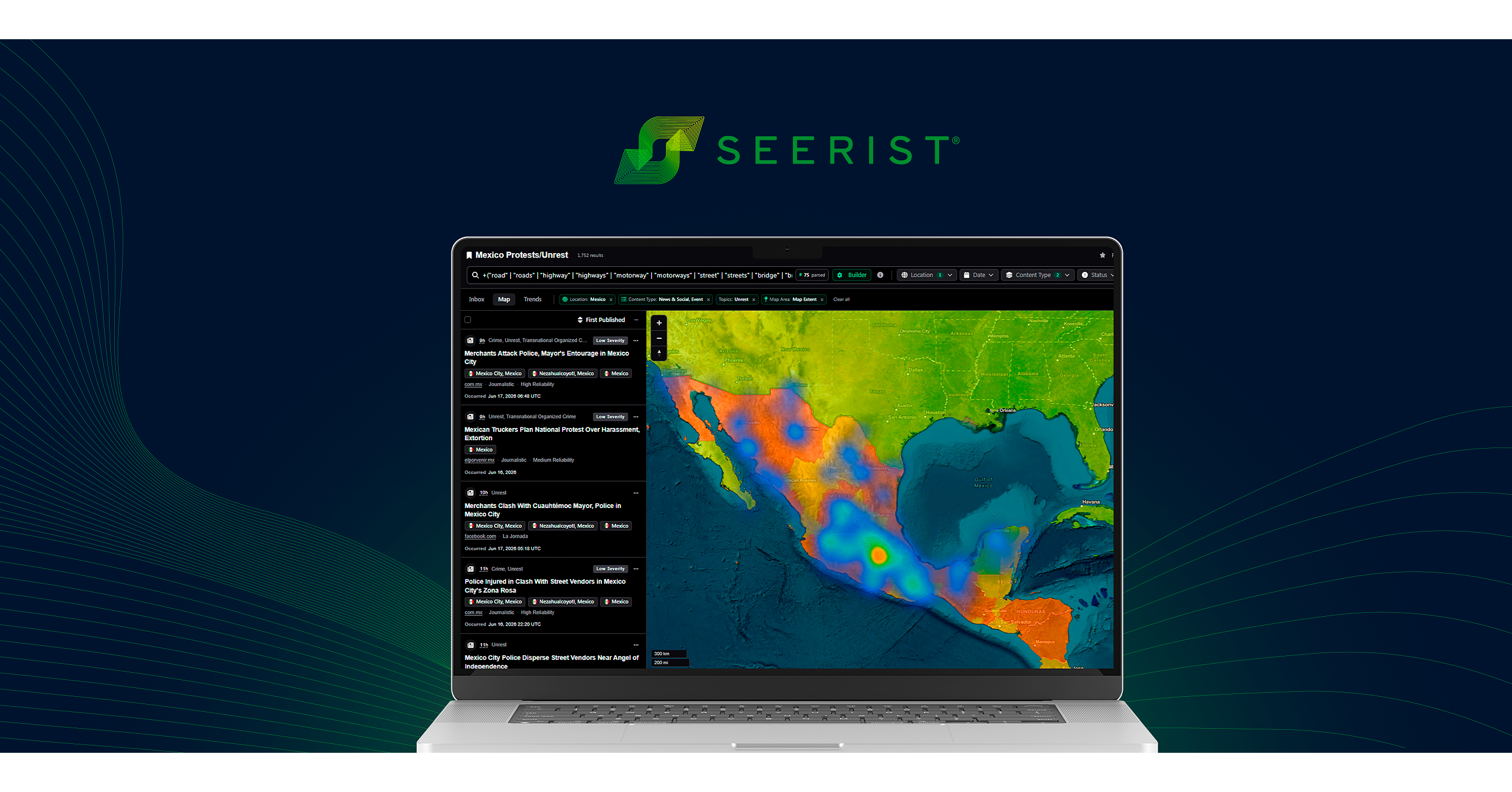
Seerist (AI-enabled risk and threat intelligence platform) announced a “major evolution” of its AI-native platform, focused on faster access to insights via unified search, natural language inputs, and streamlined report generation. The release adds connected contextual signals, greater dashboard/customization controls, and integrated tactical-to-strategic intelligence views (including location overviews with Control Risks). Overall message is operational efficiency and improved intelligence workflows, with no disclosed financial metrics; likely limited near-term market impact.
This is more evidence of category consolidation than a standalone growth inflection. In risk/intelligence software, the real economic prize is not a prettier interface; it is higher seat expansion and lower churn once the product becomes embedded in daily operating workflows. If the re-platforming meaningfully reduces analyst time-to-insight, the first beneficiaries are the vendors that can prove measurable labor substitution, not the ones that merely advertise AI features.
The second-order effect is competitive pressure on point solutions that sell alerts or dashboards without owning the workflow. Over 6-18 months, buyers may rationalize budgets toward platforms that combine data ingestion, alerting, and actionability, which should favor broader enterprise software stacks and managed intelligence providers over niche SaaS names. The Control Risks tie-in also matters: it raises perceived credibility and could increase switching costs, but only if renewals show that human-in-the-loop intelligence translates into higher retention and larger enterprise contracts.
Near term, this is mostly a sentiment event unless there is disclosed evidence of faster sales cycles, expansion revenue, or improved net retention. The main bearish risk is that "AI-native" becomes table stakes and pricing power does not improve; in that case the company absorbs R&D expense without a matching ARR uplift. The contrarian view is that the market may be underestimating procurement friction in government and regulated enterprises: if the new workflow actually shortens implementation and audit time, the revenue lift could lag by 2-4 quarters but still be structurally meaningful.
AI-powered research, real-time alerts, and portfolio analytics for institutional investors.
Request DemoOverall Sentiment
mildly positive
Sentiment Score
0.15
