

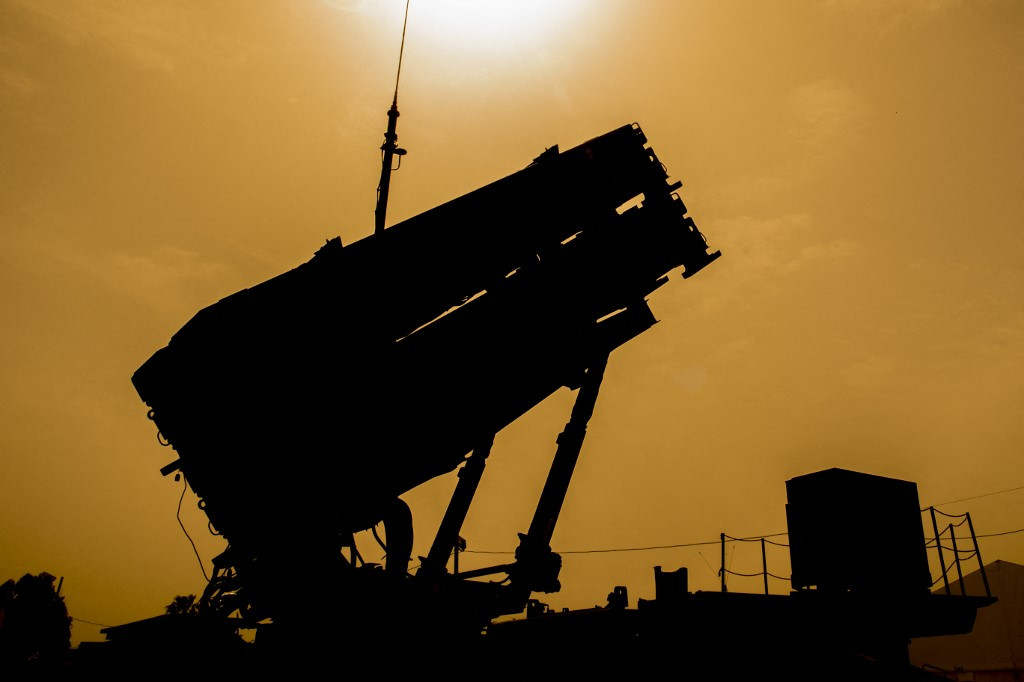
Allies announced nearly $17 billion of new military assistance to Ukraine this week, led by Norway’s planned $10.6 billion 2026 package and Germany’s $4.7 billion package, plus the Netherlands’ $268 million drone commitment and a UK plan for 120,000 drones. The Ramstein meeting also produced a NATO pledge to deliver at least $60 billion in military aid in 2026, with air defenses, drones, and long-range munitions prioritized. However, key interceptor missiles such as PAC-3 remain constrained by production timelines, with meaningful delivery/production ramp-up likely not until 2027-29.
The market is still underpricing the split between headline aid flow and actual usable air-defense capacity. Near term, the signal is supportive for the prime system integrators and for suppliers that can monetize urgently needed interceptors, but the real bottleneck is not demand — it is production cadence, qualification, and launch-system compatibility. That means the strongest earnings tailwind accrues to companies with constrained, high-margin backlogs and export licensing leverage, not to the broader defense basket.
LMT is the cleaner beneficiary because the scarce asset in this cycle is interceptor inventory and guidance-chain control. The more interesting second-order winner is RTX, not from legacy Patriot hardware alone but from increased probability of follow-on missile, sustainment, and co-production work as European allies try to de-risk US-only supply. In contrast, European prime contractors that are asked to shoulder assembly or subsystem work may see margin dilution in the near term before volume catches up; this is a classic “industrial policy now, earnings later” setup.
The key risk is timing slippage: if first meaningful PAC-3 incremental capacity does not appear until 2027-29, the equity market may front-run the story for quarters while the actual revenue conversion lags. That creates a catalyst path where defense names can rerate on order visibility even if near-term deliveries are modest, but also a reversal risk if political fatigue or fiscal constraints slow 2026 appropriations. A second-order bearish catalyst would be any surprise diplomatic de-escalation or a shift toward cheaper drone-heavy warfare, which would reduce urgency for expensive interceptors and cap the multiple on missile-centric primes.
The contrarian view is that consensus may be too focused on drones and too complacent about interceptor scarcity. Drones are abundant and increasingly commoditized; ballistic-missile defense is the structurally scarce segment with the best pricing power and the least substitutability. If anything, the current package mix reinforces a barbell: tactical unmanned systems for volume, and premium interceptors for the margin pool.
AI-powered research, real-time alerts, and portfolio analytics for institutional investors.
Request TrialOverall Sentiment
mildly positive
Sentiment Score
0.15
Ticker Sentiment
