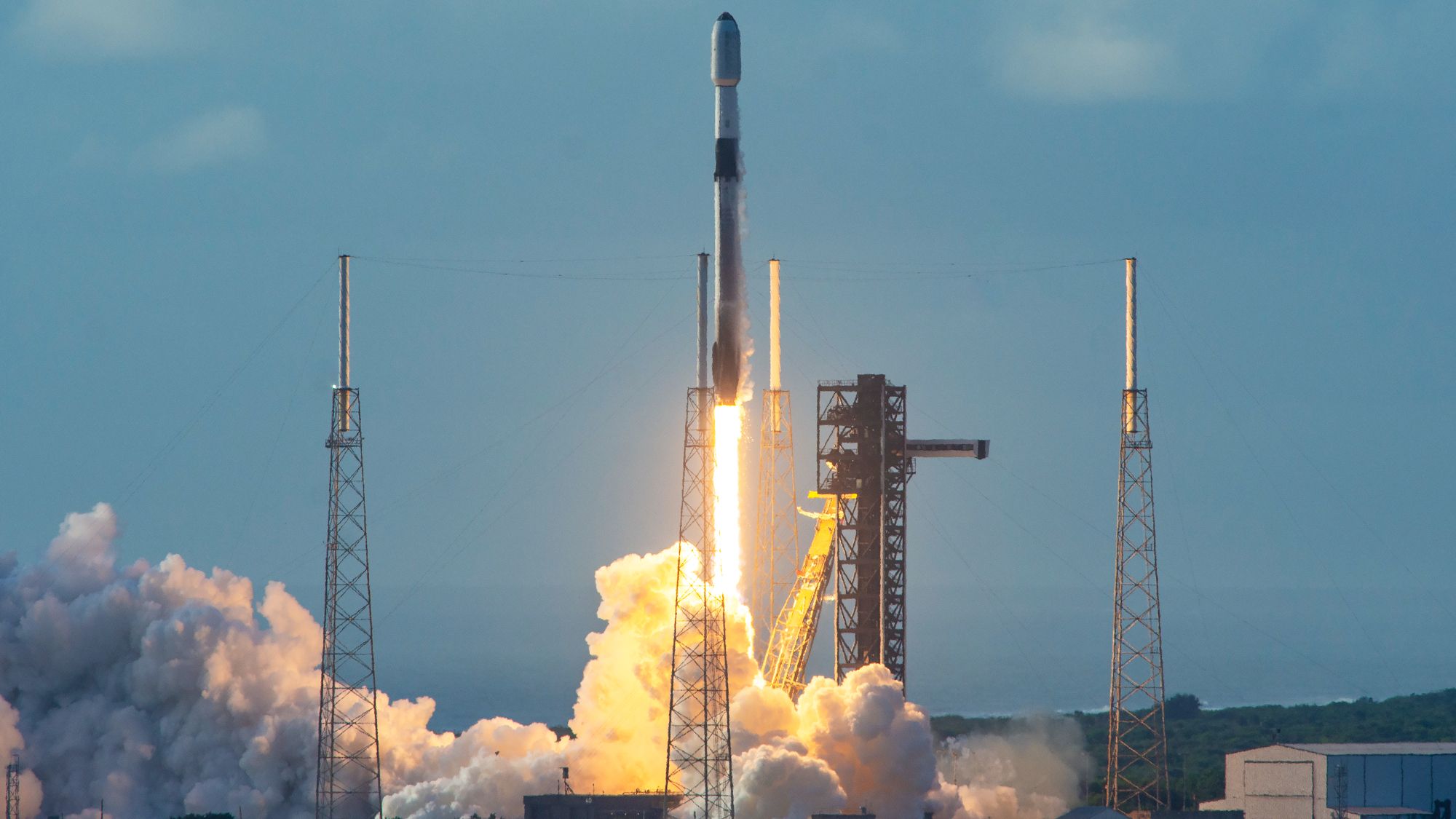
SpaceX is launching 28 Starlink satellites, pushing its total constellation past 10,000 spacecraft and marking a record 31st flight for a single Falcon 9 booster. This milestone underscores the rapid expansion and operational efficiency of Starlink, which serves millions globally, and highlights SpaceX's successful strategy of extensive rocket reusability to drive down spaceflight costs and accelerate deployment towards a planned constellation exceeding 30,000 satellites.
SpaceX achieved significant operational milestones with its latest Falcon 9 launch, deploying 28 Starlink satellites to surpass 10,000 in orbit. This mission also marked a record 31st flight for a single Falcon 9 booster (1067), underscoring advanced reusability. The rapid deployment pace, exceeding 89 missions in 2024, highlights Starlink's aggressive expansion strategy and operational efficiency.
Starlink, which began commercial rollout in 2021, now serves millions globally, demonstrating substantial market penetration in the satellite broadband sector. With regulatory permission for 12,000 satellites and a potential constellation of over 30,000, SpaceX is positioned for continued long-term growth. The high operational rate of 8,610 active satellites out of 9,988 launched indicates robust system reliability.
The extensive reusability of the Falcon 9, exemplified by Booster 1067's 31 flights, is central to SpaceX's strategy of reducing spaceflight costs and enhancing efficiency. This approach, coupled with the development of the fully reusable Starship, suggests a sustained competitive advantage in launch services and satellite deployment. These technological advancements are critical for scaling infrastructure and maintaining market leadership.
AI-powered research, real-time alerts, and portfolio analytics for institutional investors.
Overall Sentiment
strongly positive
Sentiment Score
0.80
