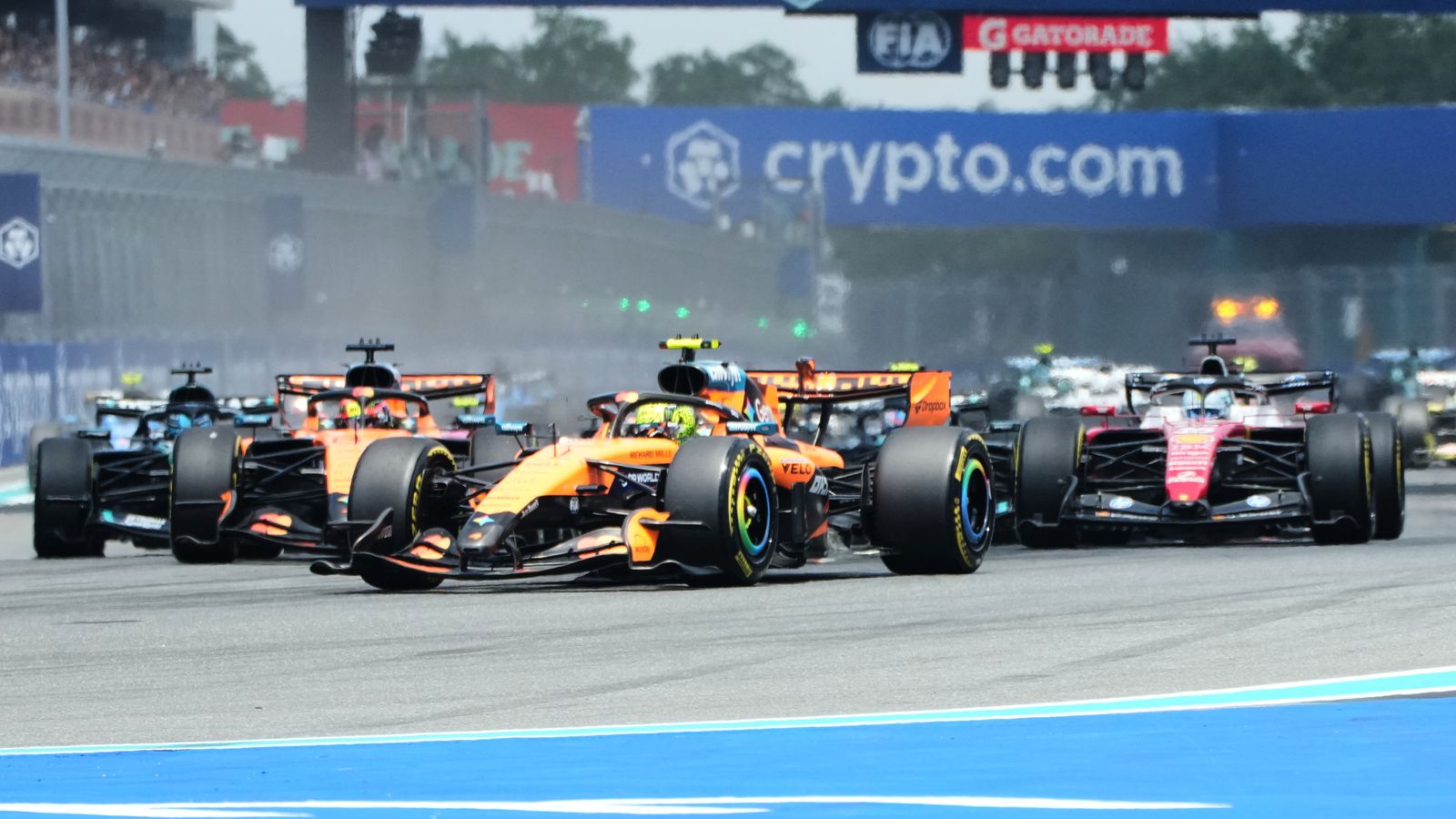
The Miami Grand Prix start time was moved 3 hours earlier to 6pm UK time (1pm local) from the original 9pm UK time due to thunderstorm risk in Florida. FIA, FOM and race organizers said the change is meant to maximize the window to complete the 57-lap race safely before heavier rain arrives. The update is operational rather than financial, with limited broader market impact.
RACE is exposed here less through race outcome and more through event economics and broadcast monetization. An earlier start time reduces cancellation probability, which is the dominant binary for the promoter and rights-holder; the market should treat this as a tail-risk reduction rather than a demand shock. The bigger second-order effect is operational: if weather degrades running quality, the event becomes a higher-volatility TV product, which can be positive for audience retention even if on-track performance is messier.
The competitive dynamic favors teams and drivers with wet-weather adaptability, but in this new-car cycle the real edge may be data scarcity. Limited wet mileage means small setup and tire-management differences can compound into large finishing-order variance, increasing podium dispersion and reducing the predictability that usually supports outright favorites. That makes the market risk around race outcome higher than the incremental weather headline suggests.
Contrarian take: the move earlier is not necessarily bearish for the event; it may actually increase the odds of a clean finish versus a later start into worse storms. For RACE, the key question is whether this becomes a template for future weather-adjusted scheduling, which would modestly improve operational resilience but also highlight the vulnerability of outdoor premium sports to climate-related disruption. Over a multi-year horizon, the more important issue is insurance, staging, and local permitting costs, not one Sunday’s weather.
From a trading lens, the direct equity impact is small, so this is mainly a volatility event in related media and event-exposure names rather than a fundamental read-through. The setup is best expressed tactically around outcome uncertainty and broadcast engagement rather than directional conviction on the race itself.
AI-powered research, real-time alerts, and portfolio analytics for institutional investors.
Request DemoOverall Sentiment
neutral
Sentiment Score
-0.05
Ticker Sentiment
