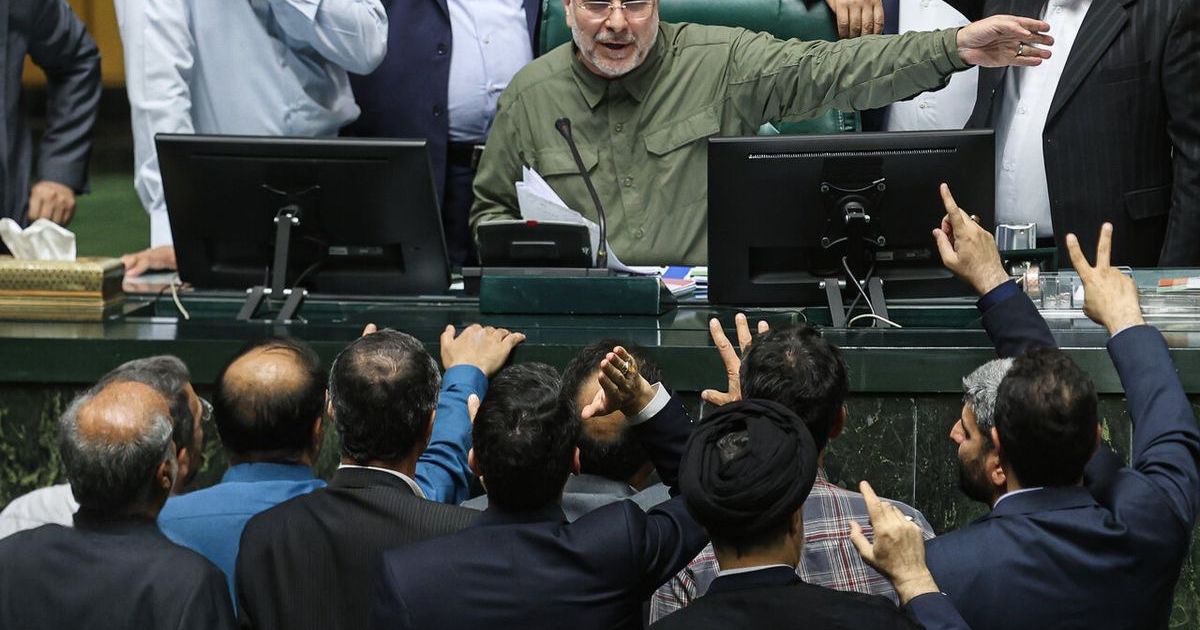
January 2026 protests in Iran triggered an unprecedented crackdown, with the most concentrated episode of repression in the Islamic Republic's history occurring largely within 48 hours on January 8-9. Government fatalities are acknowledged at about 3,000, while rights groups and Iran International cite figures ranging from at least double that to more than 36,000, underscoring the scale of the violence and the information blackout. The unrest and shutdowns raise significant geopolitical risk and could pressure Iranian assets and regional markets through heightened instability.
The market implication is not a direct Iran-specific beta trade so much as a higher probability of regime-hardening across the region. When repression becomes synchronized with communications disruption, the state is signaling that it values control over economic normalization, which raises the discount rate on any asset tied to Iranian liberalization, sanctions relief, or domestic reform. The second-order effect is on risk premia in neighboring EMs: investors typically extrapolate instability from one system into peers with similar governance stress, so Gulf equities and sovereign credit can cheapen modestly even without a direct supply shock.
The more important medium-term transmission is through maritime and energy risk optionality. Large-scale domestic unrest usually narrows the regime’s policy bandwidth and increases the chance of external distraction tactics, whether via proxies, shipping harassment, or faster nuclear brinkmanship. That means the tail risk is not an immediate crude supply interruption, but a higher convexity of oil and defense assets over the next 1-6 months if Tehran needs to reassert deterrence externally while suppressing internally.
A contrarian read is that the violence may reduce, not increase, near-term escalation risk if the leadership concludes that domestic fragility makes a broader foreign-policy confrontation too costly. In that case, the overreaction trade is in the geopolitically sensitive names rather than broad EM risk. The information blackout also matters for event-driven positioning: when verification is impaired, headlines can become less predictive and more rumor-driven, which tends to widen bid/ask spreads and punish crowded macro shorts.
For investors, the key is to separate a 48-hour repression event from a multi-quarter regime-risk regime shift. The base case is persistent political risk with limited immediate market transmission; the fat-tail case is a regionalization of conflict or sanctions escalation. That asymmetry favors low-carry convexity rather than outright directional EM bets.
AI-powered research, real-time alerts, and portfolio analytics for institutional investors.
Request TrialOverall Sentiment
extremely negative
Sentiment Score
-0.95
