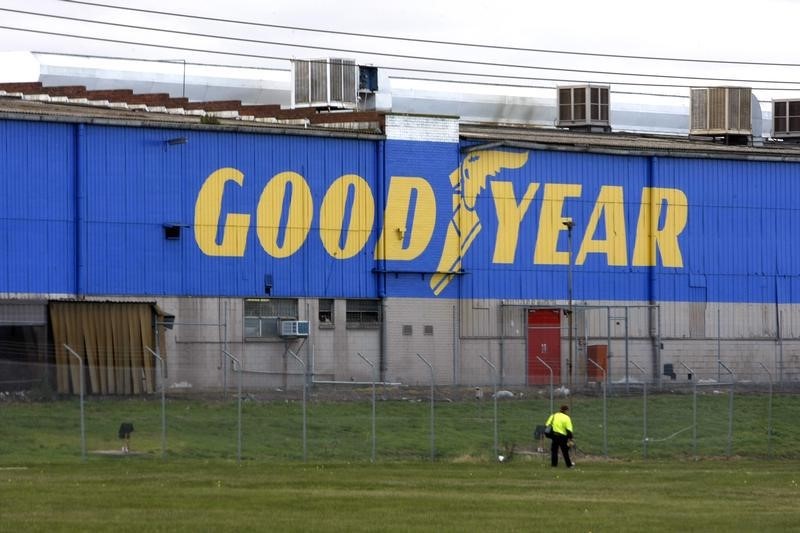
Deutsche Bank downgraded Goodyear Tire & Rubber to Hold from Buy and cut its price target to $7 from $9, citing second-half raw material headwinds tied to Middle East conflict sensitivity. The stock has fallen 40% over the past year, is trading near its 52-week low of $6.14, and dropped 6% after earnings despite Q1 2026 EPS of -$0.39 versus -$0.42 expected and revenue of $3.88B versus $3.81B consensus. The firm said re-rating is unlikely until geopolitical tensions ease and raw material prices normalize.
GT is a classic input-cost squeeze story where the equity has already discounted weak near-term fundamentals, but not necessarily the full dispersion in outcomes across the tire supply chain. The key second-order effect is that upstream latex/synthetic rubber and freight-linked cost pressure will hit manufacturers with the least pricing elasticity first, while larger diversified players and OEM-exposed suppliers with indexed contracts can preserve margin share. That means the relative trade is less about “tire industry weak” and more about who has contractual pass-through and who is forced to eat spot-cost volatility for 1-2 quarters.
The bearish setup on GT is likely most acute over the next 30-90 days, when margin revisions matter more than headline revenue beats. If oil/rubber inputs keep easing, the stock can rally sharply off a deeply washed-out base, but the mechanism for a durable re-rate remains absent until investors see evidence that gross margin inflects before volume deterioration. A stabilization in Middle East risk would matter more than another small EPS beat because the equity is trading on confidence in future pricing power, not current execution.
The contrarian read is that consensus may be overestimating how quickly lower oil feeds through to this name. Input relief is usually lagged, while competitive pricing pressure from low-cost imports can keep replacement-tire pricing from fully capturing the benefit; that creates a window where the stock looks cheap on trailing metrics but remains a value trap. The better tell is whether peers with better pass-through trade relatively stronger: if they do, GT likely stays a short on rallies rather than a value long.
AI-powered research, real-time alerts, and portfolio analytics for institutional investors.
Overall Sentiment
moderately negative
Sentiment Score
-0.45
Ticker Sentiment
