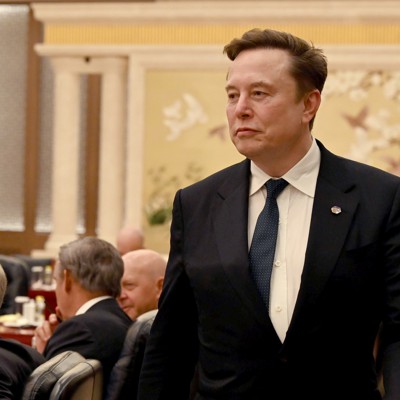
SpaceX’s S-1 highlights a material governance risk: Elon Musk’s outside entanglements, including Tesla, Neuralink, the Boring Company and prior political ties, could disrupt operations and strain customer relationships. The filing also flags that about one-fifth of revenue comes from U.S. government business, while foreign customers may be deterred if SpaceX is seen as too closely aligned with the U.S. government or military. The document specifically cites the Brazil episode, where $3.3 million was seized from Starlink and X, as evidence that Musk-related conduct can create direct business risk.
The market is likely underpricing how much of SpaceX’s government franchise is now a function of Musk’s political optionality rather than pure technical execution. That matters because government demand is sticky until it suddenly isn’t: procurement relationships can survive controversies for quarters, then reprice fast when counterparties sense reputational or legal spillover. The second-order risk is not just contract loss, but slower award cycles, more onerous compliance reviews, and higher counterparty caution from international buyers who do not want to be collateral damage in Musk-related disputes.
For TSLA, this is a governance discount issue that can widen even without any change in automotive fundamentals. The key insight is that investor tolerance for Musk risk is asymmetric: upside from his brand and speed is already embedded, while downside from external political/legal entanglements is a low-probability, high-salience overhang that can compress the multiple by 1-2 turns during periods of controversy. That means the impact is more about valuation elasticity than earnings revisions, and it can show up quickly on sentiment rather than slowly through fundamentals.
The contrarian view is that the market may already be over-extrapolating a headline risk into a durable revenue problem. If SpaceX’s core launch and satellite demand remain execution-led, the actual economic damage may be contained to a modest risk premium rather than a material cash-flow hit. The real catalyst to reverse the trade would be a deliberate separation of Musk’s political identity from operating governance — for example, clearer delegation, insulation from public controversy, or improved board/process signaling — which could remove the discount without needing any change in the business mix.
AI-powered research, real-time alerts, and portfolio analytics for institutional investors.
Request DemoOverall Sentiment
mildly negative
Sentiment Score
-0.35
Ticker Sentiment
