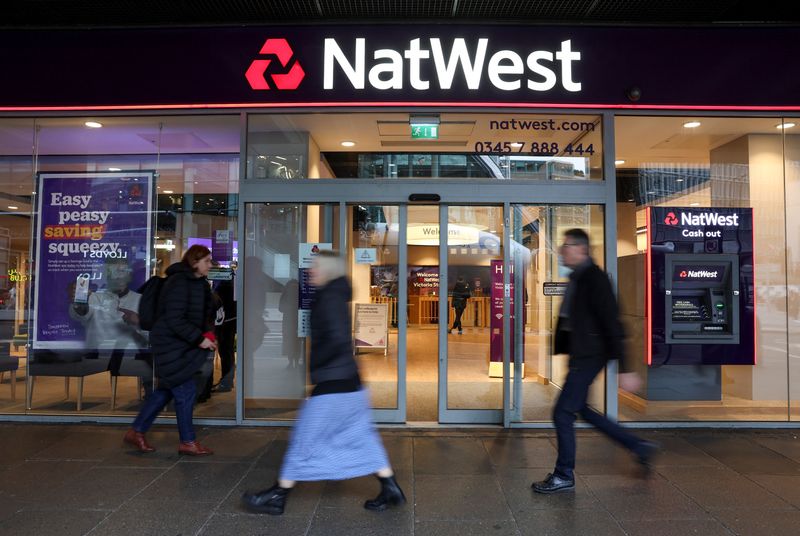
NatWest posted Q1 attributable profit of £1.43 billion, beating the £1.34 billion consensus, and raised its full-year income outlook to the top end of the £17.2 billion-£17.6 billion range. Return on tangible equity reached 18.2% versus 17.3% expected, EPS was 17.9p versus 16.8p, and the CET1 ratio improved to 14.3% after generating 65bps of capital. Offsetting the beat, total income excluding notable items of £4.2 billion missed the £4.30 billion estimate and the bank flagged weaker economic assumptions and uncertainty tied to trade tensions and Middle East risks.
The clean takeaway is not just that NWG is executing well, but that it is still early in a favorable operating leverage cycle. With capital generation running above dividend needs and CET1 still comfortably above target, the bank has optionality to do more than simply defend payout: it can lean into buybacks or M&A integration without stressing the balance sheet, which usually supports re-rating versus UK peers that are more capital-constrained.
The bigger second-order effect is on relative valuation within UK financials. If NatWest can grow income while keeping credit losses contained despite a softer macro backdrop, the market will likely reward the franchises with stronger deposit franchises and lower loan-to-deposit sensitivity; that argues for a spread trade versus more rate-sensitive or higher-cost competitors. The modest guide-up, however, leaves room for disappointment because consensus is still slightly ahead on a like-for-like basis, so the next leg higher likely requires either a better-than-feared credit cycle or clearer accretion from deal completion.
Near term, the main risk is that the benign impairment picture proves cyclical rather than structural: a weaker UK growth path, rising unemployment, or a delay in rate cuts would pressure loan growth and push provisions higher over the next 2-3 quarters. That said, the stock should be relatively insulated on days when markets focus on capital strength and shareholder returns, while any macro scare is more likely to re-open the debate on reserve build and multiple compression than on solvency.
The contrarian angle is that investors may be underestimating how much of the upside is already embedded in the sector narrative. The update improves confidence, but it does not obviously change the medium-term earnings power enough to justify aggressive multiple expansion unless the bank starts converting excess capital into larger distributions faster than expected.
AI-powered research, real-time alerts, and portfolio analytics for institutional investors.
Request DemoOverall Sentiment
moderately positive
Sentiment Score
0.65
Ticker Sentiment
