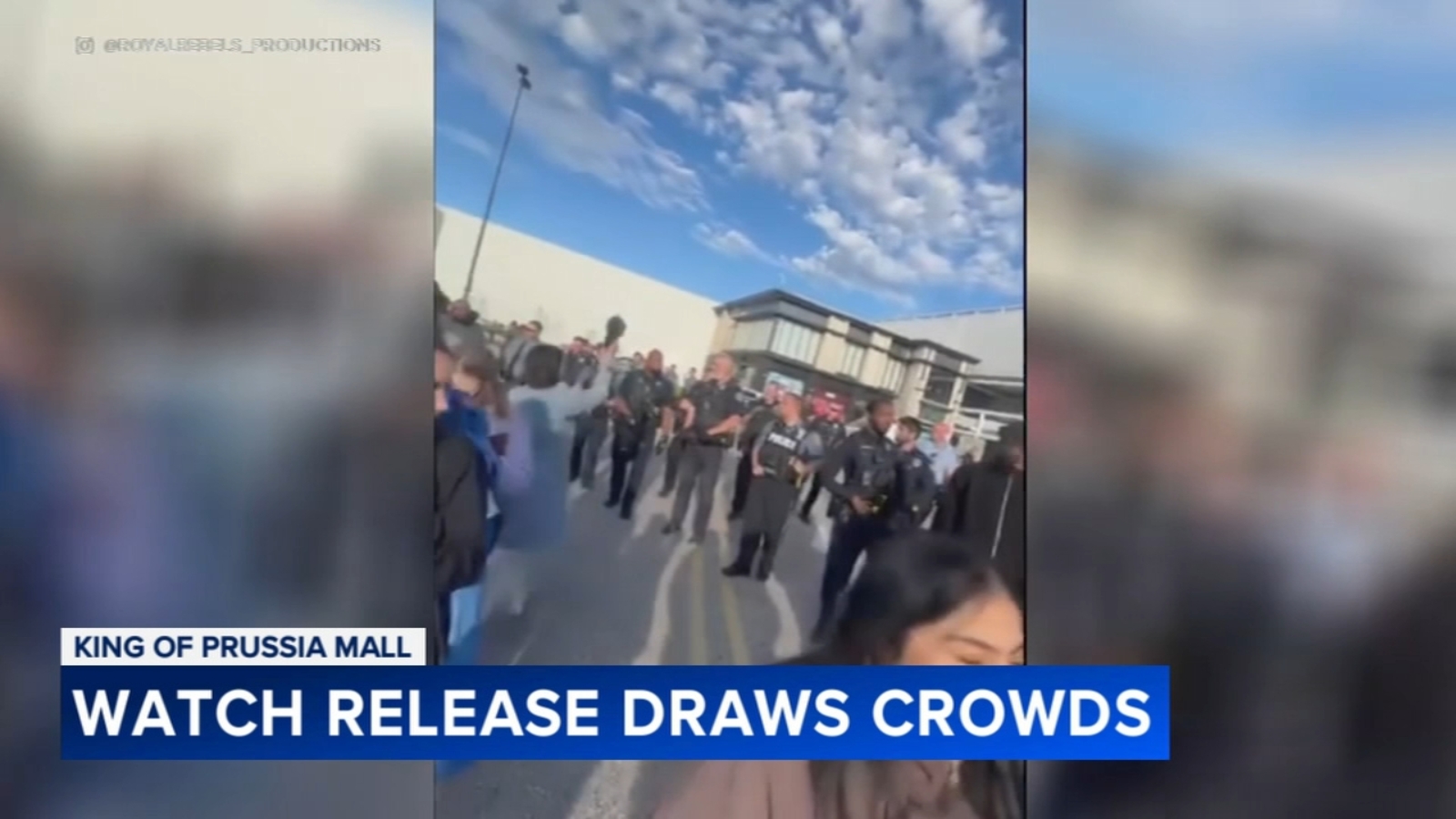
Hundreds of shoppers rushed the King of Prussia Mall before dawn for Swatch's new Royal Pop pocketwatch, triggering a heavy police response, a two-hour delayed opening, and one arrest for defiant trespassing. The watch, sold at roughly $400 and reportedly trading near $3,000 on the resale market, highlights strong collector/reseller demand but also operational challenges at launch events. Swatch later said customers should not rush stores and that the Royal Pop Collection will remain available for several months.
This is a small but useful signal that scarcity marketing is still working, but it also shows how fragile premium-collab drops become once resale economics are obvious to the market. The immediate winner is not the brand owner so much as the secondary market ecosystem: authentication platforms, resale marketplaces, and adjacent streetwear/liquidity intermediaries capture the spread whenever retail pricing lags true clearing value. The first-order demand is real; the second-order effect is that highly visible disorder can actually widen the launch-day premium by validating the item as a status asset.
The longer-duration risk sits with the luxury brand, not the mall. If releases increasingly require police presence or end in canceled in-store allocation, the brand damages its ability to convert hype into broad-based desirability and may force a pivot to lottery, app-based, or invite-only distribution. That typically reduces the “camp-out” spectacle but also compresses the reseller float, which can either stabilize aftermarket prices or, if supply is enough, cause a sharper drop once speculative buyers realize they missed the easy arb.
The contrarian read is that this is less a demand story than a microstructure story. When consumers expect a 5-7x markup on day one, the market is no longer pricing the product for use value; it is pricing a short-duration option on scarcity. That tends to be self-limiting over months: as more collaboration supply becomes predictable, the resale premium narrows and the launch-day frenzy fades even if the core brand remains healthy.
For broader retail, the takeaway is operational: malls and premium retailers may need staffed queues, digital reservations, or off-site pickup to protect conversion on future drops. Failure to do so risks alienating high-intent shoppers while rewarding resellers and increasing security costs, which is a bad mix for margin and tenant experience.
AI-powered research, real-time alerts, and portfolio analytics for institutional investors.
Request DemoOverall Sentiment
neutral
Sentiment Score
0.10
