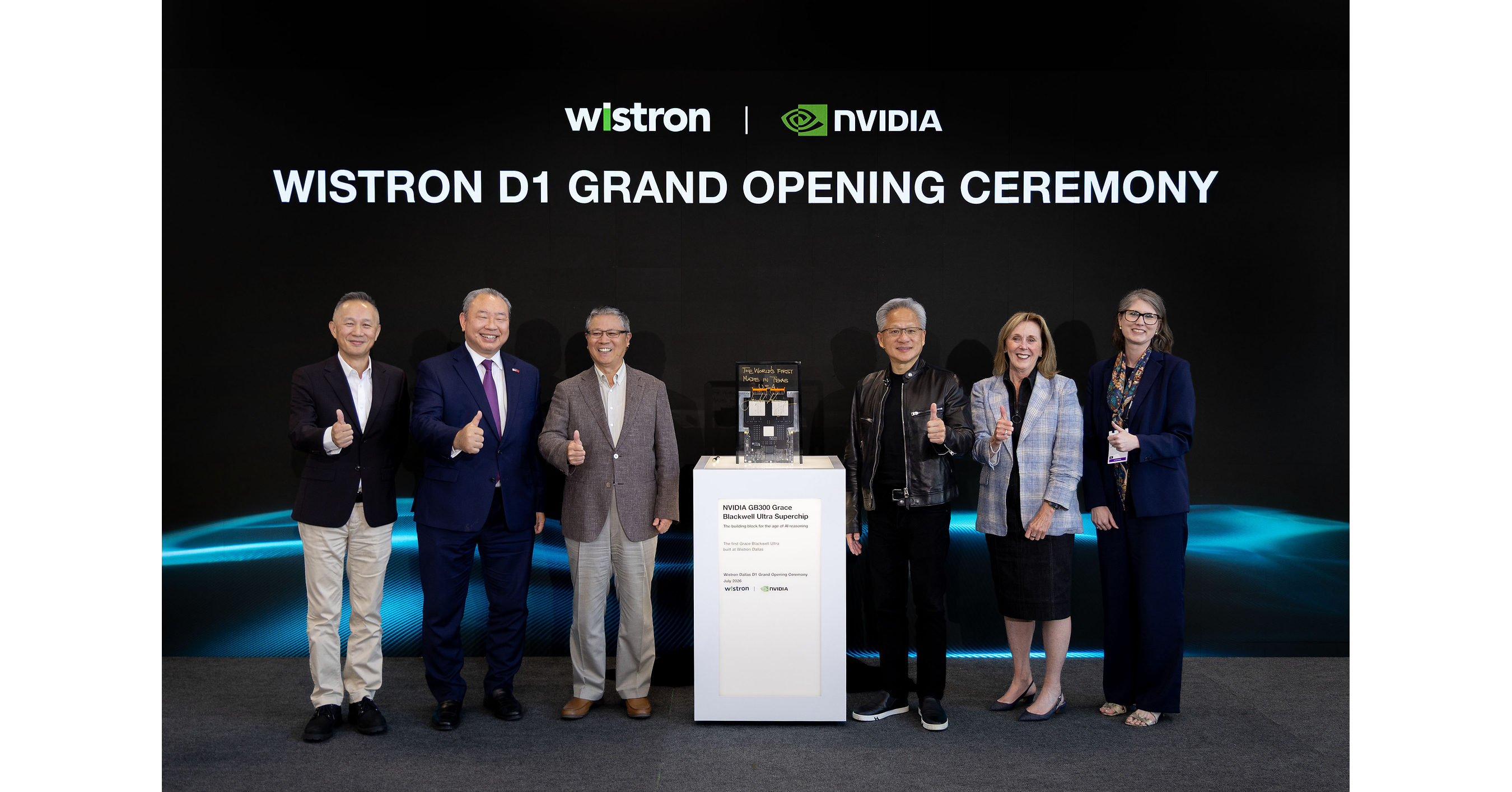
Wistron inauguró su D1 AI Smart Facility en Fort Worth (Texas) con una inversión de USD 700 millones y 324,000 pies cuadrados. La planta fabricará en serie el superchip NVIDIA GB300 Grace Blackwell Ultra y, próximamente, el NVIDIA Vera Rubin, ampliando la capacidad de armado y pruebas de infraestructura de IA local en EE. UU. El anuncio, respaldado por Jensen Huang y Simon Lin, sugiere un impulso positivo a la cadena de suministro de IA y a las capacidades de fabricación avanzada, aunque con impacto directo de corto plazo limitado para mercados más amplios.
This is more a supply-chain de-risking event than a demand inflection. For NVDA, the economic value is not the factory itself but the ability to convert hyperscaler capex into shipped systems with fewer geopolitical and logistics interruptions; that can support a modest multiple premium on durability, not a material near-term EPS step-up. The market should treat this as incremental reassurance that GB300/Vera Rubin rollout can scale, which matters most when customers are choosing whose roadmap they can commit to 12-18 months out.
Second-order beneficiaries are the Taiwan-centric assembly ecosystem and adjacent U.S. industrial inputs that sit around AI-server buildouts: power management, cooling, electrical gear, and logistics. The flip side is that U.S. localization usually raises labor and compliance costs, so if the localization push broadens, margin pressure can migrate from NVDA into its manufacturing partners rather than disappear. That means any positive read-through is likely to show up first in delivery cadence and customer confidence, and only later in revenue acceleration.
The contrarian take is that the market may be over-attributing revenue to what is mostly a geopolitical insurance policy. If investors already assume endless AI capacity, then a new plant does little; if they worry about supply bottlenecks, it helps. The thesis would be weakened if NVDA still cites constrained lead times or if gross margin guidance slips, which would indicate the U.S. build is raising cost per unit faster than it improves throughput.
AI-powered research, real-time alerts, and portfolio analytics for institutional investors.
Overall Sentiment
moderately positive
Sentiment Score
0.40
Ticker Sentiment
