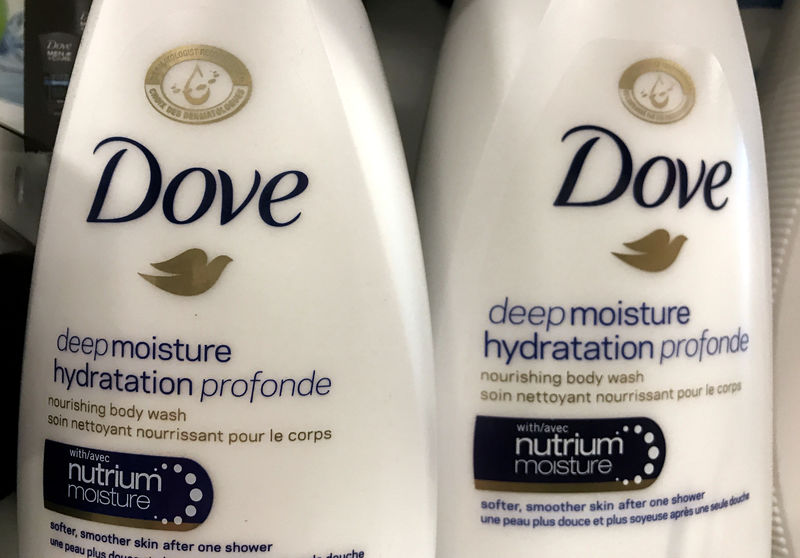
Unilever reported Q1 underlying sales growth of 3.8%, ahead of the 3.6% consensus, with volume up 2.9% versus 1.8% expected. Power Brands led with 5.0% underlying sales growth, while all business groups posted volume gains and emerging markets remained a key driver, including a strong performance in India. The company kept full-year guidance unchanged, maintained its outlook for 4%-6% underlying sales growth at the bottom end of the range, and started its €1.5 billion buyback today.
UL is signaling that its operating model is finally translating into volume rather than price-led growth, which matters because volume is the cleaner proof point that margin expansion can compound rather than mean-revert. The mix is constructive: broad-based emerging-market strength plus branded-product momentum suggests the company is taking share in categories where distribution breadth and shelf execution matter more than short-cycle promotion intensity.
The second-order implication is that the best-performing consumer staples names over the next few quarters may be those with EM exposure and pricing discipline, not the highest nominal sales growth. If demand is truly inflecting in India and Latin America, local competitors and private-label players face a tougher environment because UL can leverage scale in procurement and media, while buybacks reinforce per-share EPS even if top-line growth stays mid-single-digit.
What the market may be underestimating is how sensitive this setup is to FX and input costs. A decent volume quarter can still get swamped if EM currencies weaken or if freight/commodity inputs re-accelerate, so the durability of the move is more of a 2-3 quarter question than a one-week catalyst trade. The buyback provides a floor, but it also creates a potential fade point if the market starts to price in peak-margin complacency.
Contrarian view: this is less a “breakout” than a confirmation that expectations were too low. The upside from here is probably in rerating the quality of growth, not in multiple expansion, so chasing the stock after a clean print is lower conviction than owning it on dips or using it as a relative-value long against slower-growth staples with weaker EM leverage.
AI-powered research, real-time alerts, and portfolio analytics for institutional investors.
Request DemoOverall Sentiment
moderately positive
Sentiment Score
0.45
Ticker Sentiment
