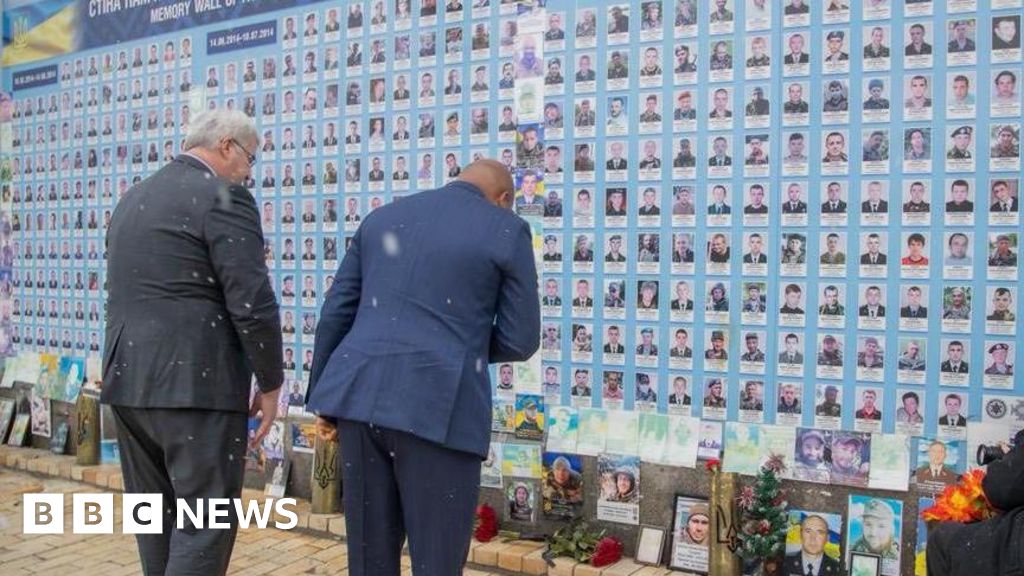
Ghana's foreign minister reported at least 55 Ghanaians have been killed fighting in the Russia-Ukraine war and two are held as prisoners of war, while Ukrainian authorities estimate about 272 Ghanaians were recruited into the conflict since 2022. Accusations of criminal trafficking and illegal recruitment networks have prompted Ghana to pursue dismantling dark‑web schemes and run awareness campaigns, and Ghana has sought the return of detainees; related reports indicate similar recruitment and casualties across several African countries. The developments increase reputational and geopolitical risk for West African labor migration and could spur diplomatic, legal and enforcement actions in affected jurisdictions, though direct market effects are likely limited.
Market structure: The immediate winners are listed Western defense primes (e.g., LMT, NOC, GD) and cybersecurity firms (CRWD, PANW, FTNT) as governments commit to tracking dark‑web recruiters and ramping security spending; losers are Ghana sovereign debt, Ghana/Africa consumer and remittance‑dependent sectors, and private security recruiters. Expect pricing power shift to prime defense contractors and SaaS cyber vendors (recurring revenue), while illicit recruitment supply contracts if enforcement intensifies, raising risk premia for private military contractors.
Risk assessment: Tail risks include widespread social unrest in remittance‑dependent countries, diplomatic rupture with Russia, or sanctions on intermediaries — each could widen Ghanaian sovereign CDS by 200–500bps. Near term (days–weeks) will be headline‑driven sovereign spread/FX volatility; medium (3–12 months) for policy and prosecutions; long term (12–36 months) for structural defense and cyber budgets. Hidden dependencies: remittances, labor flows from Gulf states, and crypto payment rails used by traffickers.
Trade implications: Tactical allocations: small, diversified long exposure to defense (1–2% portfolio) and cyber (1%) with 3–12 month horizons; hedge EM/Africa sovereign risk using CDS or 3‑month EEM put protection sized to 0.75–1% portfolio. Cross‑asset: expect Ghana cedi weakening vs USD, gold appreciation, broader EM risk‑off; use pair trades (long LMT, short EEM) to capture relative conviction.
Contrarian angles: The consensus buys defense and shorts EM sovereigns; overlooked is opportunity in listed African security/cyber vendors and private‑equity targets that may receive grants—these can re‑rate on remediation contracts. Also, if Ghanaian authorities rapidly repatriate prisoners and contain rhetoric within 30–60 days, sovereign spreads may snap back 30–60%, creating a mean‑reversion long entry.
AI-powered research, real-time alerts, and portfolio analytics for institutional investors.
Request DemoOverall Sentiment
moderately negative
Sentiment Score
-0.50
