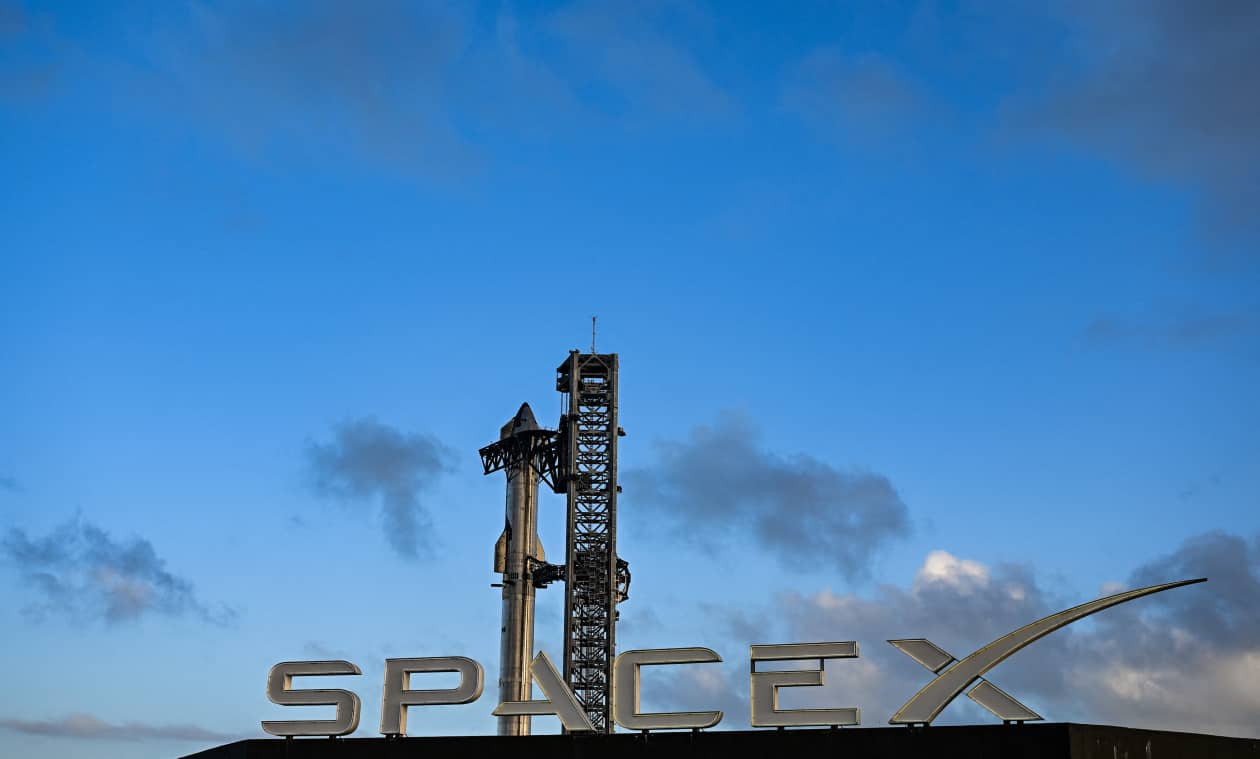
Investment in the space economy hit a record $36 billion in Q1, up from $6.7 billion a year earlier, according to Space Capital. That followed a previous quarterly high of $26.4 billion in Q2 2025, underscoring strong venture appetite for space-related assets ahead of a potential SpaceX IPO. The article highlights rising enthusiasm around Elon Musk, moon missions, and space-based data centers.
The bigger signal is not that space is suddenly a new asset class; it is that private capital is now underwriting a much shorter path from narrative to monetization. When funding surges this quickly, the second-order winners are often not the launch providers but the “picks-and-shovels” layer: propulsion suppliers, RF/component vendors, ground-station infrastructure, and data-center power/cooling ecosystems that can attach to multiple programs regardless of which prime wins the launch cadence.
Near term, the trade is mostly a sentiment and funding-cycle bet, not a fundamental earnings story. That means the risk is a sharp air-pocket if the IPO window closes, the launch/reliability tape worsens, or broader growth multiples compress; private-market enthusiasm can reverse in weeks, while actual revenue ramps take years. The most fragile part of the thesis is space-based data centers: they require not just launch cost declines, but thermal management, maintenance, and insurance assumptions that are still largely unproven at scale.
Contrarianly, the current enthusiasm may be underpricing capital intensity and execution risk. A record private-market quarter can coexist with poor public-market follow-through if investors realize the sector is being valued on addressable market rather than path-to-cash-flow. The best asymmetry is likely in enablers with existing cash flows, not in pre-revenue pure plays; those companies can capture upside from sector spending without needing the market to fully believe the end-market story.
Over a 3-12 month horizon, I’d expect the first-order beneficiaries to be firms exposed to defense-space procurement, satellite components, and terrestrial infrastructure tied to space data traffic. The key catalyst to watch is whether the next funding wave converts into IPOs with credible unit economics; if not, the sector may still be investable, but only through a narrower set of suppliers and infrastructure names rather than the broad theme.
AI-powered research, real-time alerts, and portfolio analytics for institutional investors.
Request TrialOverall Sentiment
moderately positive
Sentiment Score
0.60
