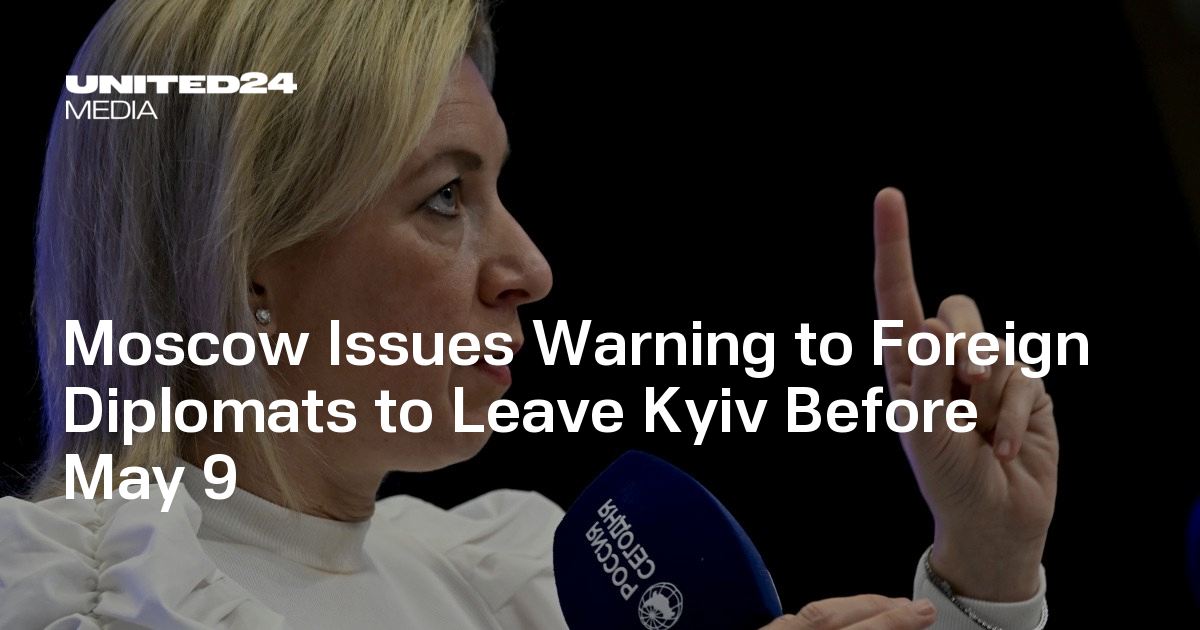
Russia issued an official warning for foreign diplomats and international organizations to evacuate Kyiv before May 9, citing an imminent retaliatory strike if Ukraine attacks Moscow on Victory Day. The exchange escalates wartime tensions, with Moscow framing its response as defensive and President Zelenskyy signaling mirror-like retaliation. The heightened risk of strikes around May 9 raises the chance of market disruption across regional assets and defense-related headlines.
This is less about a single headline and more about the market repricing the probability of an escalation window around a hard calendar date. The key second-order effect is not just energy or defense beta; it is a temporary spike in operational risk premia across any assets exposed to Eastern Europe logistics, sovereign risk, and counterparty settlement friction. In the next 3-7 sessions, the market typically overweights tail scenarios and underweights the fact that most such warnings are deterrence signaling, so headline volatility can outrun realized damage.
The more actionable read-through is that air-defense, ISR, drone, electronic warfare, and munitions replenishment demand remain structurally supported even if the immediate event passes without incident. If escalation is limited, defense equities may initially fade the news, but procurement backlogs will not: European rearmament and stockpile restocking are multi-quarter spend drivers that are now becoming politically harder to delay. The winners are firms with near-term production capacity and visible order conversion, not pure concept names.
A broader contrarian point: the market may be too focused on the binary strike/no-strike outcome and too little on the signaling function. Even absent a kinetic surprise, this kind of warning increases the perceived probability that diplomatic activity is being subordinated to military sequencing, which can keep risk premiums elevated for months. The downside case for defense longs is not de-escalation per se, but budget slippage if European fiscal constraints reassert before contracts are signed.
For cross-asset positioning, the most interesting spillover is in Europe-sensitive cyclicals and transport, where even a short-lived disruption can widen spreads and delay shipments. Any reopening of shipping/insurance risk around the Black Sea can also support select commodities and defense-adjacent industrials while pressuring airlines, rails, and logistics names with regional exposure. The move is probably modestly underpriced on duration but fairly priced on immediate headline intensity.
AI-powered research, real-time alerts, and portfolio analytics for institutional investors.
Request DemoOverall Sentiment
moderately negative
Sentiment Score
-0.45
