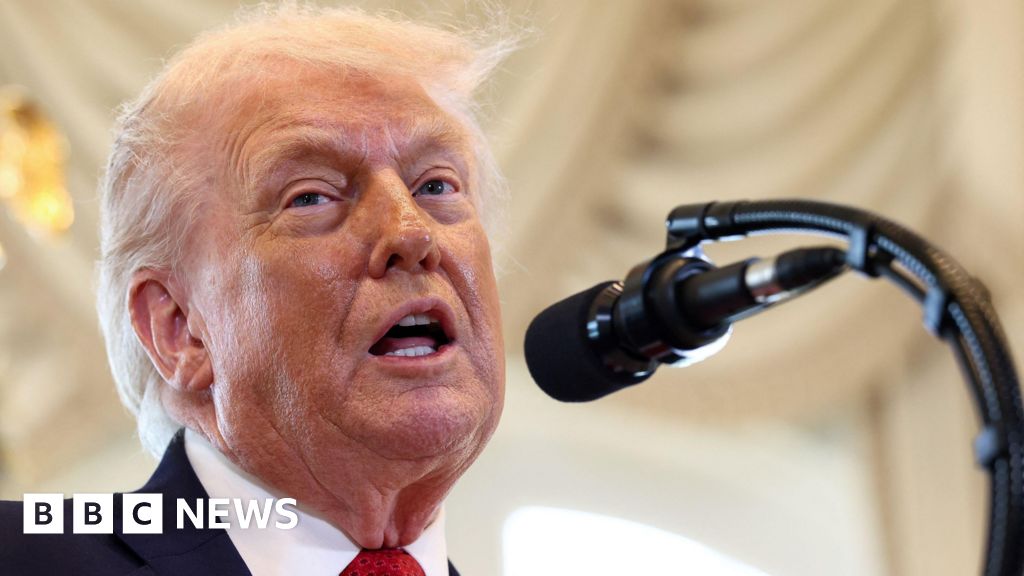
President Trump told Norway's prime minister he no longer feels bound to prioritize peace after being passed over for the Nobel Prize and reiterated a demand for “Complete and Total Control of Greenland,” while threatening a 10% tariff on goods from eight NATO allies (including the UK) from Feb. 1 — rising to 25% by June if they oppose a U.S. takeover. Denmark warned any U.S. military action in Greenland would imperil NATO; several European allies have increased reconnaissance and military presence in Greenland, highlighting elevated geopolitical risk in the Arctic and the potential for trade frictions tied to tariff threats.
Market structure is shifting toward defense, ISR/satellite and Arctic resource exposures while exporters to the US face downside risk. Direct winners: large-cap defense primes (Lockheed LMT, Raytheon RTX, Northrop NOC) and ISR/space suppliers (L3Harris LHX) as NATO/Arctic deployments increase; losers: European exporters and UK-centric equities (EWU) if tariffs materialize. Pricing power should rise for defense suppliers over 3–12 months as governments re-prioritize CAPEX; commodity upside most visible in nickel/copper/REEs linked to Arctic mining and shipborne logistics. Tail risks include an escalatory trade war (10% → 25% tariffs by June) or extreme geopolitical action (seizure scenario) that would trigger sanctions and a fast global growth shock — equity drawdown of 10–20% is a plausible low-probability outcome. Time windows: immediate (days) for volatility spikes around Feb 1 tariff deadline; short-term (weeks–months) for policy responses and budget re-allocations; long-term (years) for Arctic infrastructure and mining development. Hidden dependencies: Danish domestic politics, Greenland autonomy and EU coordination; second-order effects include accelerated European defence integration and onshoring of supply chains. Trade implications: tactically long defense primes via cash or 3–6 month call spreads, hedge equities with VIX calls or 2–5y Treasury (TLT) exposure, and underweight UK/Euro exporters (EWU). Pair trades: long LMT/RTX vs short EWU to capture relative re-rating; options: buy VIX 1-month calls into Feb 1 and 3–6 month call spreads on LMT to lever upside while capping premium. Entry/exit: establish initial positions now, scale-in on VIX >20 or sovereign yield compression; take profits on defense at +15–20% or if NATO tensions noticeably de-escalate. Contrarian view: markets may overprice a permanent rupture in alliances — physical seizure is low probability — while underpricing multi-year defense and Arctic infrastructure spending that benefits U.S. primes and select energy/mining players. Historical parallels (2018 tariff episodes) show bouts of headline-driven volatility but durable winners in defense and havens (gold, Treasuries). Unintended consequences: US tariff threats can accelerate EU procurement autonomy, creating new European champions — avoid long-only exposure to legacy European exporters without hedges.
AI-powered research, real-time alerts, and portfolio analytics for institutional investors.
Request DemoOverall Sentiment
moderately negative
Sentiment Score
-0.42
