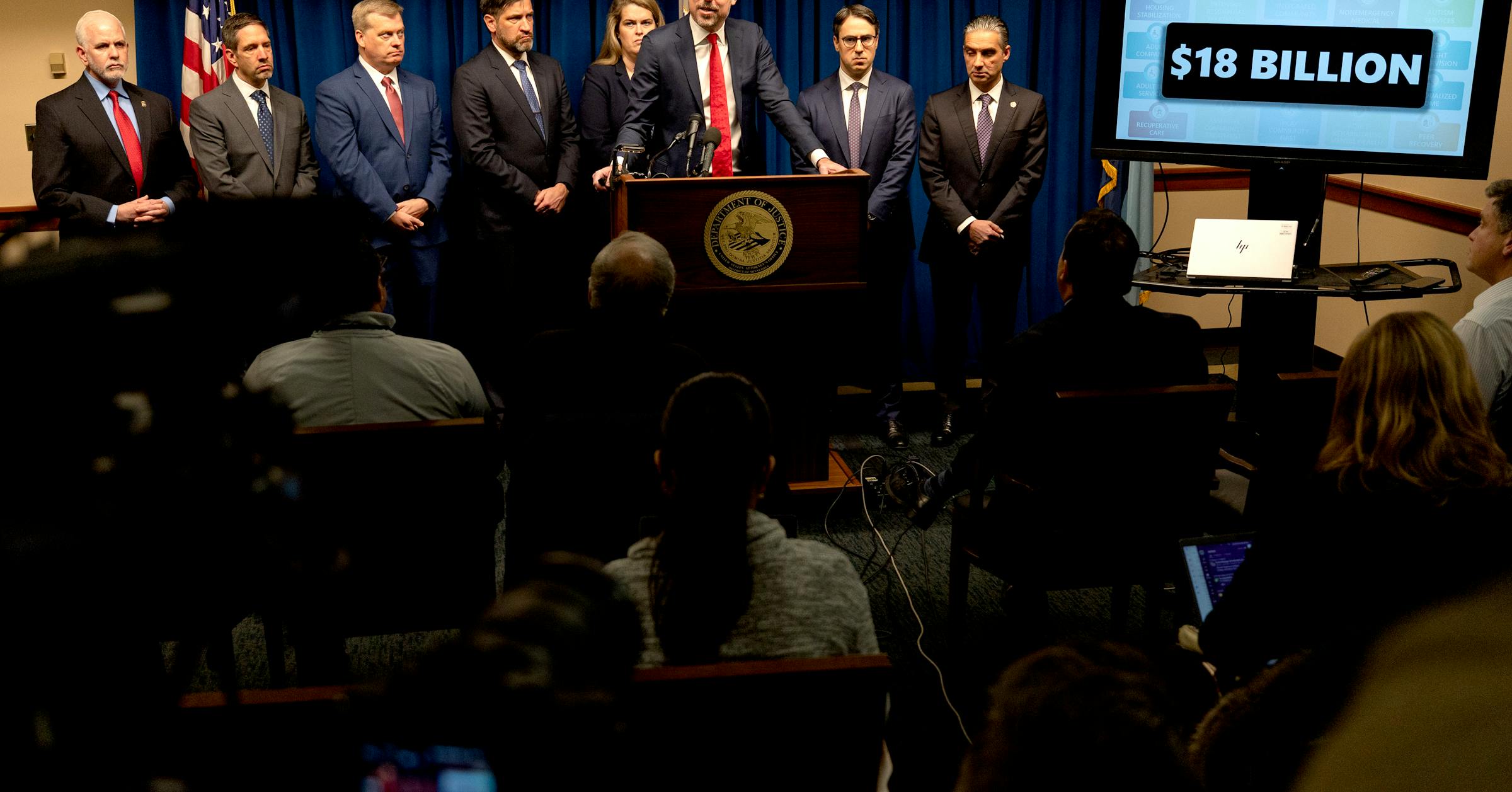
The Trump administration sent thousands of federal agents to Minnesota under 'Operation Metro Surge' to target alleged fraud among Somali immigrants, but two months in officials have provided little evidence of prosecutions while deportations and violent clashes — including the killings of two U.S. citizens — have drawn attention. The effort suffered a major setback when six top federal prosecutors in Minnesota resigned amid a Justice Department probe, raising concerns about capacity to pursue white‑collar fraud; Minnesota DHS reports it has conducted more than 3,000 investigations since 2020 and referred over 500 cases to law enforcement. DOJ, DHS and the U.S. Attorney’s Office did not comment, and experts warn that departures and under‑resourcing have weakened fraud‑fighting capabilities.
Market structure: Federal redeployment to Minnesota creates a clear short-term bid for firms supplying DHS/ICE logistics, detention and law‑enforcement analytics (eg, Palantir PLTR, GEO Group GEO, CoreCivic CXW) as demand for tracking, detention beds and analytics temporarily rises; municipal issuers and local service providers in Minnesota face reputational and operational stress that can widen credit spreads by 10–50bp on small‑issue credits. Competitive dynamics favor contractors with existing DHS/DOJ relationships and cleared personnel; however sustained prosecutorial activity will be constrained by resignations, reducing long‑run pricing power for fraud‑investigation services and shifting demand toward deportation/detention suppliers.
Risk assessment: Tail risks include large‑scale civil unrest spreading to other metros (low probability, high impact) and Congressional funding pullback for DHS (medium probability post‑election) which could wipe out forward revenue for detention contractors; expect immediate volatility (days), contract award/news driven moves (weeks–months), and structural enforcement changes (quarters). Hidden dependencies: many federal moves depend on discretionary appropriations and DOJ staffing; a reversal by Congress or a court injunction could rapidly remove demand. Key catalysts: DHS contract announcements, state lawsuits, DOJ leadership statements in next 30–90 days.
Trade implications: Direct plays: tactical long exposure to PLTR (short‑term DHS analytics demand) and selective long exposure to GEO/CXW for deportation/detention flow, but hedge legal/regulatory tail risk with protective puts or position size limits. Cross‑sector: underweight Minnesota municipal credits and small‑cap regional service providers; rotating into defense primes (RTX, LMT) only after confirmed multi‑month contract ramps. Options: preferred 3‑month call spreads on PLTR (buy 25–35% OTM call, sell 60% OTM) to cap premium while keeping upside.
Contrarian angles: Consensus assumes enforcement = more prosecutions; reality may be fewer prosecutions and more administrative enforcement (deportations) — this undercuts long‑term returns for fraud‑investigation software firms but benefits urgent logistics and detention capacity providers. Reaction may be overdone in detention equities where legal risk is already priced; a 20–40% selloff on adverse court rulings would create re‑entry points. Historical parallel: 2018 enforcement spikes produced front‑loaded contract wins but flattened revenues once political pushback ensued within 6–12 months.
AI-powered research, real-time alerts, and portfolio analytics for institutional investors.
Request DemoOverall Sentiment
moderately negative
Sentiment Score
-0.35
