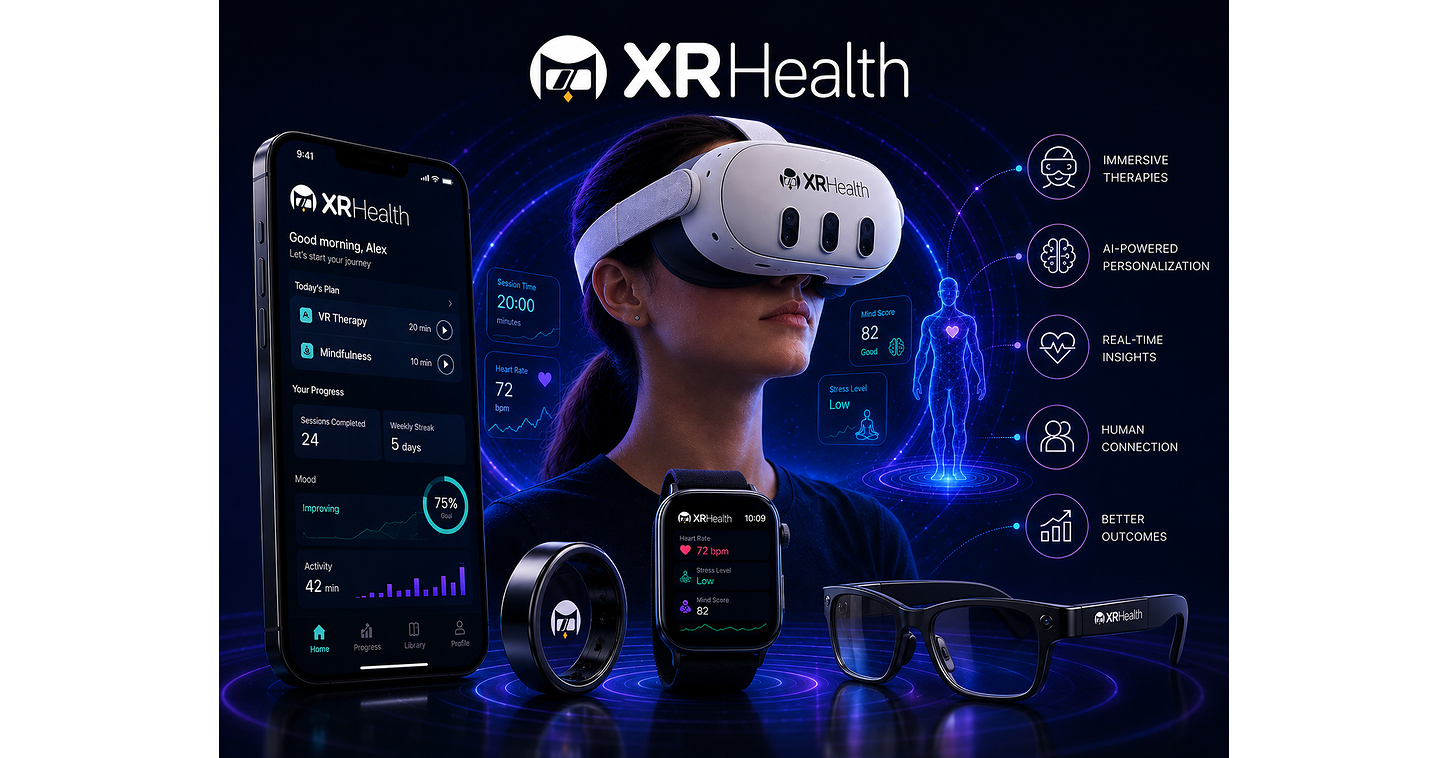
XRHealth announced it is acquiring Swing Therapeutics to expand its AI-powered digital health platform from XR devices into mobile apps, smartwatches, and IoT wearables. The deal adds Swing Therapeutics’ FDA De Novo–authorized Stanza prescription digital therapeutic for fibromyalgia and chronic pain to XRHealth’s existing chronic pain and behavioral health capabilities, creating a broader reimbursable virtual care platform. Swing reported strong outcomes in its 1-year program, with 88.0% of patients reporting improvement in overall wellbeing (PGIC) and 50.2% reporting feeling “much improved” or better.
The important shift is not the acquisition itself; it is the move from a niche device-led product to a reimbursement-friendly care layer that can be delivered on endpoints patients already own. That lowers acquisition friction, widens addressable utilization, and makes the economics more comparable to chronic-care management than to “digital therapeutics” hype, which is where a lot of prior valuation damage came from.
If this works, the first beneficiaries are payers and employers, not the acquirer: a lower-cost substitute for repeated specialist visits, PT, and opioid-adjacent pain management could improve medical-cost ratios over 2-4 quarters. The second-order loser set is broader than the article implies: outpatient pain clinics, behavioral-health point solutions, and any telehealth vendor selling fragmented episodic care will face pressure if bundled, reimbursable digital treatment gains credentialing traction. The key question is whether claims adjudication and prior-auth friction allow the model to scale faster than clinician capacity constraints.
The market should separate near-term announcement optics from the 6-18 month evidence path. In the next 1-3 months, the catalyst is payer acceptance and cross-sell conversion; over 6-18 months, the thesis lives or dies on persistence of outcomes as the platform scales beyond the highest-intent patients. The contrarian risk is that chronic pain is a large problem but a low-velocity buying process: if reimbursement remains patchy, this becomes an integration story rather than a growth inflection, and digital-health multiples stay compressed.
AI-powered research, real-time alerts, and portfolio analytics for institutional investors.
Request TrialOverall Sentiment
moderately positive
Sentiment Score
0.45
