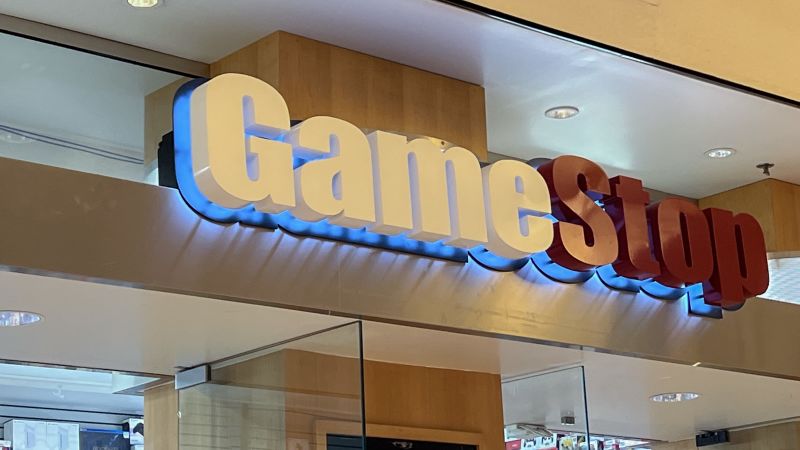
GameStop made an unsolicited $55.5 billion offer for eBay at $125 per share, a 20% premium, but the financing math appears incomplete and analysts questioned the strategic logic. GameStop said the deal would be funded 50% cash and 50% stock, with about $20 billion in debt financing and roughly $9 billion in cash, leaving a sizable gap; shares fell 10% while eBay rose 5%. The article highlights skepticism around GameStop's ability to buy a much larger company and the dilutive risk of issuing new stock.
The immediate market signal is that this is less an M&A proposal than a credibility stress test on GME management. When a company with a much smaller equity base tries to buy a larger asset using a mix of debt, cash, and newly issued stock, the key second-order effect is dilution risk: even if the bid is non-binding, it can pressure GME’s cost of capital for weeks as investors reprice the odds of follow-on equity issuance or covenant slippage. That dynamic is especially toxic for a stock already trading on narrative rather than stable fundamental cash flow.
EBAY looks like the cleaner winner on a near-term basis, but the upside is likely capped unless a real strategic buyer emerges. The bid creates a temporary control premium, yet the more important effect is that it forces the market to revisit monetization optionality around payments, authentication, and managed-fulfillment initiatives without actually changing operating quality. If the offer is rejected quickly, EBAY can still hold a portion of the move because the process puts a floor under strategic value; if the rhetoric escalates, the stock can grind higher on takeover optionality rather than fundamentals.
The biggest hidden beneficiary may be CHWY, not because of direct exposure, but because the market is likely to re-anchor Ryan Cohen’s operating pedigree to a more credible asset-light growth story. A failed bid would likely impair GME’s multiple while leaving the market to speculate that Cohen’s next move is either capital return or a pivot toward a simpler, higher-quality ecommerce adjacency. AMZN is the subtle loser only if investors start talking themselves into an anti-Amazon coalition; in practice, the moat remains unchanged, and any “challenger” narrative should compress back once financing math dominates the headlines.
Contrarian read: the consensus is underestimating how quickly this can become a governance event rather than a strategic one. If the board or lenders force more explicit financing terms, the setup shifts from meme-driven upside to dilution-driven downside in days, not months. Conversely, if GME can demonstrate committed financing or a credible asset sale, the squeeze in the name could reappear fast; the signal to watch is not the deal statement itself, but whether implied borrow tightens and whether management starts talking about stock issuance as a bridge rather than a plan.
AI-powered research, real-time alerts, and portfolio analytics for institutional investors.
Request DemoOverall Sentiment
mildly negative
Sentiment Score
-0.25
Ticker Sentiment
