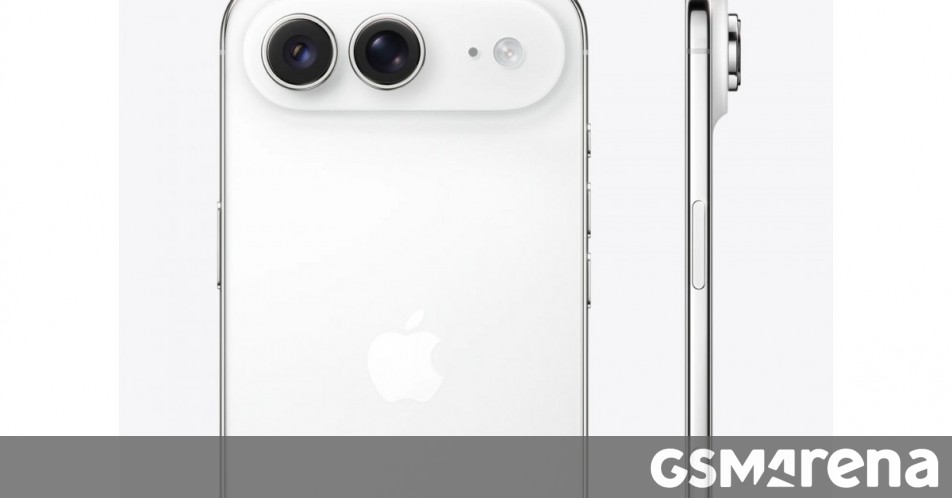
A new tip claims Apple will launch the iPhone Air 2 at the September 2026 fall event, reversing earlier reports that pushed the successor to spring 2027 after weak sales of the original Air; the same source says the lower-cost iPhone 17e has entered mass production for a spring launch. Reported Air 2 upgrades include a dual rear camera, larger battery, vapor-chamber cooling and a lower price point, signalling a product refresh and potential pricing strategy to revive demand. If accurate, the revised timing and mass-production signal could affect Apple’s product cadence and revenue mix for fiscal 2026–27, though the information remains unconfirmed and speculative.
Market structure: A September 2026 launch of a lower‑priced iPhone Air 2 (rumored ~$800 256GB) would shift share toward Apple (AAPL) in the mid‑tier smartphone segment, benefitting component suppliers with advanced cooling/battery/camera products (TSMC/TSM, optics and thermal suppliers) and wireless carriers via incremental activations. Android incumbents (Samsung) and used-phone marketplaces face price and volume pressure; ASP compression of 3–6% is plausible in 12 months unless volumes rise >5–10% to offset. Impact window: product lifecycle 0–12 months post‑launch for handset volumes, 12–36 months for services/installed‑base effects.
Risk assessment: Key tail risks include a delay to spring 2027 (we assign ~15% probability), TSMC capacity squeeze raising component costs 5–10%, or weaker China demand cutting projected volumes by >10%. Near term (days–weeks) volatility centers on rumors and supplier order flow; short term (3–6 months) execution risk from mass‑production; long term (12–36 months) risk to AAPL margins if cannibalization lowers ASP sustainably by >100–200bps. Hidden dependency: success hinges on China replacement cycles and carrier subsidy programs; services upside materializes only if installed base grows by >3% annually.
Trade implications: Tactical plays favor long AAPL exposure into Sep‑Oct 2026 with hedged option structures and selectively long TSM to capture foundry volume; avoid levered exposure to Android OEMs. Options: prefer defined‑risk debit call spreads into the event (5–8% OTM, Sep 2026 expiries) or small straddles if implied vol < historical realized by ≥20%. Rebalance sector exposure toward semis and mobile services stocks 6–18 months if sell‑through data (units/week) shows >5% sequential pickup post‑launch.
Contrarian angles: Consensus treats a cheaper Air as margin negative; we see a plausible services revenue lift—installed base growth of 2–4% could add $0.05–$0.20 quarterly to EPS within 12–24 months, offsetting ASP pressure. Historical parallel: iPhone SE iterations compressed ASPs but expanded lifetime spend; downside is cannibalization of Pro models. Monitor sell‑through, carrier promotions, and TSMC wafer allocation as leading indicators; mispricings appear when supplier stocks don’t reflect confirmed mass‑production (a 5–10% buy window).
AI-powered research, real-time alerts, and portfolio analytics for institutional investors.
Request DemoOverall Sentiment
neutral
Sentiment Score
0.10
Ticker Sentiment
