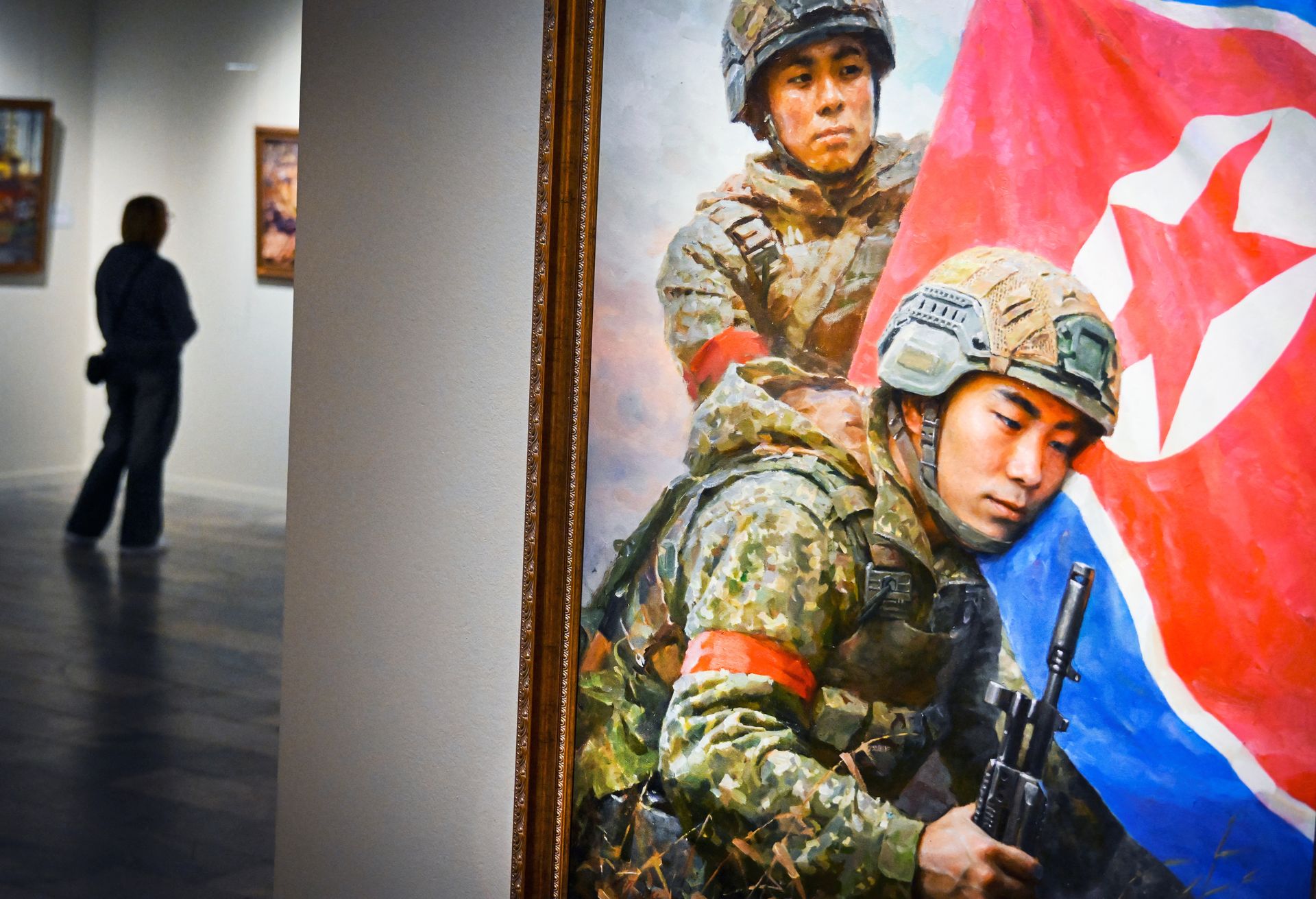
North Korea opened a museum and memorial complex honoring soldiers who fought alongside Russian forces in Ukraine, with Russian Defense Minister Andrei Belousov attending and awarding medals in Pyongyang. The event highlights deepening Russia-North Korea military cooperation, including the reported participation of about 12,000 North Korean troops in the Kursk counteroffensive. Putin also sent a message praising the bilateral relationship, underscoring continued alignment between two sanctioned and isolated states.
This is less a headline risk event than a signal that the Russia–North Korea relationship is maturing from transactional weapons supply into a durable sanctions-evasion ecosystem. The market implication is not direct revenue uplift for listed defense primes, but a higher probability that Moscow can sustain manpower and munitions intensity longer than consensus expects, which extends the planning horizon for European rearmament and keeps the NATO replenishment cycle structurally intact.
The second-order effect is pressure on logistics, ISR, and air-defense supply chains rather than on classic frontline armor names. If Russia can continue to source auxiliary manpower and low-cost shells from the North Korean axis, the marginal advantage shifts toward systems that degrade transport, communications, and ammo depots—areas where Western procurement still has obvious shortages. That favors firms with high exposure to interceptors, EW, space-based ISR, and counter-UAS, because the battlefield adaptation cycle is shortening while inventories remain thin.
The contrarian read is that this is evidence of weakness, not strength: Russia is increasingly dependent on sanctioned partners for labor and matériel, which raises execution risk over months rather than days. Any disruption in elite-level coordination, payment rails, or shipping enforcement could quickly expose the fragility of this arrangement. The most interesting tail risk is not escalation, but overconfidence by Moscow in a deeper war economy that still rests on a narrow set of chokepoints that can be targeted with sanctions, interdiction, and export controls.
AI-powered research, real-time alerts, and portfolio analytics for institutional investors.
Request DemoOverall Sentiment
neutral
Sentiment Score
-0.10
