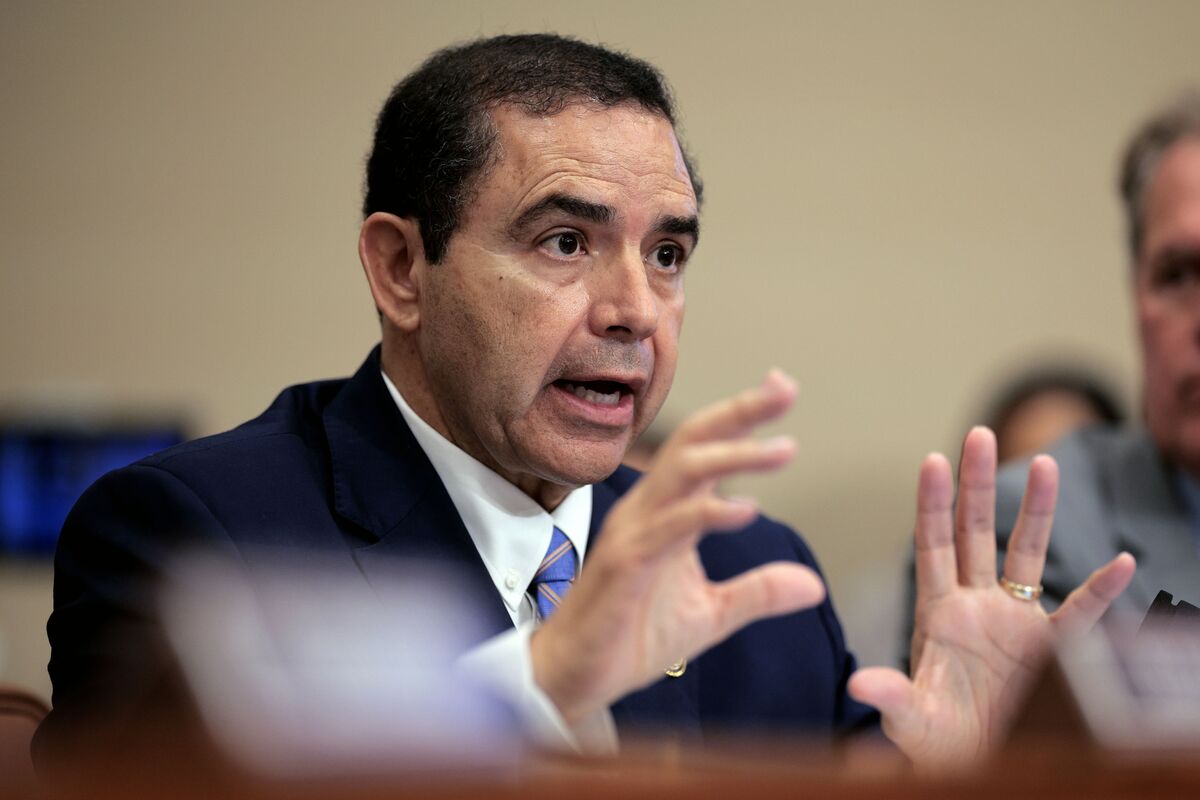
Former President Donald Trump publicly criticized Representative Henry Cuellar after Cuellar announced he will seek reelection as a Democrat following a presidential pardon for Cuellar and his wife, Imelda, on federal corruption charges. Trump characterized the prosecutions as politically driven by the Biden administration; the item is political/legal news with limited direct financial-market implications but potential relevance to near-term domestic political dynamics.
Market structure: This is primarily a political signal, not a macro shock; winners are defense/border-security contractors (LHX, RTX, CACI) and Texas-exposed energy names (XOM, PXD) if rhetoric translates to procurement or state-directed spending; losers are regional municipal credit and consumer cyclicals in politically contested districts if policy uncertainty raises local tax or litigation risk. Competitive dynamics: Increased politicization of prosecutions raises the value of incumbency and firms with government dependency, concentrating revenue upside to a small set of federal contractors and creating pricing power in defense procurement over months (potential 1–3% revenue tailwind in 3–12 months). Cross-asset: expect knee-jerk rise in equity implied volatility (VIX +5–15% on event spikes), MXN downside (1–3% move) on an escalated border narrative, and modest widening in 5–10y Treasury term premium (~5–15bp) around major legal/political milestones. Risk assessment: Tail risks include DOJ politicization leading to regulatory whiplash (higher oversight or spending cuts) or retaliatory state-level litigation that could hurt Texas munis and regional banks (losses concentrated if bank CRE exposure >10%); probability low-medium but impact high over 6–24 months. Time horizons: immediate (days) — noise, watch short-term volatility; short-term (weeks–months) — positioning around primaries and pardons; long-term (quarters–years) — policy/regulatory shifts that reallocate federal budgets. Hidden dependencies: firms with >30% federal revenue and Texas asset concentration are second-order beneficiaries/targets; campaign finance flows can alter procurement pipelines within 6–12 months. Catalysts: additional pardons, DOJ memos, primary outcomes, and midterm funding bills within 30–180 days. Trade implications: Direct plays — establish small tactical longs (1–3% portfolio) in LHX and CACI via 3–6 month call spreads to capture potential procurement upside if political momentum persists; hedge with 1% long VIX calls for event risk. Pair trades — long LHX (1–2%) vs short IWM (1–2%) to express defense/govt-exposure over small-cap domestic cyclicals vulnerable to local political disruption. Sector rotation — trim XLY exposure by 2–4% and redeploy into XLE and defense (LHX) over 2–12 weeks; entry within 2 weeks, take profits at +8–12% or at 3 months, stop-loss -6%. Contrarian angles: Consensus underestimates localized credit and procurement channel impact — markets may underprice a 1–3% earnings swing in defense contractors over 12 months but overprice immediate national-policy change risk; historical parallels (post-pardon political noise 2017–2018) show price moves fade in 30–90 days unless followed by legislative action. Reaction could be overdone if no follow-up policy; unintended consequence — heavy long defense exposure without confirmed budget shifts risks underperformance if oversight or contract freezes occur. Hedge by sizing positions modestly (1–3%) and using calendar spreads to limit theta loss during high event noise.
AI-powered research, real-time alerts, and portfolio analytics for institutional investors.
Request DemoOverall Sentiment
neutral
Sentiment Score
0.00
