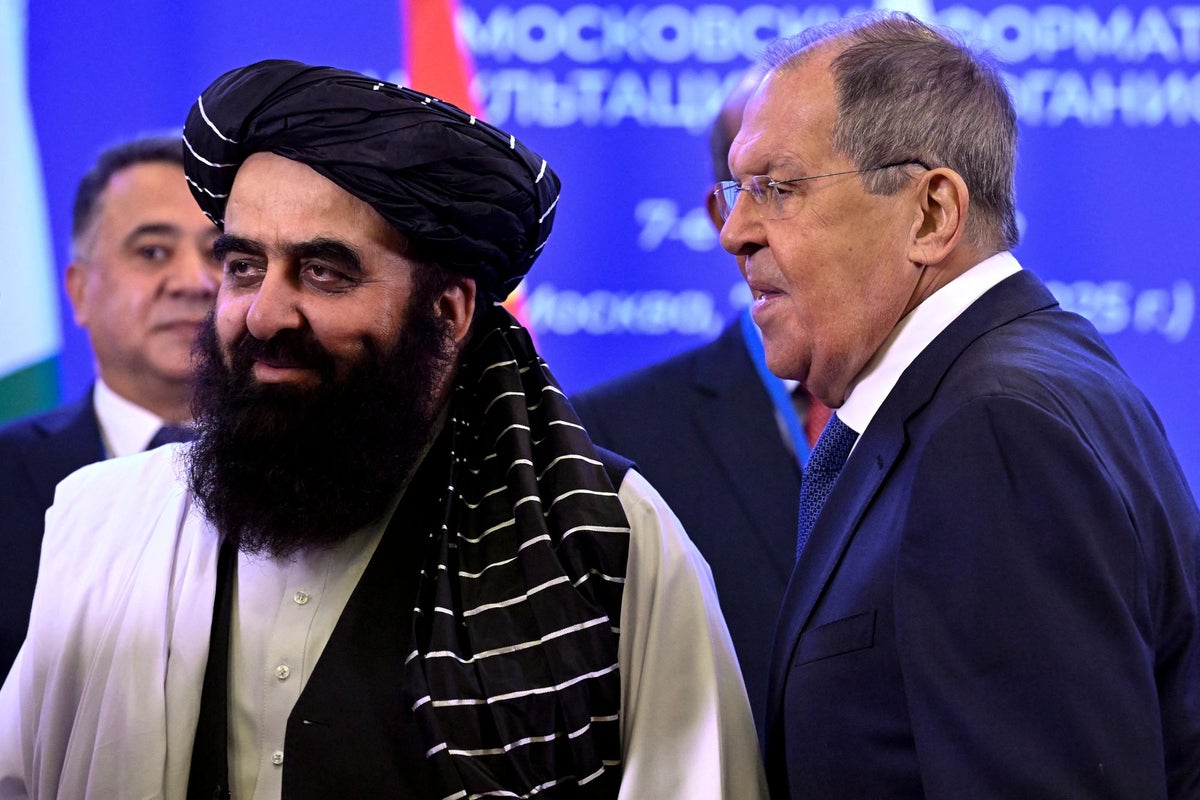
Russia signed a military cooperation pact with the Taliban and became the only country to formally recognise the Taliban regime in Afghanistan, heightening geopolitical risk around Russia’s war posture and regional security. The agreement lacks disclosed terms, but it raises speculation that Taliban support could resemble North Korea’s troop and munitions role in Ukraine, even though experts say that outcome is unlikely. The talks also underscore Moscow’s focus on countering ISIS-K and limiting any U.S./NATO return to the region.
The immediate market read is not about Afghan troop flows; it is about Russia broadening its sanctioned network of permissive counterparties. That tends to benefit the defense/dual-use complex only indirectly: the higher-probability outcome is not a new manpower channel for Ukraine, but incremental demand for maintenance, spare parts, drones, comms, and ruggedized systems that can be routed through harder-to-trace intermediaries. In practice, the fastest beneficiaries are likely to be firms with broad distributor networks and low exposure to end-user scrutiny, while pure-play primes with visible government contracts see little first-order uplift.
The more material second-order effect is on Central Asia risk premia. If Moscow leans on Afghanistan to police the northern frontier and counter ISIS-K spillover, it raises security pressure on Tajikistan, Uzbekistan, and Kazakhstan — which can translate into higher border-security spending, tighter capital controls, and more sanctions leak enforcement. That is mildly supportive for Western defense names with C4ISR, surveillance, drones, and perimeter-security exposure, but bearish for EM risk assets in the region because investor concern shifts from isolated politics to a broader instability corridor adjacent to Russia.
Contrary to the market’s instinct to focus on a potential North Korea-style troop pipeline, the more plausible tail is reputational and sanctions drift: Russia is signaling it is willing to normalize dealings with excluded actors if they serve internal security objectives. That increases the probability of additional secondary-sanctions designations and more aggressive enforcement on logistics, aviation, and financial intermediaries over the next 3-12 months. Any upside catalyst from actual Taliban battlefield support would likely be gradual and hard to verify, so the tradeable edge lies in monitoring sanctions intensity and regional security budgets rather than expecting an immediate front-line effect in Ukraine.
The consensus is likely overestimating near-term military impact and underpricing the longer-duration sanctions architecture. If this evolves at all, the first market-moving consequence is probably tighter compliance friction for firms moving goods into Central Asia and the Gulf, not a sudden change in Ukraine force balances. That suggests a slower-burn trade where the opportunity is in suppliers to border-security and counter-drone systems, while the risk is a broader risk-off impulse in frontier Asia if the region is recast as a sanctions transit node.
AI-powered research, real-time alerts, and portfolio analytics for institutional investors.
Request TrialOverall Sentiment
mildly negative
Sentiment Score
-0.15
