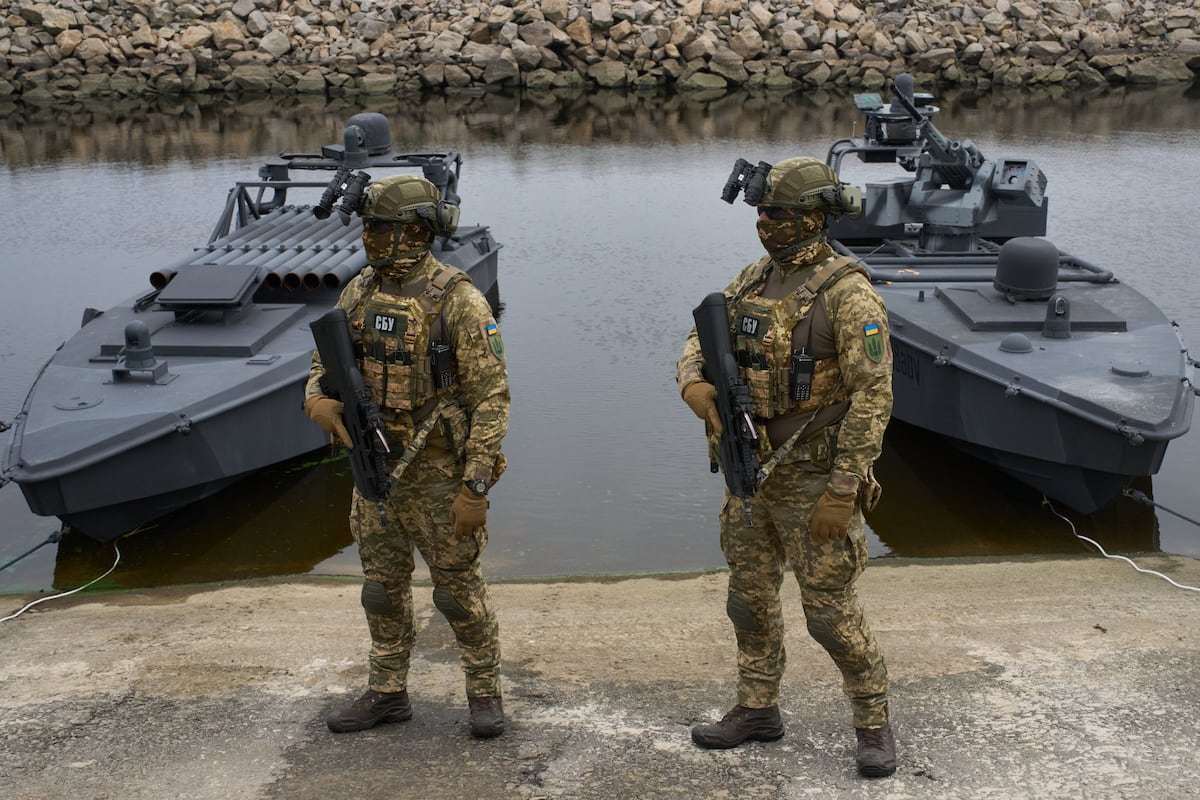
Ukraine's Security Service (SBU) has unveiled an upgraded 'Sea Baby' sea drone, significantly enhancing its operational capabilities with an extended range of 1,500 km, a 2,000 kg payload capacity, and AI-assisted targeting systems. This advanced, multipurpose platform, capable of deploying various weapon systems, has already been credited with successful attacks against 11 Russian vessels and forced a strategic relocation of Russia's Black Sea fleet. The development marks a critical advancement in asymmetric naval warfare, funded partly by public donations, and signifies Ukraine's pioneering role in this new form of maritime conflict, with potential implications for regional security and defense industry trends.
Ukraine's Security Service (SBU) has unveiled an upgraded 'Sea Baby' sea drone, significantly enhancing its operational capabilities with an extended range of 1,500 kilometers and a substantial payload capacity of up to 2,000 kilograms. This advanced variant integrates AI-assisted targeting systems and can deploy various weapon systems, including rocket launchers and machine-gun turrets, marking a critical technological leap in unmanned naval warfare. The evolution from a single-use craft to a reusable, multipurpose platform underscores rapid innovation in defense technology.
These advanced drones have already demonstrated considerable operational effectiveness, being credited with successful attacks against 11 Russian vessels and forcing the strategic relocation of Russia's Black Sea fleet from Sevastopol to Novorossiysk. This development highlights Ukraine's pioneering role in asymmetric naval warfare and the increasing relevance of autonomous systems in modern conflict. The program, partially funded by public donations, showcases the agility and impact of non-traditional defense procurement.
The successful deployment and continuous upgrade of such systems indicate a growing global trend towards advanced unmanned platforms in military applications. This trajectory has significant implications for defense contractors, AI developers, and naval technology firms, potentially accelerating research and development as well as procurement cycles worldwide. The strategic shift in naval operations also underscores the evolving nature of maritime security challenges.
AI-powered research, real-time alerts, and portfolio analytics for institutional investors.
Request DemoOverall Sentiment
neutral
Sentiment Score
0.00
Ticker Sentiment
