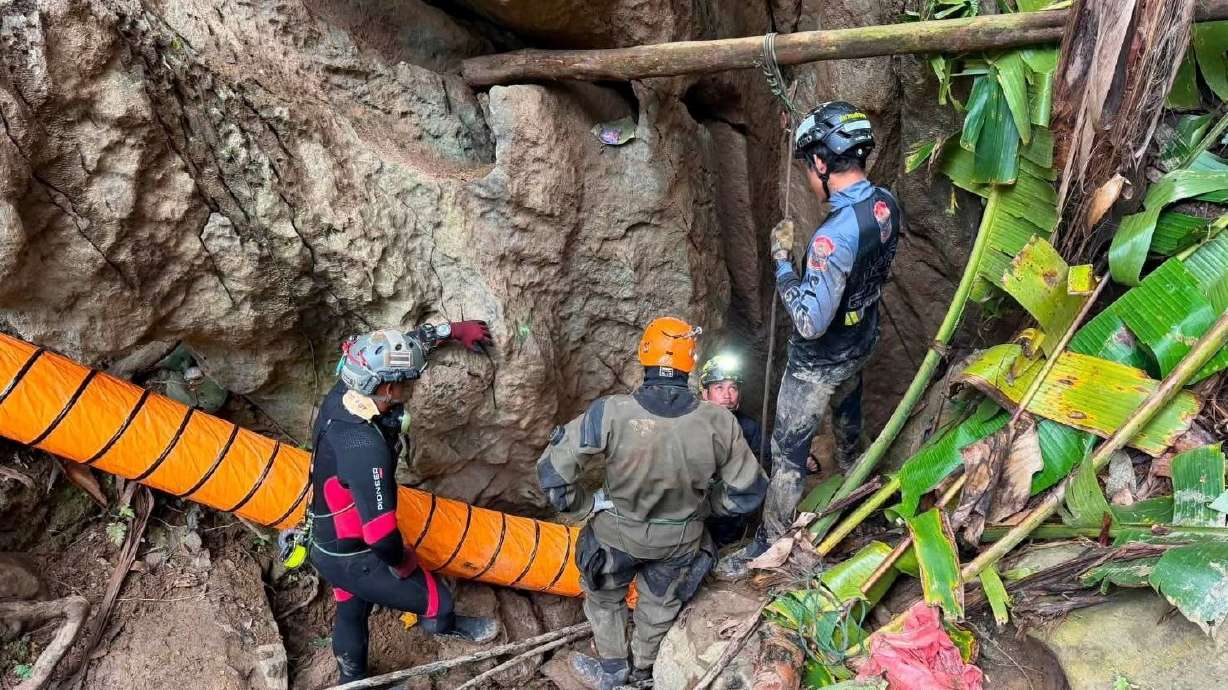
Rescuers located five men trapped in a flooded Laos cave after eight days, with the group reported alive, mostly well aside from severe hunger, and communicating with rescue teams. The operation involves Thai and Finnish cave divers, with the preferred extraction plan to drain the cave because narrow passages, 260-meter depth, and hydrogen sulfide gas make evacuation difficult. Two other missing individuals remain unaccounted for.
The immediate market read is not about the rescue itself; it is about the operational template for extreme-event response in frontier tourism geographies. Events like this create a short-lived premium for firms that can move heavy equipment, power generation, communications gear, and medical support into low-infrastructure locations, while exposing the fragility of destination markets that rely on “adventure” demand but lack redundancy in roads, drainage, and emergency systems.
Second-order beneficiaries are likely to be local logistics contractors, satellite communications providers, portable power vendors, and insurers with strong specialty reinsurance books that can reprice catastrophe exposure over the next renewal cycle. The loser set is more interesting: small regional tourism operators and hoteliers near the affected corridor can see booking deferrals for weeks, but the larger risk is reputational spillover across comparable cave/diving/adventure destinations in emerging markets if the rescue drags on or turns fatal.
The key catalyst is not the rescue completion but whether authorities can institutionalize a credible safety regime in the next 1–3 months. If they do, the event becomes a positive proof point for national resilience and foreign media attention may even support tourism recovery; if not, insurers and tour operators will infer a higher tail-risk premium, especially for monsoon-season itineraries. The contrarian view is that consensus may overestimate the tourism hit and underestimate the infrastructure signal: in these markets, a high-visibility emergency often accelerates spend on access roads, drainage, generators, and telecom, which can be modestly bullish for construction and equipment supply chains over 6–18 months.
AI-powered research, real-time alerts, and portfolio analytics for institutional investors.
Overall Sentiment
mildly positive
Sentiment Score
0.20
