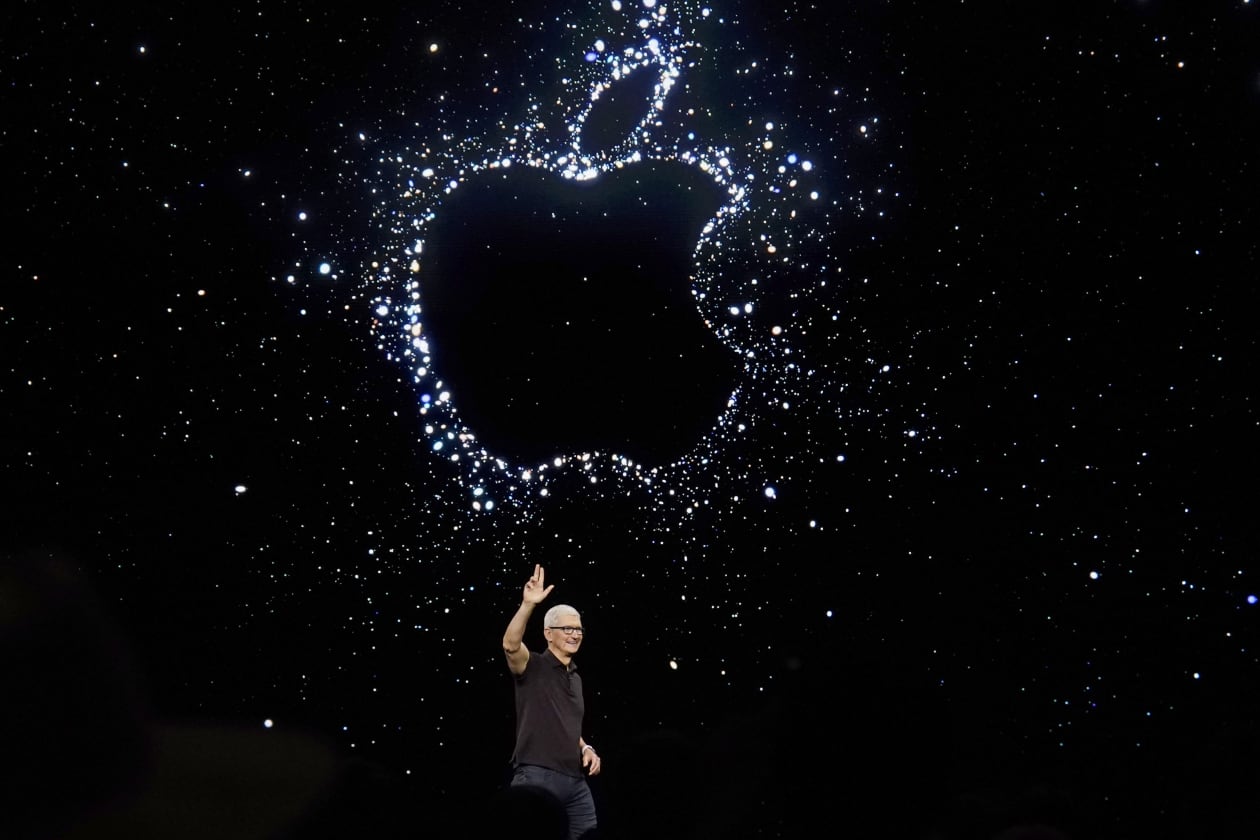
Apple’s leadership transition is orderly, with Tim Cook set to step aside on Sept. 1 and John Ternus taking over as CEO, but the article argues investors should focus on Apple’s AI weakness. The piece raises concern that Cook may have optimized Apple into a corner, leaving the company with a glaring AI gap that Ternus must fix. The tone is cautious and reflective rather than event-driven, so near-term market impact should be limited.
The market is likely underpricing the governance signal embedded in this handoff: a hardware-centric operator taking over at the same time Apple’s AI narrative is most vulnerable. That tends to help firms with enterprise distribution, model infrastructure, and on-device AI differentiation, while pressuring names whose premium valuation depends on Apple remaining the default consumer tech platform rather than a fast follower. The second-order effect is more important than the headline: if Apple’s AI cadence stays behind, app developers, cloud providers, and chip vendors can capture a larger share of wallet even without Apple losing unit share.
The risk window is asymmetric. In the next few weeks, nothing changes operationally, so the stock may grind on inertia; the real test is over the next 2-3 product cycles, when investors decide whether AI weakness is a temporary execution gap or a structural margin/innovation problem. A prolonged AI gap can compress multiple expansion even if revenue stays intact, because the market is paying for Apple as a platform with optionality, not just a mature hardware annuity.
The contrarian view is that this may be more process risk than product risk. Apple has historically monetized lagging features extremely well once it integrates them into the ecosystem, so the gap is not automatically a permanent valuation destroyer. The stock could actually be over-penalized if the market extrapolates a one-CEO transition into a multi-year decline before there is evidence of user churn, lower attach rates, or weakening Services growth. The cleaner tell is whether Apple can close the gap without sacrificing its privacy-first positioning; if it can, the current concern may prove a buying opportunity rather than a thesis break.
Competitive beneficiaries are the usual AI enablers: cloud and model-stack suppliers with exposure to enterprise inference demand, and premium Android OEMs that can market AI features more aggressively in the interim. Suppliers to Apple with concentrated exposure are the hidden losers if product timing slips, but that effect will show up first in sentiment and order expectations rather than reported numbers. The most actionable setup is to watch for relative weakness in Apple versus semis/cloud names as a signal that investors are rotating away from consumer platform durability and toward AI infrastructure winners.
AI-powered research, real-time alerts, and portfolio analytics for institutional investors.
Request TrialOverall Sentiment
mildly negative
Sentiment Score
-0.30
Ticker Sentiment
