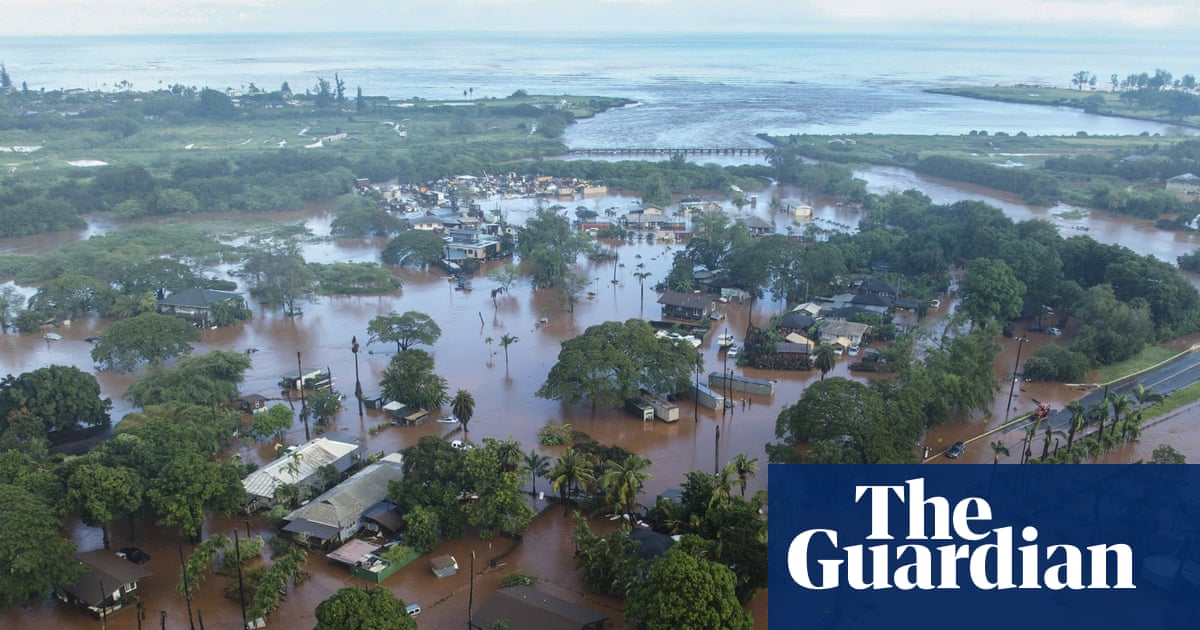
Wahiawā dam on Oahu is overflowing at ~1,500 gallons per second and officials warned it 'may collapse or breach at any time', triggering a 'LEAVE NOW' evacuation covering more than 4,000 people and activation of the Hawaii National Guard. Flash floods have inundated roads, damaged homes on the North Shore (Haleiwa, Waialua) and forced evacuation of a shelter housing ~185 people and 50 pets. Immediate risks include life‑threatening flooding, infrastructure failure (roads, power), and displacement of thousands — localized economic hits to housing, utilities, and tourism are likely though national market impact should be limited.
This event is a localized catalyst that amplifies two durable market themes: underinvestment in aging water infrastructure and the fiscal elasticity of federal/state disaster responses. Expect a two-stage spend cycle — urgent, concentrated emergency contracting and materials demand in the next 0–6 months, followed by multi-year engineering/mitigation contracts (3–5 years) as regulators and legislators accelerate resilience funding for dams and coastal flooding.
Winners in the short run will be firms supplying aggregates, hauling, short-duration civil-construction crews and emergency services logistics; winners across the medium term are large engineering firms with existing GSA/DOT FEMA relationships that can scale quickly. Insurers and regional real-estate players face headline risk and potential loss-ratio pressure, but the absolute financial hit for national carriers will be limited unless losses cascade across multiple states simultaneously — contagion into reinsurance pricing and retro premiums is the higher-probability transmission mechanism.
The consensus knee-jerk trade is to bid insurance/reinsurance protection and rotate into cyclicals indiscriminately; a more nuanced approach is to pair long exposure to contractors/engineers and materials (capture higher-margin backlog) with disciplined, short-dated hedges on insurers or transient demand-exposed REITs. Key reversals: a rapid federal appropriation or insurer reinsurance purchases could compress contractor upside within 3–6 months, while discovery of larger-than-expected structural failures could force sustained reinsurance repricing over 6–18 months.
AI-powered research, real-time alerts, and portfolio analytics for institutional investors.
Request DemoOverall Sentiment
extremely negative
Sentiment Score
-0.90
