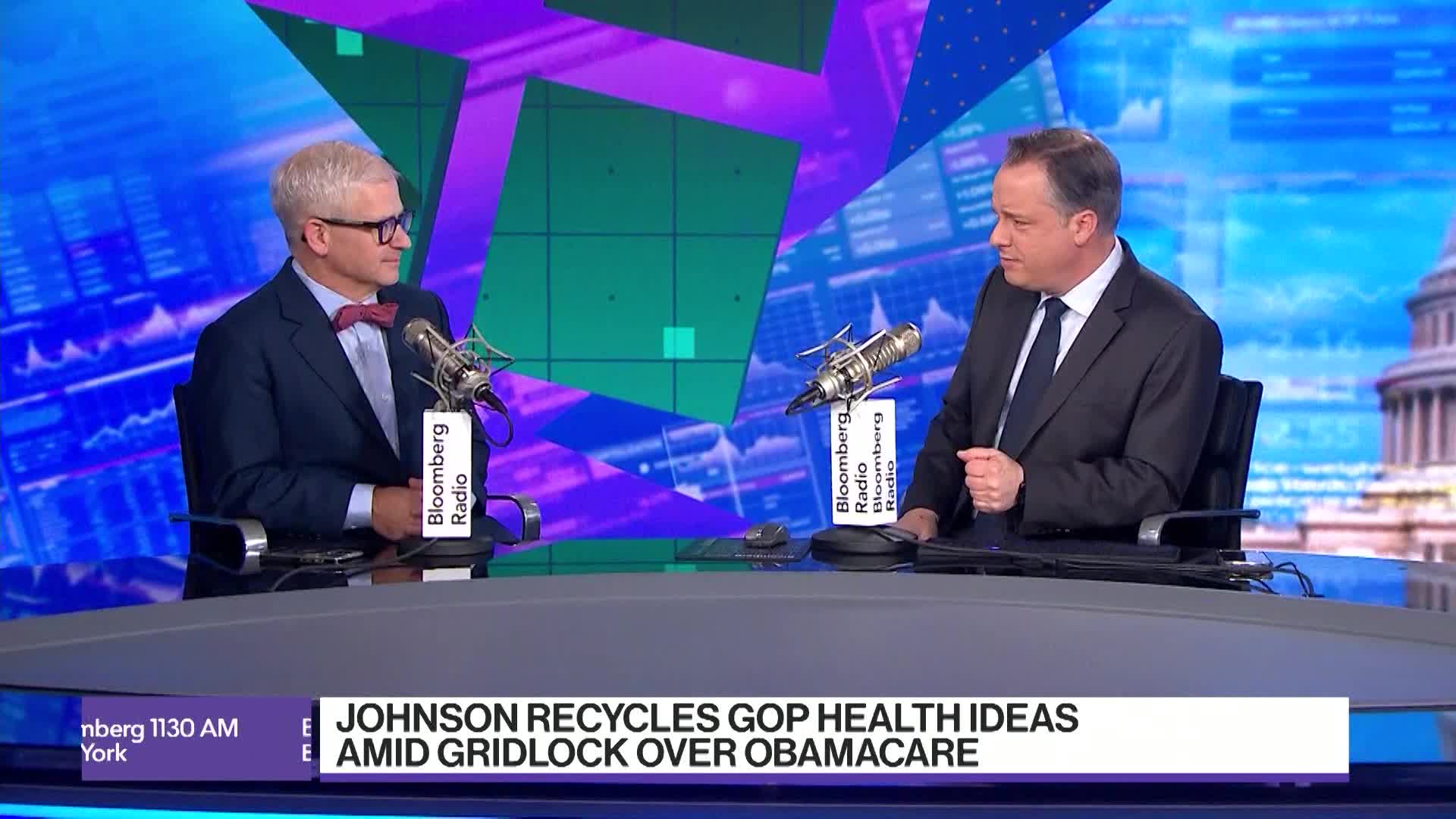
Political brinkmanship over rising health-insurance premiums and an expiring subsidy regime is likely to dominate near-term Washington activity, with Democrats favoring multi-year extensions to shore up base support and Republicans lacking a unified alternative beyond proposals like one-year subsidy extensions or HSA-focused reforms. The dispute raises shutdown and funding risks into year-end and could materially affect 10–15 million people in disproportionately red states, creating state-level policy responses and election-year political leverage. Separately, markets are watching Fed leadership and policy: Kevin Hassett is reported as a leading Fed chair candidate amid speculation of a 25bp cut, while tariff, tax and geopolitical (anti-drug/military) actions add policy uncertainty for investors.
Market-structure: Election-year fights over ACA subsidies and a likely partisan standoff (deadline end-December, government funding cliff end-January) create a binary payout for health insurers and state budgets. If Congress extends subsidies >=1 year (high-probability near-term compromise), national carriers (UNH, HUM) see revenue stability and pricing power; if not, expect 10-30% local premium spikes in red states and material enrollment churn that favors vertically integrated payors and Medicaid-heavy operators.
Risk assessment: Key tail risks are a protracted shutdown (weeks) and a multi-year Democratic strategy to keep premiums politically salient, which would preserve subsidies but invite regulatory scrutiny and margin caps. Short-term (days–weeks) volatility will hinge on House vote counts and GOP cohesion; medium-term (3–12 months) risks center on Fed rate path (25bp cut odds) and state-level patchwork responses; long-term (1–3 years) uncertainty includes potential subsidy re-design or eligibility limits that compress marketplace margins by 200–500bps.
Trade implications: Prioritize convexity to political outcomes: favor large-cap, diversified insurers and Medicare-centric names if a 1–3 year extension is priced in, hedge marketplace specialists and Medicaid/reimbursement-exposed names. Interest-rate sensitivity increases if a 25bp Fed cut materializes — position for a 10s/2s steepener and modest USD weakness; commodities and oil have limited direct exposure but gold should benefit from softer real yields.
Contrarian angles: Consensus assumes Democrats will always extend subsidies; markets underprice the probability of a narrow, one-year stopgap or targeted eligibility tightening that would disproportionately hurt Centene (CNC) and other marketplace-dominant players. Also, a Fed cut priced in at ~25bp is not guaranteed — that underpins equity rally risk if delayed, so protect long-dated equity exposure with shorter-dated hedges (30–90 days).
AI-powered research, real-time alerts, and portfolio analytics for institutional investors.
Request DemoOverall Sentiment
mildly negative
Sentiment Score
-0.25
