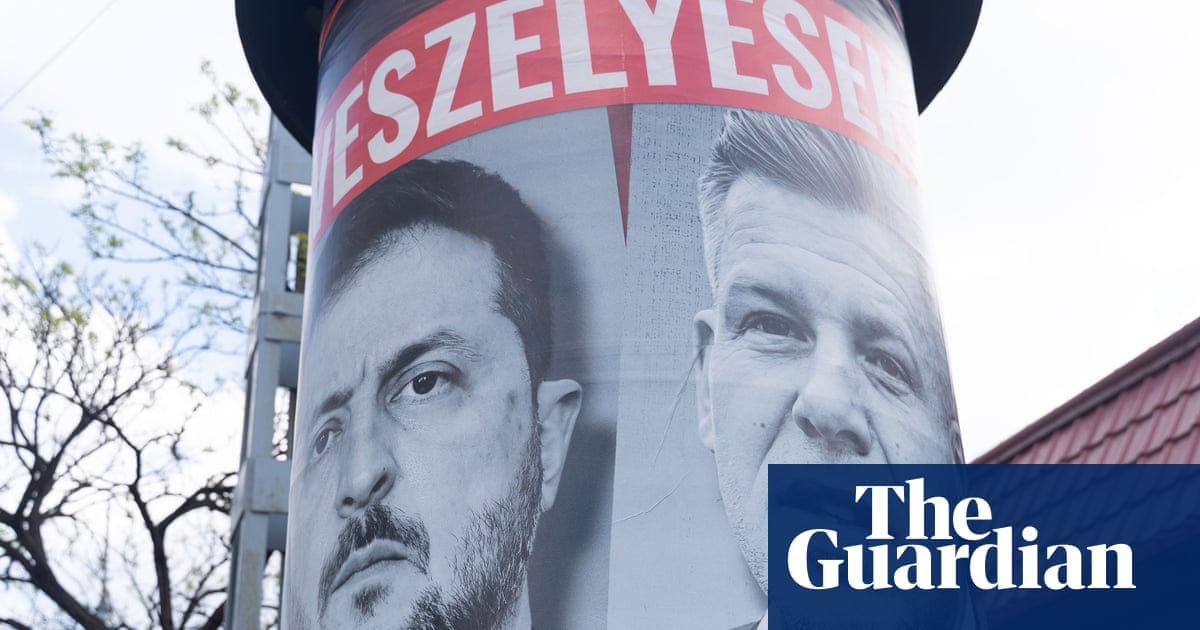
Hungary’s new leader Péter Magyar said he would be willing to press Vladimir Putin to end the war in Ukraine and may review Russian energy contracts, while Ukraine welcomed Orbán’s defeat as it supports a €90bn ($105bn) loan effort. Ukraine’s central bank warned that higher Middle East oil prices could lift inflation by 1.5 to 2.8 percentage points, even as it kept its 5% inflation target over three years. The article also reports a Ukrainian strike on a Russian chemicals plant and a change allowing Russian and Belarusian athletes back into World Aquatics events.
The market implication is less about one Hungarian election than about a marginal improvement in EU policy coordination. A softer Budapest lowers the probability of veto-driven delays around Ukraine financing and sanctions maintenance, which should compress tail-risk premia in Eastern European sovereign spreads and nearby FX rather than create a straight-line rally. The first-order beneficiary is not risk assets broadly, but duration-sensitive names tied to funding certainty: lenders to Ukraine, contractors exposed to reconstruction, and regional utilities that need policy continuity more than commodity prices. The bigger second-order effect is energy. Any meaningful renegotiation of Russian gas/oil contracts in Hungary would be gradual, but the signal matters because it increases the odds of incremental European de-risking from Russian molecules over the next 6-18 months. That is modestly bullish for non-Russian pipeline alternatives, LNG infrastructure, and power generators with diversified fuel procurement; it is negative for firms whose margins rely on cheap legacy Russian supply being preserved. The move also reinforces a broader European inflation disinflation path if energy procurement becomes less politically sticky, partially offsetting the near-term oil shock from the Middle East. Near term, the sharpest tradeable risk is that the Ukraine funding relief becomes an EU negotiation slippage story rather than an all-clear. If the €90bn package is delayed, short-dated UAH pressure and higher CDS on frontier sovereign proxies could reprice quickly over days to weeks. Conversely, if oil stays elevated for 1-3 months, the central bank’s inflation path is likely to look optimistic, which could keep local rates higher for longer and pressure domestic Ukrainian demand-linked assets despite improved external funding. The contrarian read is that Orbán’s defeat may be overestimated as a durable strategic shift. Magyar’s room to maneuver is constrained by Hungary’s energy dependence and domestic coalition math, so the practical change may be more rhetorical than contractual in the first 90 days. That argues for trading the relief rally in regional risk, but fading any assumption of a fast structural break with Moscow.
AI-powered research, real-time alerts, and portfolio analytics for institutional investors.
Request DemoOverall Sentiment
neutral
Sentiment Score
-0.05
