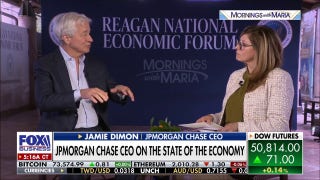
Jamie Dimon discussed his private meeting with New York City Mayor Zohran Mamdani, saying he warned that ideology can hinder practical governance and that good policy should prioritize competitiveness, safety, and efficient administration. The meeting reportedly covered reducing government waste, cutting red tape for development, public-private partnerships, and affordability issues such as housing and child care. The article is mainly political and policy commentary, with limited direct market impact.
The near-term market read-through is not a policy shock to JPM so much as a signal that Wall Street is trying to pre-negotiate the overhang from NYC governance risk before it hardens into hiring, permitting, and tax-policy uncertainty. For JPM, the bigger second-order effect is franchise protection: if the city’s business climate deteriorates, large banks can reallocate headcount, trading budgets, and sponsor activity to other hubs faster than civic leaders can replace that economic activity. That makes this less about one meeting and more about whether New York preserves its status as the default command center for finance over the next 12-24 months.
Housing is the key transmission channel. If city policy actually accelerates approvals and reduces soft costs, the beneficiaries are not just developers but banks with mortgage, CRE, and muni-finance exposure because supply expansion dampens affordability pressure without requiring punitive tax moves. Conversely, if ideology turns housing policy into rent-control theater or anti-developer signaling, the losers are construction-linked names, NYC-facing REITs, and local lenders via delayed project starts and weaker collateral values. The market is likely underpricing how quickly permitting reform could improve activity in the real estate ecosystem even if headline politics remain noisy.
The contrarian point is that public pressure on wealthy residents may be politically useful but economically self-defeating if it pushes the tax base to more mobile jurisdictions. That creates a subtle bull case for JPM as a relative beneficiary of any “pragmatic governor’s handshake” outcome: the bank gains influence, while actual relocation risk for clients remains low unless policy becomes materially punitive over multiple quarters. The tail risk is a slow-burn exodus of talent and capital, not an overnight flight, and that would show up first in commercial deposits, brokerage flows, and NYC transaction volume before it hits earnings.
From a timing perspective, this is a months-not-days trade unless the administration immediately pivots to visible deregulatory wins. The most important catalyst is whether City Hall can produce measurable permit-cycle compression and public-private partnership wins by the next budget and real-estate cycle; absent that, the market will treat the outreach as optics. In that case, the upside for JPM is modest but durable, while the downside in NYC-exposed assets compounds through lower growth expectations and a higher risk premium.
AI-powered research, real-time alerts, and portfolio analytics for institutional investors.
Request DemoOverall Sentiment
neutral
Sentiment Score
0.05
Ticker Sentiment
