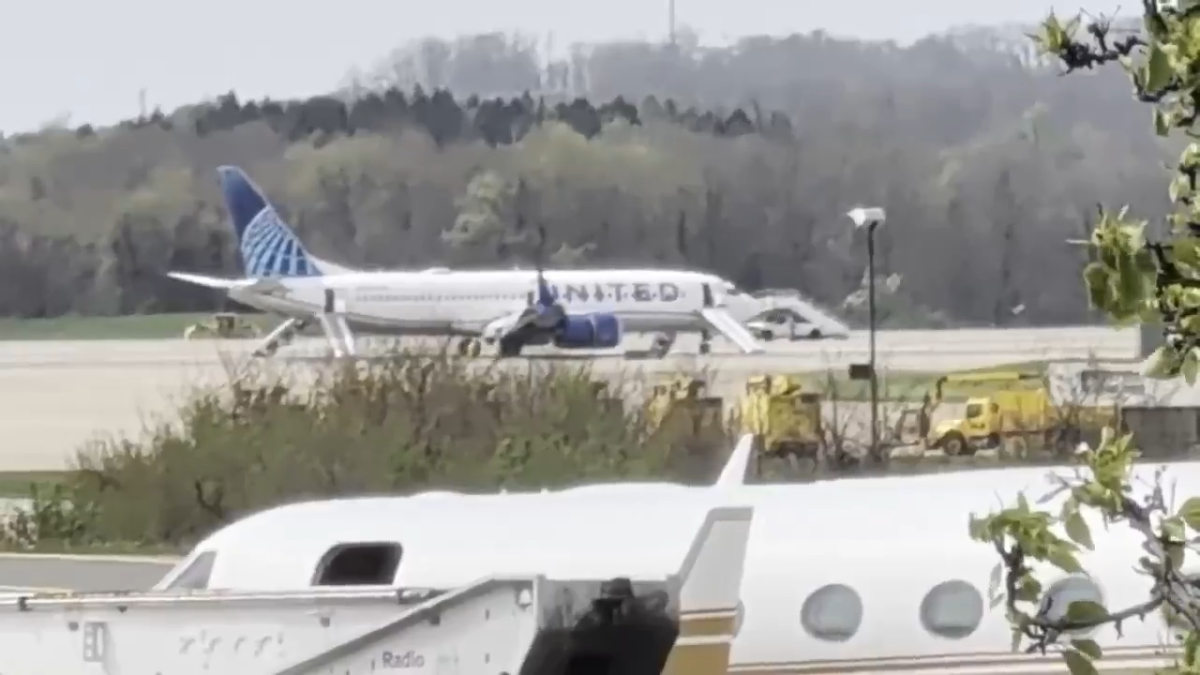
United Airlines Flight 2092, carrying 159 passengers and 6 crew members, was diverted from Chicago O’Hare to Pittsburgh after a reported potential security concern. The aircraft landed safely, all passengers and crew were evacuated, and a bomb squad found no explosive; the incident has been cleared with no injuries reported. The FBI is aware and is coordinating on the investigation.
This is a reputational and operational event more than a direct earnings event, but the second-order risk is real: airlines trade on perceived control, and any hint of a security lapse increases the probability of temporary booking softness on the affected carrier and, to a lesser extent, the broader network. In the near term, the impact is usually concentrated in the next 1-10 days via social amplification and elevated customer service costs; the core issue is not volume loss from this one flight, but whether corporate travel managers and higher-yield leisure travelers see a pattern of disruption or response slippage.
The more interesting read-through is to airport operators and security vendors. Incidents like this tend to increase pressure on TSA, airport authorities, and carriers to show visible hardening: more screening, more canine deployments, more spend on perimeter monitoring, and faster threat-assessment workflows. That usually benefits security-related infrastructure and services names with federal exposure before it helps airlines, because the budget response arrives faster than any measurable improvement in passenger throughput.
For UAL specifically, the equity risk is that management is forced into a defensive posture just as travelers remain price-sensitive and the domestic yield environment is already fragile. A single cleared incident should fade quickly, but repeated events over a 30-90 day window can raise insurance, disruption, and brand-friction costs disproportionately versus the actual operational loss. The contrarian angle is that unless there is a second incident or a credible pattern, this is likely over-penalized in the stock because investors tend to extrapolate headline risk faster than booking behavior changes.
The catalyst to watch is whether regulators or the carrier introduce meaningful process changes, which would signal the incident has crossed from one-off noise into a broader security review. If that happens, the cost burden lands first on airline margins and airport operations, while defense/security contractors can see incremental budget tailwinds over the next quarter.
AI-powered research, real-time alerts, and portfolio analytics for institutional investors.
Request DemoOverall Sentiment
mildly negative
Sentiment Score
-0.20
Ticker Sentiment
