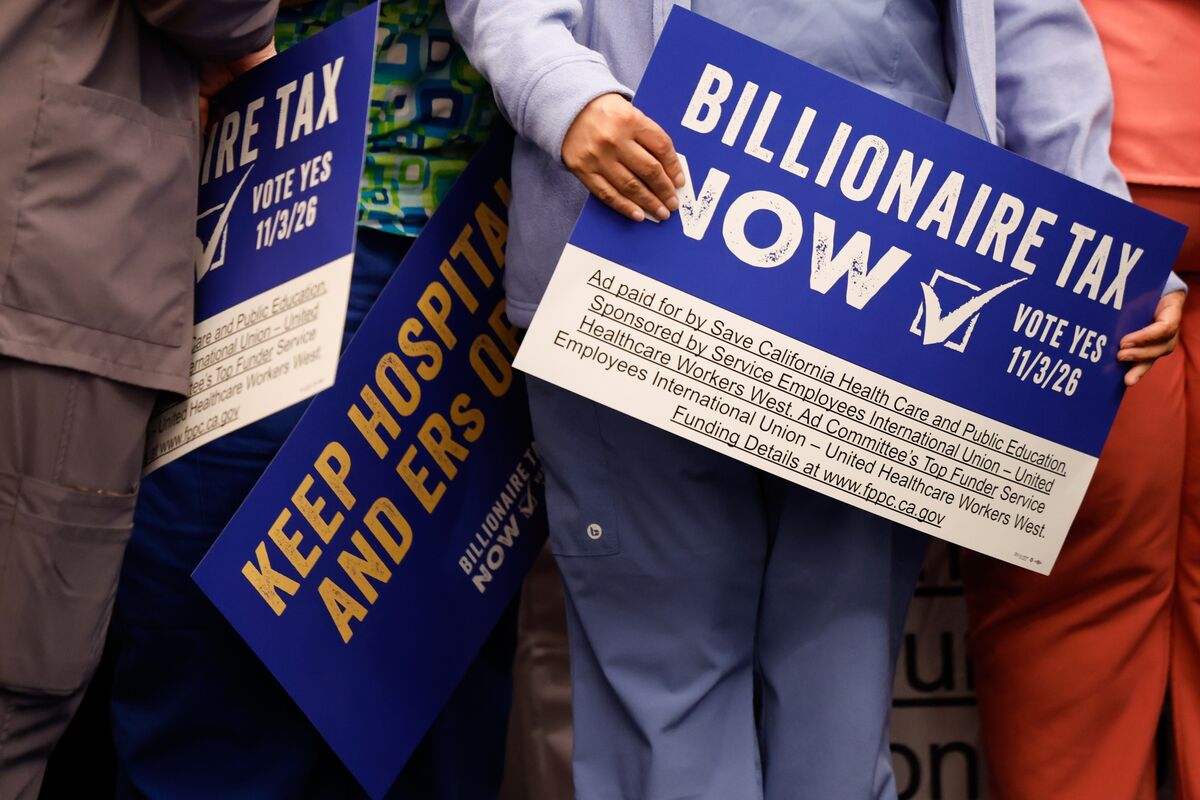
The Billionaire Tax Now Coalition is offering to back a 2% California wealth tax instead of its original 5% proposal, signaling a compromise effort with Governor Gavin Newsom. The article is centered on state tax policy and legislative negotiation rather than a direct corporate or market event. Market impact appears limited and largely political unless the proposal advances materially.
A credible compromise on wealth taxation would matter less through the headline rate than through the precedent it sets: if Sacramento can normalize a lower levy, it reduces the odds of an all-or-nothing ballot outcome and shifts bargaining power toward incremental taxation over time. The near-term market impact is mostly on private capital allocation, not public equities — high-net-worth residents and founders will optimize domicile, trust structures, and unrealized gain realization windows before any rule is finalized, which creates a measurable but lagged drag on California-linked taxable bases.
The second-order winner is not the state budget so much as private-market advisors, estate planners, and jurisdictions competing for mobile wealth. A lower-rate compromise also weakens the political urgency for more extreme versions later, but it does not remove the risk of ratchet effects: once the framework exists, future governors can expand scope, tighten definitions, or index thresholds more aggressively. That makes the bigger threat a multi-year policy creep rather than a one-time wealth exodus.
The key catalyst is political, not macro: if Newsom signals openness, expect a short burst of headline risk around California-facing venture, private wealth, and consumer discretionary names tied to upper-income households. If negotiations fail, the market may initially interpret it as a defeat for the tax bloc, but that can be bullish only in the short run; the failure likely resurrects a more punitive version in the next election cycle. The contrarian view is that the compromise itself may be structurally bearish for California in the long run because it lowers the odds of immediate voter backlash while preserving the policy apparatus, making the eventual tax burden more durable and harder to unwind.
AI-powered research, real-time alerts, and portfolio analytics for institutional investors.
Overall Sentiment
neutral
Sentiment Score
0.05
