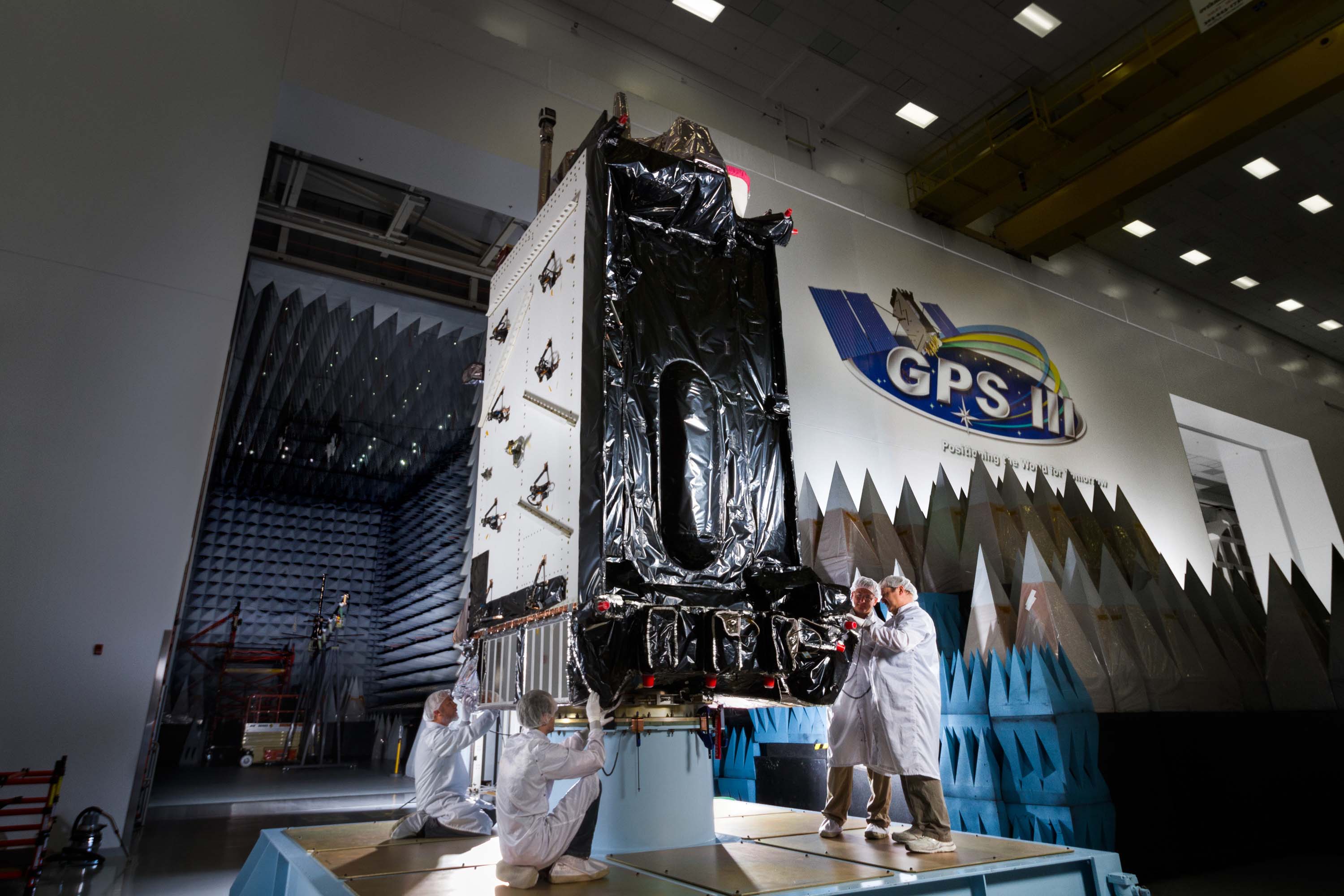
Lockheed Martin highlighted the GPS III SV09 launch and the upcoming SV10 final mission in the GPS III series, emphasizing improved accuracy, stronger anti-jamming, and new technologies including an LRA, DRAFS clock, and optical crosslink payload. The article frames the GPS III program as a modernization step toward the next-generation GPS IIIF block, with added military resilience and civilian precision. Overall, this is positive strategic progress for Lockheed Martin but likely limited near-term market impact.
This is a quiet positive for LMT, but the real value is less in the satellite count than in the de-risking of the next franchise cycle. The market tends to underwrite GPS modernization as a one-time launch event; the more important second-order effect is that every successful upgrade raises confidence in the follow-on IIIF procurement path, which can support higher visibility on a multi-year backlog rather than just a headline program milestone.
The commercial spillover is more interesting than the defense headline. Better timing and anti-jam performance improve the economics of autonomy, precision agriculture, logistics, and financial timestamping, but those benefits accrue gradually as downstream OEMs refresh hardware and software stacks over 12-36 months. That means suppliers in receivers, timing modules, and secure PNT infrastructure may see a longer-duration demand tail than the prime, which typically gets the initial narrative pop but not the full ecosystem monetization.
The contrarian risk is that investors may already be extrapolating a smooth transition into IIIF without enough scrutiny of execution and budget politics. A more capable payload also raises the bar for future testing, integration, and launch timing; any slip would be more damaging now because the market is implicitly pricing schedule reliability. In addition, improved civilian utility is a slow burn, so near-term revenue impact to LMT is likely modest unless follow-on contracts or export wins emerge within the next 2-4 quarters.
Net: positive but not a chaseable rerating on this headline alone. The setup is better viewed as a catalyst that reinforces long-cycle defense modernization, with the main upside coming from reduced program risk and improved probability of IIIF funding continuity rather than immediate earnings acceleration.
AI-powered research, real-time alerts, and portfolio analytics for institutional investors.
Request DemoOverall Sentiment
mildly positive
Sentiment Score
0.35
Ticker Sentiment
