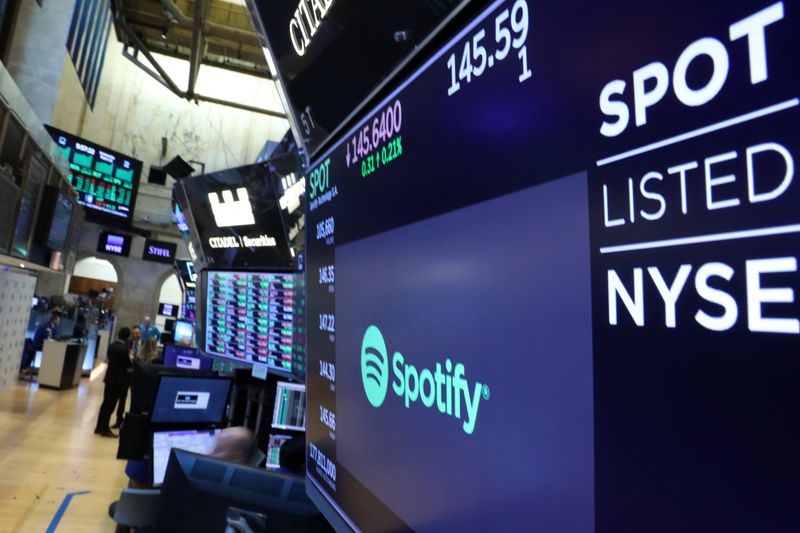
Benchmark reiterated a Buy on Spotify with a $760 price target ahead of the April 28 Q1 earnings report, while Guggenheim, KeyBanc and Morgan Stanley also maintained bullish stances with targets of $600, $745 and $630. The note points to in-line ARPU, subdued subscriber growth, and potential upside from second-half ad revenue inflection and AI music monetization commentary. Offseting positives, Spotify faces a Texas Attorney General investigation over alleged payola schemes and InvestingPro flagged the stock as overvalued versus fair value.
The setup is less about the headline Buy rating and more about the next two levers: pricing power and ad monetization. If premium ARPU holds after the US price increase while subscriber churn stays contained, the market can re-rate the name on durable mid-teens revenue growth plus operating leverage; the first-quarter print is the first clean test of that thesis. The more important second-order effect is that Spotify’s AI-music commentary can widen the moat narrative if management frames AI as enhancing discovery and creator tooling rather than commoditizing listening.
The risk is that consensus is leaning into a narrow path where one good ARPU update is enough to keep the multiple elevated, while subscriber growth and ad recovery both remain back-half stories. That creates a high bar for the guide: any softness in paid net adds or evidence that ad-product rollouts are too early to matter in 2025 would likely trigger a de-rating, especially after the recent rerating. The overhang from regulatory scrutiny is not a near-term P&L issue, but it increases the probability of slower experimentation in ad tech and platform partnerships, which matters if the market is paying for a cleaner monetization acceleration.
The consensus may be underestimating how much of the bullish case is already in the price. A business with improving monetization but muted user growth usually trades well only until the market starts modeling saturation; at that point, incremental upside comes from FCF conversion, not top-line surprises. That makes the stock sensitive to even modest changes in opex trajectory, because any AI/content investment intensity could offset the expected margin expansion and cap upside versus the most optimistic targets.
For the broader media/streaming complex, a strong print would reinforce the idea that price increases can be absorbed without demand destruction, which could help other subscription platforms. But if Spotify disappoints on sub growth or ad timing, it likely derisks the entire “pricing + ads + AI” framework across consumer internet names and shifts investor focus back to unit economics rather than narrative optionality.
AI-powered research, real-time alerts, and portfolio analytics for institutional investors.
Request TrialOverall Sentiment
mildly positive
Sentiment Score
0.20
Ticker Sentiment
