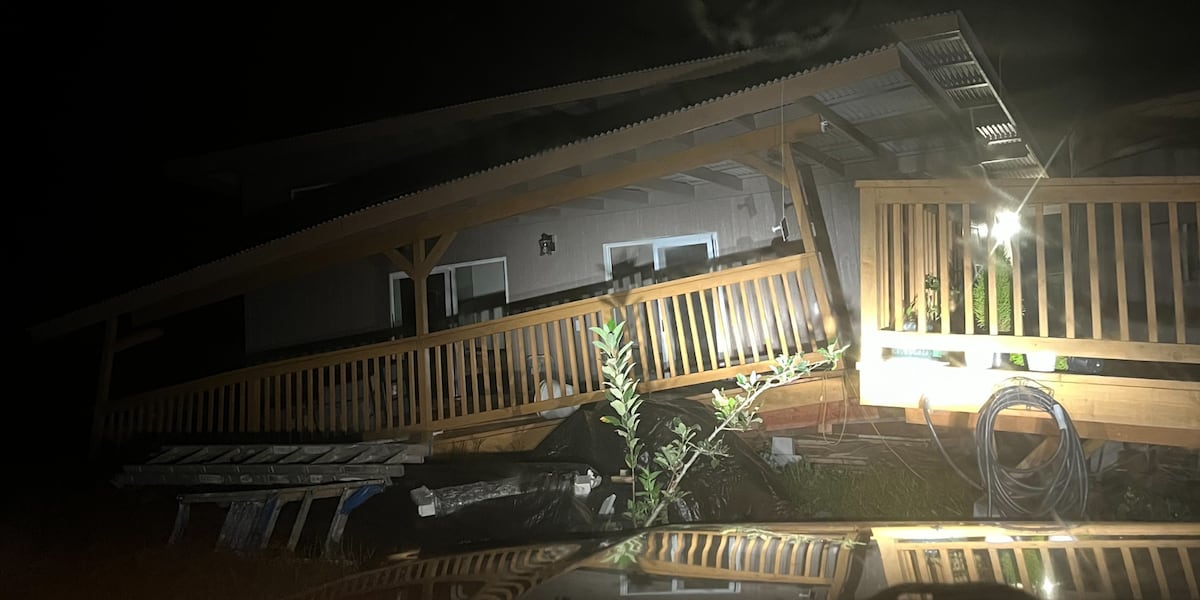
A magnitude 6.0 earthquake near Honaunau caused damage, rockslides, and utility outages across parts of South Kona, briefly cutting power to about 1,000 Hawaiian Electric customers and leaving around 70 still without electricity by Saturday morning. Officials also reported at least one home shifted off its foundation and broken water lines, though all roads had reopened by morning and most power had been restored. The quake was not linked to volcanic activity at Mauna Loa or Kilauea.
This is a localized, fast-repair event rather than a macro shock, so the immediate market read-through is less about direct damage and more about operational friction: micro-outages, road closures, and utility inspections temporarily interrupt commerce, but the rapid restoration profile suggests the economic hit should compress into days, not quarters. The second-order risk is that Hawaii’s infrastructure is more fragile than headline outage counts imply; even a short-lived quake can expose deferred maintenance in power distribution, water mains, and hillside roads, which raises near-term capex and can create recurring service interruptions during aftershocks.
The more interesting angle is insurance and housing. A home shifting off foundation, rockslides, and broken water lines are precisely the type of claims that can be expensive relative to the event size because repair labor and materials are constrained on-island. That can tighten local underwriting, increase deductibles, and push renewal pricing higher over the next 1-2 policy cycles, especially for homeowners and small commercial properties in slope-exposed areas. Contractors, debris-removal firms, and restoration specialists can see a short-lived demand spike, but bottlenecks in labor and transport cap the upside.
The market is likely underpricing the upside in resilience spending while overpricing the probability of broad economic disruption. If this event causes even a modest reprioritization toward utility hardening, seismic retrofits, and water-system upgrades, the beneficiaries are not local REITs but mainland engineering, grid equipment, and restoration names with exposure to disaster-recovery budgets. The contrarian view is that the visible damage is not large enough to justify a durable macro trade; the cleaner expression is a tactical event-driven basket rather than a thesis on Hawaii demand deterioration.
AI-powered research, real-time alerts, and portfolio analytics for institutional investors.
Request DemoOverall Sentiment
moderately negative
Sentiment Score
-0.35
