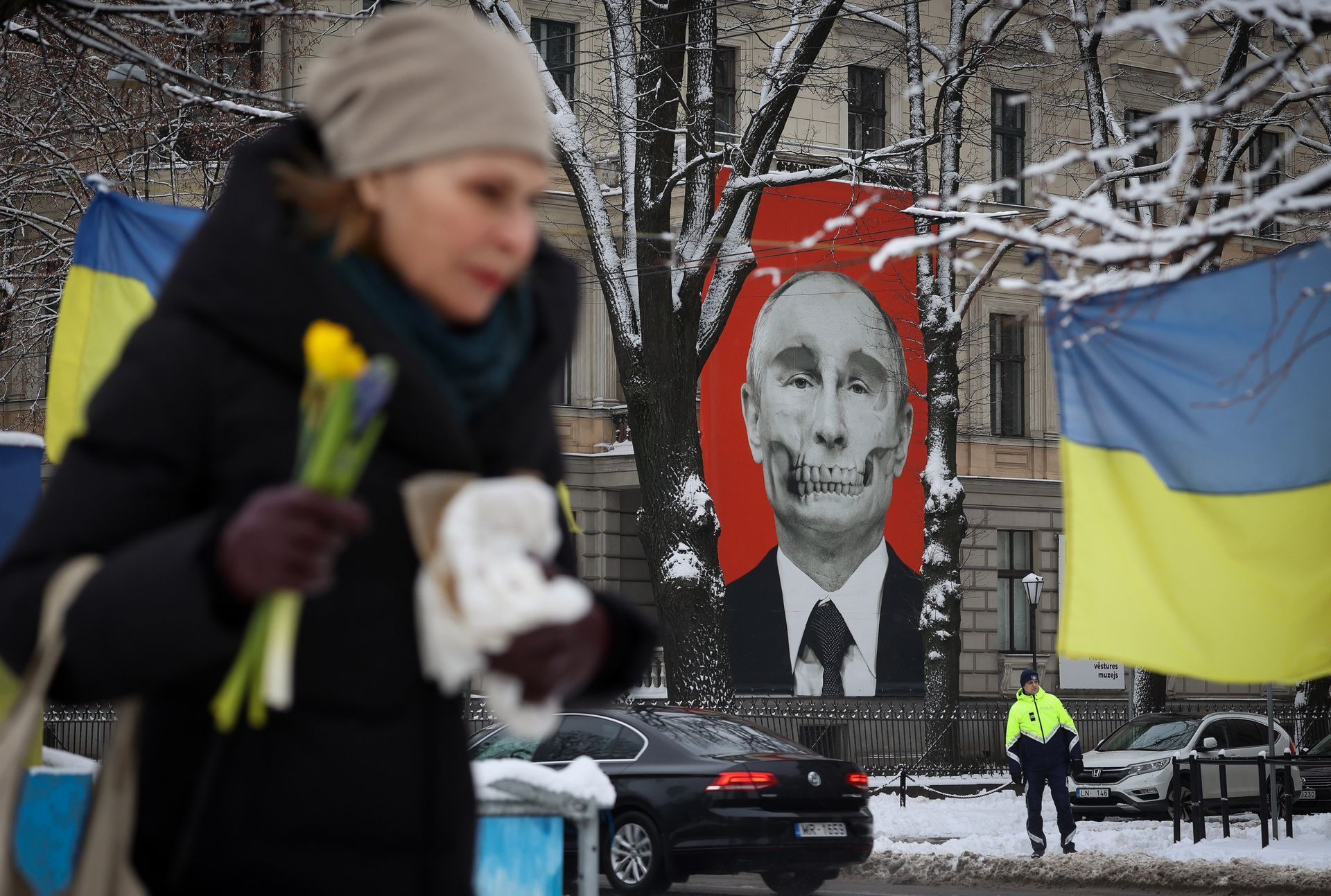
Ukraine is pressing the EU to finalize a proposed reparations loan — a roughly $140bn scheme to lend frozen Russian central-bank reserves — arguing the roughly $300bn of frozen reserves (about €185bn held in Belgium) legally belong to Ukraine. Kyiv says approval would secure €83.4bn in military support and €52.3bn in macro-financial needs for 2026–27, while the World Bank estimates $524bn will be required for reconstruction; negotiations continue amid dwindling U.S. support. The outcome would set precedents on use of sovereign reserves, expose European finances to political risk, and materially affect geopolitical and sovereign credit dynamics.
Market structure: Freezing and potential repurposing of ~€185bn (Belgium) out of ~$300bn Russian reserves creates a lever for EU fiscal engineering that benefits defense contractors, engineering/materials suppliers and supranational bond issuers while further isolating Russian energy/finance. Ukraine’s stated need (€135.7bn for 2026–27 plus ~$524bn reconstruction) implies multi-year guaranteed demand that shifts pricing power to large-cap defense names and industrials and increases EU issuance that can compress core yields while steepening peripheral spreads.
Risk assessment: Tail risks include (1) legal seizure triggering Russian energy retaliation — a >30% one-week Brent/Gas spike scenario — (2) a precedent causing global reserve diversification away from EUR leading to EUR volatility and higher long-term rates, and (3) an abrupt peace deal that collapses defense demand. Immediate (days) risk = RUB and energy volatility; short-term (1–3 months) = EU vote & Belgian courts; long-term (3–36 months) = reconstruction funding flows and persistent higher defense budgets.
Trade implications: Expect asymmetric opportunities: long defense equities/ETFs and industrials, short RUB/Russian-linked assets, and commodity tail hedges. Pricing windows: act within 2–8 weeks ahead of EU deliberations; trim/exit on either (a) reparations-loan approval (dampens upside) or (b) credible peace deal (collapses upside). Use options to express convexity and CDS/credit to express sovereign-fragmentation risk.
Contrarian angles: The market assumes either permanent freeze or diplomatic split; both underprice a middle outcome — EU-backed supranational borrowing to frontload Ukraine support — which would strengthen EU credit and lower peripheral spreads. Conversely, the seizure pathway is underpriced for energy disruption; historical parallels (partial freezes since 2014) show freezes can linger without seizure, so size positions conservatively and favor liquid hedges.
AI-powered research, real-time alerts, and portfolio analytics for institutional investors.
Request DemoOverall Sentiment
moderately negative
Sentiment Score
-0.45
