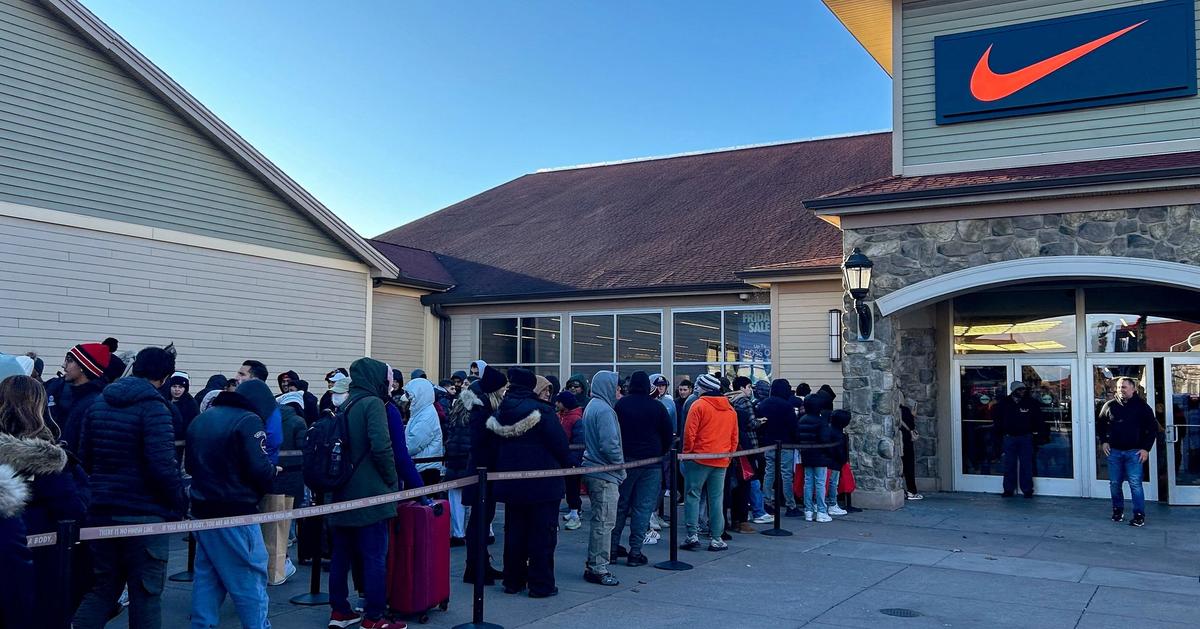
Black Friday retail spending rose 4.1% year-over-year according to Mastercard, but gains may be muted once persistent inflation is accounted for. Adobe Analytics reported AI-driven traffic to U.S. retail sites surged 805% year-over-year, while the Federal Reserve's Beige Book notes a K-shaped spending pattern with higher-income consumers boosting purchases and low- and middle-income households pulling back amid tariffs and a cooling jobs market — factors that could temper consumer-discretionary upside.
Market structure: Black Friday’s 4.1% nominal lift (Mastercard) with an 805% spike in AI-driven site traffic (Adobe) concentrates upside into payment processors, premium e‑commerce (AMZN) and luxury/ASP-up retailers while pressuring low/mid-tier brick-and-mortar retailers (e.g., KSS, M) and thin-margin discounters. Network effects increase pricing power for MA/V—each incremental transaction has high incremental margin—while weaker spending by lower-income cohorts suggests demand bifurcation and rising inventory risk for value retailers over the next 1–2 quarters.
Risk assessment: Key tail risks are sticky core inflation forcing the Fed to keep rates higher (higher real yields compressing P/E multiples), rapid tariff or supply-chain shocks that raise input costs, and regulatory/data-privacy constraints on AI-driven targeting; probability medium but impact high. Near term (days–weeks) watch Cyber Monday and December weekly retail prints; short term (1–3 months) watch CPI and payrolls; long term (3–12 months) watch durable goods ex‑autos and credit delinquencies for evidence of broad weakness.
Trade implications: Favor payments and AI-enabled e‑commerce (long MA, AMZN) and underweight/short exposed low-end retailers (KSS, M) and mall REITs; hedge real-rate exposure via short 2‑yr duration if CPI surprises hot. Use defined‑risk option structures into earnings/holiday follow-through—buy-call spreads on MA/AMZN and put spreads on KSS—to monetize asymmetric payoff from concentrated high-end demand.
Contrarian angles: Consensus celebrates nominal spending but underprices real (inflation-adjusted) weakness and income bifurcation; a 4% nominal lift with sticky CPI could still mean flat real activity—so durable winners are network/AI players, not broad retail. Historical parallels (post‑2008 K-shaped recoveries) show market concentration into a few winners while broad consumer credit metrics deteriorate; overpaying for cyclical retail recovery is the primary mispricing to avoid.
AI-powered research, real-time alerts, and portfolio analytics for institutional investors.
Request DemoOverall Sentiment
mixed
Sentiment Score
0.05
Ticker Sentiment
