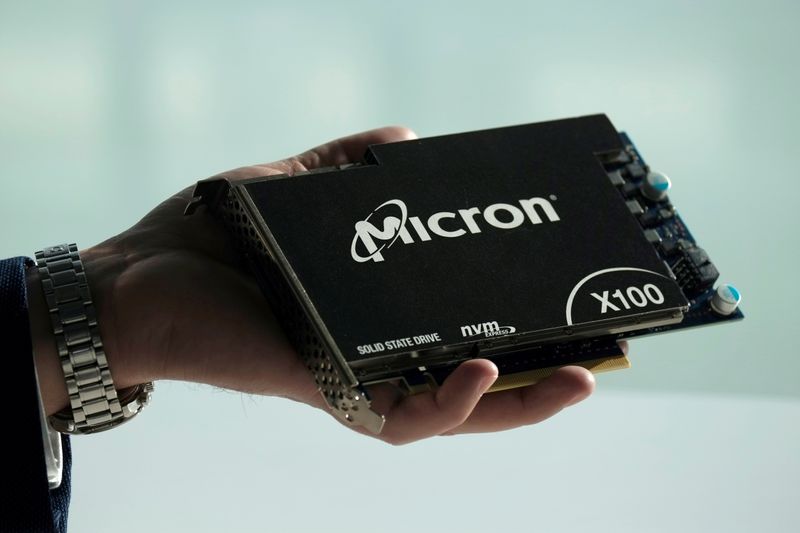
Mizuho reiterated an Outperform rating on Micron and kept its $800 price target, citing AI-driven memory demand, undersupplied DRAM/NAND markets, and potential HBM4/HBM4e pricing increases of 70%-100% in 2027. The firm also highlighted long-term agreement interest and a new Taiwan capacity addition that could start in 2H 2027. The article is broadly constructive for Micron, reinforcing bullish analyst sentiment and growth expectations, though it is mainly commentary rather than a new company-reported catalyst.
The market is still underestimating how leverage in memory pricing works when AI demand shifts from “accelerator-led” to “system-wide.” If CPU-attached memory intensity rises alongside agentic workloads, the implication is not just higher DRAM unit demand but a re-rating of the entire memory stack: lead times, contract duration, and customer pre-buy behavior should all extend, which typically keeps gross margins elevated longer than spot pricing models assume. That tends to favor the supplier with the cleanest mix and the most pricing power, while squeezing downstream OEMs that are slower to pass through costs.
The bigger second-order effect is on capacity allocation. If non-HBM supply is already tight, any incremental wafer starts will likely be diverted toward the highest-return bits, delaying relief in legacy and mid-tier products. That creates a bifurcation where AI-infrastructure buyers remain protected by LTAs, while enterprise, mobile, and consumer end markets face intermittent shortages and higher contract volatility; this is how a “good demand” story becomes a multi-quarter margin dislocation story for everyone else.
The main risk is not demand disappearance, but timing. Memory cycles can stay irrational for long stretches, yet the inflection usually comes when new supply scheduled for 12–18 months out becomes visible and customers realize they over-committed. If AI capex pauses or hyperscalers digest inventory for even one quarter, the market will de-rate forward EPS aggressively because consensus is now embedding a very long runway. That makes the next 1–2 quarters more about order-book durability and contract terms than headline pricing targets.
The contrarian view is that the setup may be good for fundamentals but bad for forward returns from here. When sell-side targets start implying stretched upside across multiple years, the market is often already discounting most of the value transfer from customers to suppliers. The better trade may be relative value within semis: the beneficiaries are not the broad AI complex, but the parts of the stack with direct memory exposure and the few names that can own scarce capacity rather than simply consume it.
AI-powered research, real-time alerts, and portfolio analytics for institutional investors.
Request DemoOverall Sentiment
moderately positive
Sentiment Score
0.55
Ticker Sentiment
