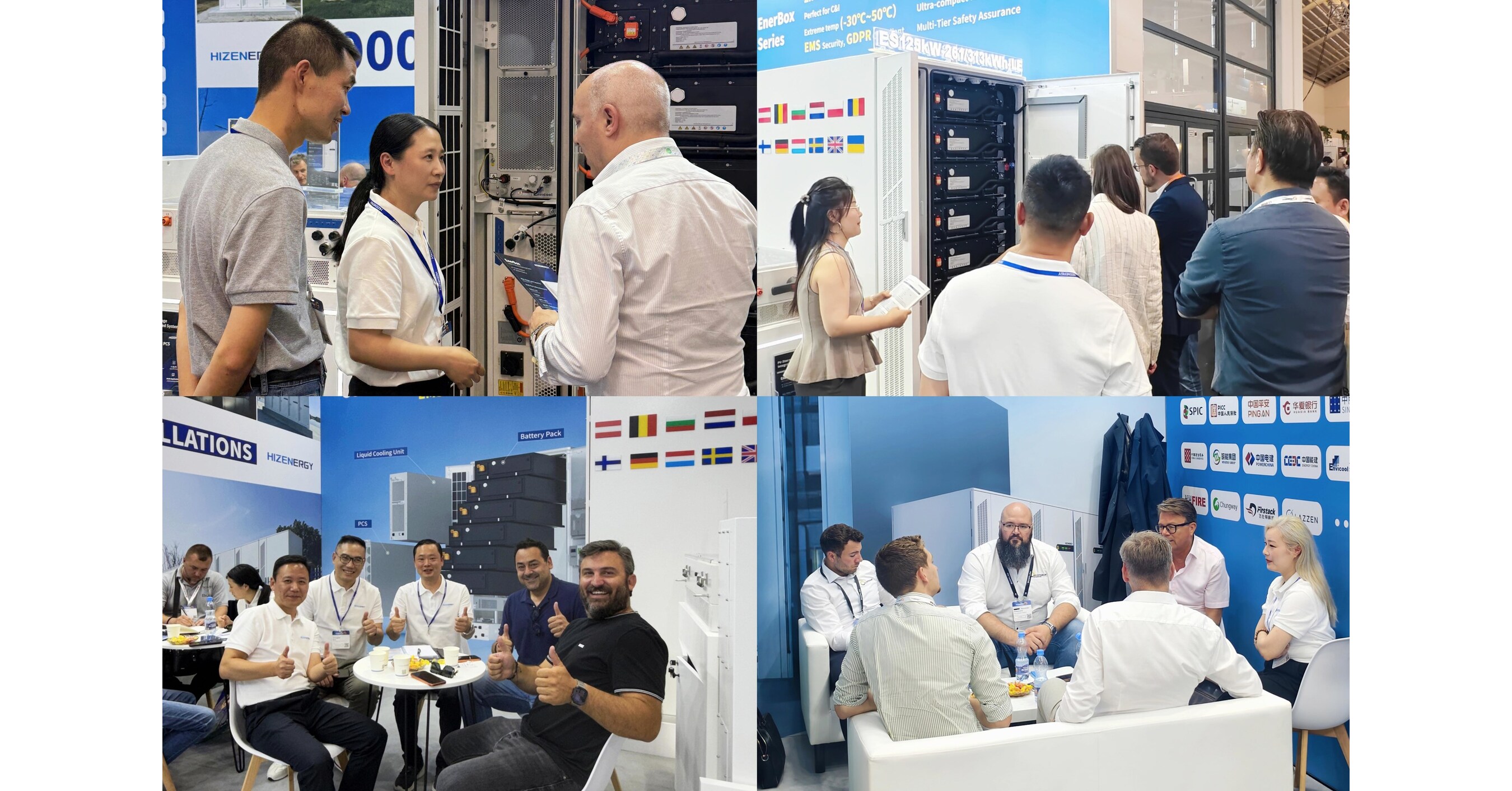
HIZENERGY stellte auf der „The smarter E Europe 2026“ flüssigkeitsgekühlte PCS-Modelle mit 300 kW und 460 kW vor, um Kapazitäts- und Effizienzlücken in europäischen C&I-Projekten zu schließen. Für europäische KMU präsentierte das Unternehmen die integrierte ENERBOX ES125 (125 kW) in Varianten mit 261 kWh bzw. 313 kWh mit EU-Konformität, leiser Flüssigkeitskühlung und lokalisierter Fernsteuerung. Zudem wurden drei Kooperationsvereinbarungen mit europäischen Systemintegratoren/O&M-Partnern unterzeichnet, um die Marktdurchdringung in Deutschland, den Niederlanden, Italien, Spanien und Österreich zu beschleunigen.
This is more relevant as a pricing-power signal than as a company-specific event: a Chinese entrant is trying to move the battleground in European C&I storage from hardware differentiation to compliance, service, and local-channel access. If that playbook works, the first-order winner is European end-customer adoption, while the second-order loser is the mid-tier hardware layer that still depends on premium ASPs to cover fixed R&D and certification costs.
The more interesting implication is margin migration. Cheaper, EU-compliant systems tend to lower project hurdle rates, which expands the addressable market for installers, EPCs, and O&M providers, but also accelerates commoditization for PCS/inverter vendors that lack scale or installed-base stickiness. That usually shows up with a lag: procurement decisions and tender pricing in 1-3 months, then margin pressure and mix deterioration over 6-18 months if the entrant can prove uptime and service quality.
The main risk to the thesis is that Europe’s C&I buyers care less about spec sheets and more about bankability, warranty enforcement, and local response times. If certification slips, field failure rates rise, or trade scrutiny increases, the “low-cost compliant import” story can reverse quickly. For now, the signal is directional but not yet investable as a standalone catalyst; I would treat it as an early warning on margin compression rather than a confirmation of market-share loss.
Contrarianly, the consensus may be overestimating how quickly hardware share can move in a regulated end-market. The likely durable winner is not the seller of batteries or PCS, but the local integrator plus software/O&M stack that controls permitting, interconnection, and lifecycle service.
AI-powered research, real-time alerts, and portfolio analytics for institutional investors.
Request DemoOverall Sentiment
mildly positive
Sentiment Score
0.25
