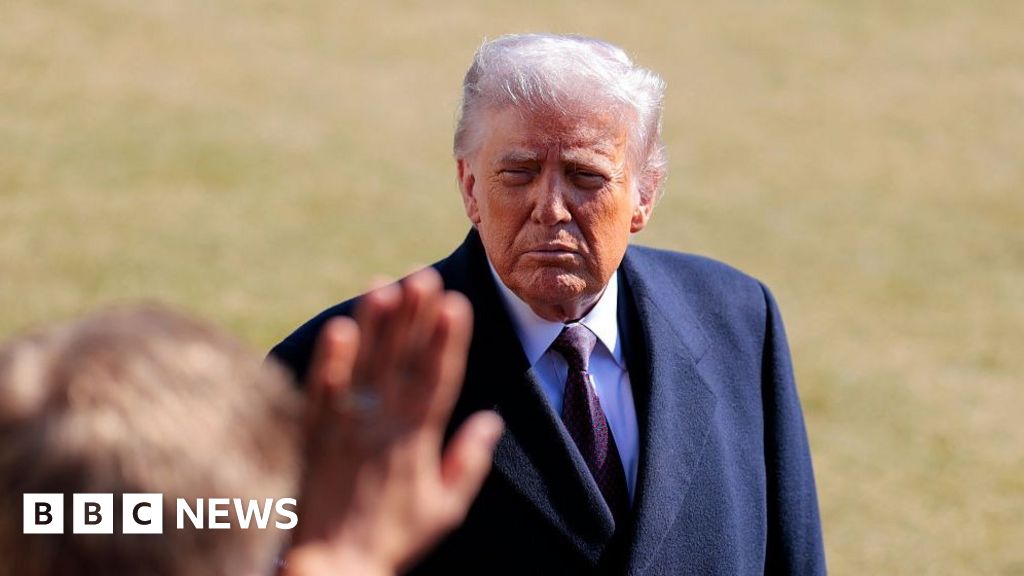
President Trump said he is "not thrilled" after indirect nuclear talks with Iran in Geneva ended without a deal and has not ruled out military action, even as he emphasizes a preference for diplomacy. The administration has ordered a major military buildup in the region—including two aircraft carriers and additional forces—while several Western governments have withdrawn or advised non-essential embassy staff to leave Iran and Israel; negotiators plan technical talks next week in Vienna. The IAEA reported it has been denied access to Iranian enrichment sites, raising inspection concerns and elevating tail risks for regional conflict, oil-market volatility and risk-off investor flows.
Market structure: Immediate winners are defense primes (LMT, RTX, NOC) and commodity producers (XOM, CVX) as military demand and oil-risk premia rise; losers are airlines (UAL, AAL), regional tourism, and EM assets with Lebanon/Israel/Iran links. Pricing power shifts to defense contractors (multi-year procurement tails) and oil exporters who can push spot Brent higher by 15–30% if shipping through the Gulf is disrupted (days–weeks). Cross-asset: expect USD and JPY strength, Treasuries/TLT inflows, gold (GLD/GDX) upside, equity volatility spike (VIX +10–20 pts) and widening credit spreads in HY/HYG.
Risk assessment: Tail risk is a direct strike that closes the Strait of Hormuz causing 2–4 mb/d supply shock and a >25% jump in Brent; contingency for escalation to Israel is non-linear. Time horizons: immediate (days) for volatility and flight-to-quality, short-term (weeks–months) for energy and defense repricing, long-term (quarters) for sanctions, reshoring and defense budgets. Hidden dependencies include insurance/LC/charter market disruptions, shipping reroutes (higher freight), and delayed OPEC responses. Catalysts: Vienna technical talks, IAEA access denials, troop movements and any tanker/port incidents.
Trade implications: Favor 3–5% tactical overweight in large-cap defense and energy for 3–12 months, paired with 1–2% gold/bond hedges; trim EM equity exposure by 2–3% and sell short small cap travel/tourism names (EIS puts or UAL). Use options to express asymmetric risk: 1–3 month call spreads on XLE and 1-month puts on EIS/UAL; scale in after volatility spikes and set profit targets. Monitor Brent breaching $85–95/bbl or VIX >30 as add-on triggers.
Contrarian angles: Market may be underestimating persistence of sanctions and IAEA access denial—this favors long-dated defense/energy exposure vs. short-term pop trades. Reaction may be overdone in crude if diplomatic de-escalation occurs (histor parallels: 2019 tanker scares saw 15–25% transient oil spikes then mean-reversion in 2–3 months), so size positions with stop-profit at +20% and soften at Brent >$95. Unintended consequences: sustained higher shipping costs and inflation could pressure corporate margins and push central banks to re-evaluate policy, amplifying fixed-income volatility.
AI-powered research, real-time alerts, and portfolio analytics for institutional investors.
Request DemoOverall Sentiment
strongly negative
Sentiment Score
-0.70
Ticker Sentiment
