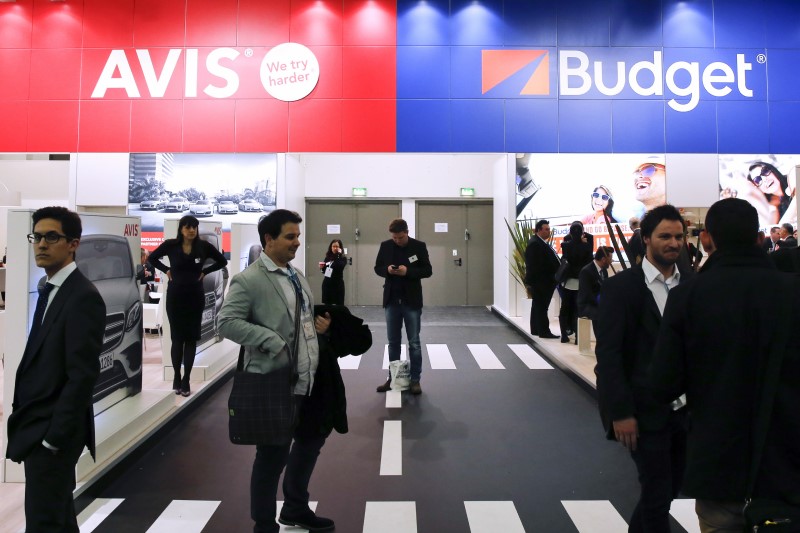
Barclays cut its price target on Avis Budget Group to $140 from $150 while reiterating an Underweight rating, citing lingering technical concerns despite better-than-expected fundamentals. The firm now estimates 2026 EBITDA at $972 million versus $876 million consensus, and noted first-quarter progress in fleet depreciation and pricing, including Americas revenue per day turning positive for the first time since Q4 2022. Recent Q1 results were mixed, with EPS of -8.01 missing the -7.14 estimate but revenue of $2.53 billion beating the $2.43 billion forecast.
The supply-chain readthrough is bigger than the headline move suggests: if Apple is genuinely broadening foundry exposure, the immediate beneficiary is not just one alternate supplier but the entire non-TSMC ecosystem that can credibly absorb leading-edge volume over time. Even a modest allocation shift would matter because Apple sets the qualification bar for yields, packaging, and reliability; once that work is done, the optionality extends to other high-end customers who prefer a second source for geopolitical resilience. The market is likely underestimating how long this takes—initial design wins are a 12-24 month process, but capacity reservation and ecosystem signaling can move sooner.
TSMC’s risk is less about losing a large chunk of Apple revenue tomorrow and more about margin structure and bargaining power over the next 2-4 years. A second-source strategy weakens pricing discipline across advanced nodes, especially if the alternate supplier can use Apple as an anchor tenant to accelerate capex utilization. Intel’s setup is asymmetric: the stock can re-rate on validation alone, but the operational proof points need to extend beyond press reports into packaging, yields, and actual volume commitments before the market should pay for a true foundry franchise.
On the trading side, the event is constructive for Intel but probably not enough to chase the common outright after a rumor-driven pop. The cleaner expression is a relative-value long INTC / short TSM pair, because the stock reaction to optionality is likely to be faster than the earnings translation, while TSM’s multiple is more exposed to incremental headline risk if diversification becomes a recurring theme. The key contrarian point is that Apple may be signaling supply-chain insurance rather than a meaningful migration; in that case, the first move in INTC can persist, but the second leg higher likely stalls unless there is a confirmed design win or packaging roadmap.
For Avis Budget, the improvement in pricing and fleet dynamics is real, but the equity still looks like a crowded squeeze with fragile support once the narrative shifts from recovery to normalization. The biggest second-order issue is that better fundamentals can coexist with a poor stock if technical ownership is already saturated and expectations are extrapolated too far ahead. That makes the setup more suitable for fade-trade structures than for long-only exposure.
AI-powered research, real-time alerts, and portfolio analytics for institutional investors.
Request DemoOverall Sentiment
neutral
Sentiment Score
0.05
Ticker Sentiment
