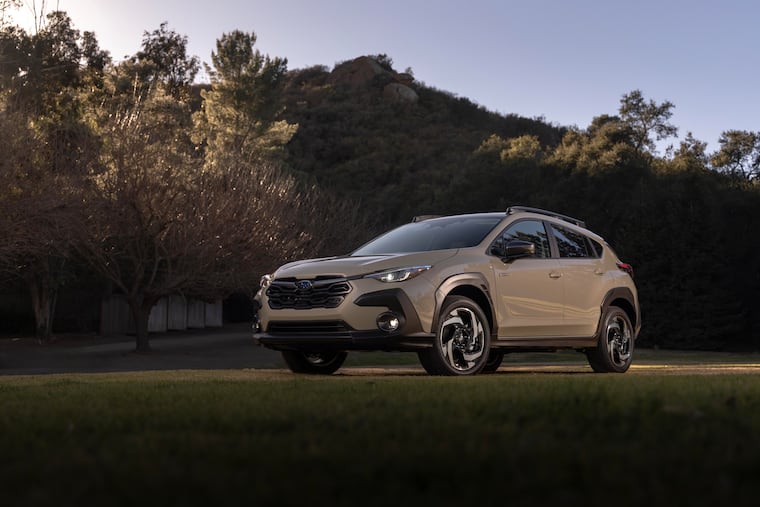
Subaru’s 2026 Crosstrek Hybrid returns after a three-year hiatus with a new hybrid powertrain, 194 horsepower, and a 12.3-inch touchscreen, priced at $38,015 as tested. The review is mixed: it delivers better fuel economy than the nonhybrid and keeps mechanical AWD, but it is slower than the Mazda CX-30 Turbo at 0-60 mph in 7.7 seconds and is criticized for vague handling and a less effective infotainment setup. Overall, the piece is a product comparison rather than a material business update, so market impact is limited.
Ford is trying to compete in the most structurally unforgiving part of the U.S. auto market: sub-$40k crossovers where buyers are increasingly paying up for a thin layer of perceived efficiency and safety rather than outright excitement. The hybrid’s real significance is not unit volume but mix protection — it gives Ford a reason to hold gross margins in a segment where ICE-only products are becoming more promotion-heavy, while also reducing its regulatory carbon burden at the margin. The second-order effect is that this is less a growth story than a defense of pricing power: if the hybrid take-rate rises, it can partially offset weaker economics in lower-trim gas variants.
The problem is that the product appears to improve rational appeal without creating emotional pull, which matters because in this price band the competition is cross-shopped constantly and brand switch costs are low. A vehicle that is merely efficient but not notably better to drive or live with risks becoming a ‘good enough’ option that wins only when incentives do the work. That is a margin risk for Ford, because discounting on a hybrid halo model tends to leak into adjacent trims and compresses the perceived premium on the broader compact/SUV lineup.
The contrarian takeaway is that the market may overestimate near-term lift from any single hybrid launch and underestimate the cumulative strategic value of competence. Even if this model does not become a breakout, it helps Ford train buyers into accepting electrified drivetrains without forcing a full BEV commitment, which is valuable if EV adoption slows over the next 12-24 months. The more important signal is whether Ford can use these incremental hybrid wins to stabilize transaction prices while competitors fight for share with incentives; if not, the launch is more optics than economics.
AI-powered research, real-time alerts, and portfolio analytics for institutional investors.
Request DemoOverall Sentiment
neutral
Sentiment Score
0.05
Ticker Sentiment
