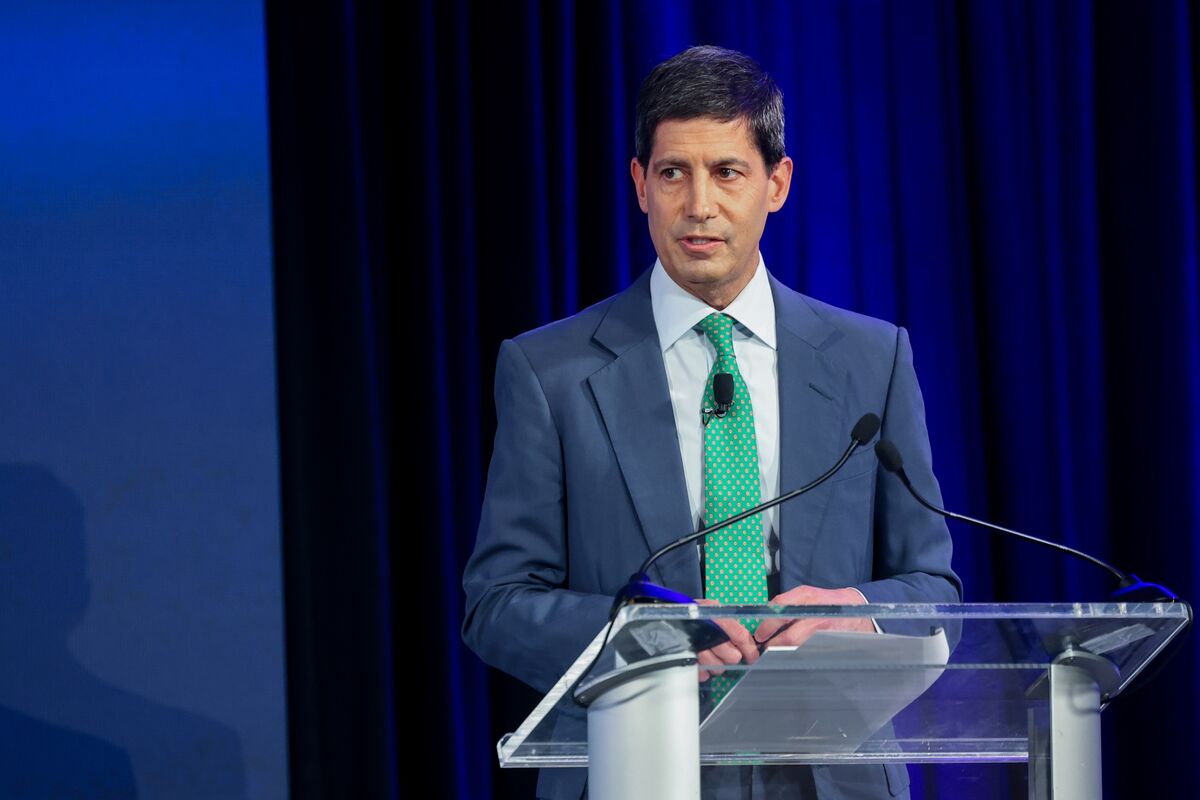
Kevin Warsh, President Donald Trump’s nominee to chair the Federal Reserve, will face a Senate Banking Committee confirmation hearing at 10 a.m. Tuesday, with lawmakers expected to press him on monetary policy, inflation, and interest rates. The hearing is described as potentially the most contentious in decades, making it a politically sensitive but still largely procedural event for markets until policy specifics emerge.
This is less a single-event headline than a regime-shift catalyst for rates volatility. The market’s first-order reaction will be in the front end, but the more important trade is the repricing of the Fed reaction function: if investors infer a more politicized or growth-tolerant central bank, the curve can steepen even if short rates rally initially. That matters because the winners are not just banks; anything levered to a higher term premium and wider risk premia becomes relatively more attractive versus long-duration growth.
The second-order effect is on financial conditions, not just yields. A central bank perceived as less independent can tighten USD liquidity through higher inflation expectations and wider credit spreads, even if nominal rates fall on recession fears. That creates a subtle loser set: high-multiple software, small-cap growth, and levered private-credit borrowers that depend on stable term funding may underperform before the macro data visibly rolls over.
The contrarian risk is that the hearing becomes theater and the policy path barely changes; in that case, the trade unwinds fast because positioning is already crowded into the “political Fed” narrative. The bigger tail risk over months is not one meeting, but the signaling cascade into 2026 inflation expectations and Treasury term premium, which could force the market to reprice the entire front end higher even in a slowing economy. If the nominee emphasizes credibility and data-dependence, the knee-jerk steepener should be faded.
The best asymmetric setup is to express a barbell: benefit from higher term premium while hedging growth-duration exposure. In practice, that favors financials and value over software, with optionality around rate volatility rather than outright duration direction. Short-dated options are preferable because the immediate catalyst is political; the structural trade is in the cross-asset follow-through over the next 1-3 months.
AI-powered research, real-time alerts, and portfolio analytics for institutional investors.
Request TrialOverall Sentiment
neutral
Sentiment Score
0.00
