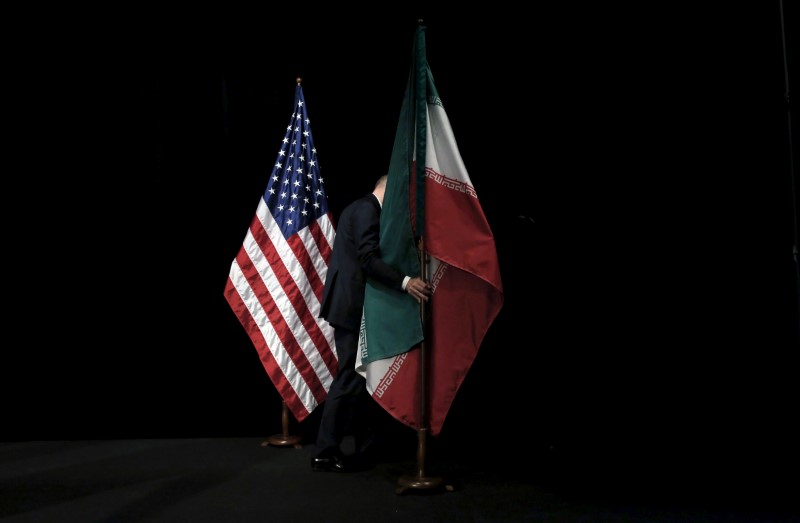
The U.S. will begin enforcing a blockade on maritime traffic entering and leaving Iranian ports from 10 AM ET on April 13, escalating tensions after 21 hours of failed U.S.-Iran talks in Islamabad. The move covers vessels of all nations calling at Iranian ports and coastal areas, including the Arabian Gulf and Gulf of Oman, raising risks for regional shipping flows and energy markets. Regional governments are still trying to restart diplomacy and extend a fragile two-week ceasefire, but the situation remains highly volatile.
The immediate market issue is not just crude sensitivity; it’s the re-pricing of maritime risk premia across the entire Gulf shipping stack. Even if physical barrels are not fully removed, a blockade raises effective costs through longer routing, higher war-risk insurance, vessel delays, and precautionary inventory hoarding — all of which can tighten prompt balances faster than headline supply numbers suggest. That supports front-end energy strength and steepens the backwardation structure, but it also hits downstream refiners and any industry with just-in-time Gulf exposure.
The second-order winner set is broader than energy producers: non-Gulf LNG, U.S. midstream/export infrastructure, and defense/logistics names should outperform as buyers pay for optionality and route redundancy. The losers are airlines, ocean freight, Asian and European industrial importers, and refiners dependent on Middle Eastern feedstock; their margin pressure can show up within days via freight and insurance, but the earnings impact is more likely to surface over the next 1-2 quarters as inventories roll through. If the blockade persists beyond a few weeks, expect a cascade of working-capital stress in commodity users and a stronger bid for strategic storage.
The key contrarian risk is that this is still a policy event, not yet a confirmed supply shock, so the market may overshoot on the first headline. If diplomacy resumes within days and the ceasefire extends, vol can mean-revert quickly, especially in products where positioning is crowded. The more durable opportunity is to own asymmetry: companies with physical optionality and domestic balance-sheet strength that benefit from dislocation but do not require a full-scale escalation to work.
AI-powered research, real-time alerts, and portfolio analytics for institutional investors.
Request DemoOverall Sentiment
strongly negative
Sentiment Score
-0.78
