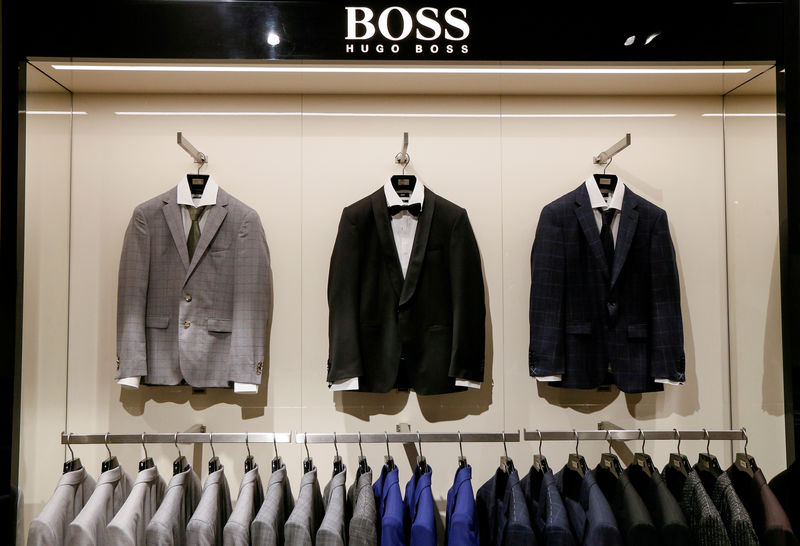
Hugo Boss Q1 profit attributable to equity holders fell 52% to 17 million euros, while sales declined 9% to 905 million euros amid weak consumer demand, elevated inflation, and interest-rate concerns. Retail and wholesale sales both fell, and the company continued to spend heavily on marketing and its Claim 5 Touchdown restructuring plan. Management reaffirmed 2026 guidance for mid-to-high single-digit sales declines and EBIT of 300 million-350 million euros.
The core read-through is not just weak discretionary demand; it is a margin-reset story where brand investment is being forced ahead of revenue normalization. That tends to hurt mid-tier premium names first because they lack the pricing power of true luxury but still carry the fixed-cost structure of a fashion franchise, so incremental marketing spend may preserve relevance without restoring operating leverage.
Second-order effects likely show up in the wholesale channel before they show up in headline comps. Retail can be defended with promotional cadence and traffic engineering, but wholesale partners tend to de-risk inventory faster when sell-through disappoints, which can create a multi-quarter destock loop and pressure adjacent European apparel brands with similar aspirational positioning.
The guidance signal matters more than the quarter: management is effectively telling you the turnaround is a 12-24 month execution trade, not a near-term demand recovery story. If inflation eases and rates fall, the stock can bounce on multiple expansion before fundamentals inflect, but the more durable catalyst would be evidence that marketing spend is converting into higher full-price sell-through rather than merely sustaining top-line at lower margins.
Contrarianly, the market may already be discounting a bad consumer backdrop, so the asymmetry is no longer on revenue surprise but on restructuring credibility. If the company can stabilize Asia and hold gross margin while cutting overhead, the downside from here is less about another earnings miss and more about a prolonged dead-money period, which is often where shorts bleed unless timed around inventory or guidance resets.
AI-powered research, real-time alerts, and portfolio analytics for institutional investors.
Overall Sentiment
moderately negative
Sentiment Score
-0.45
Ticker Sentiment
