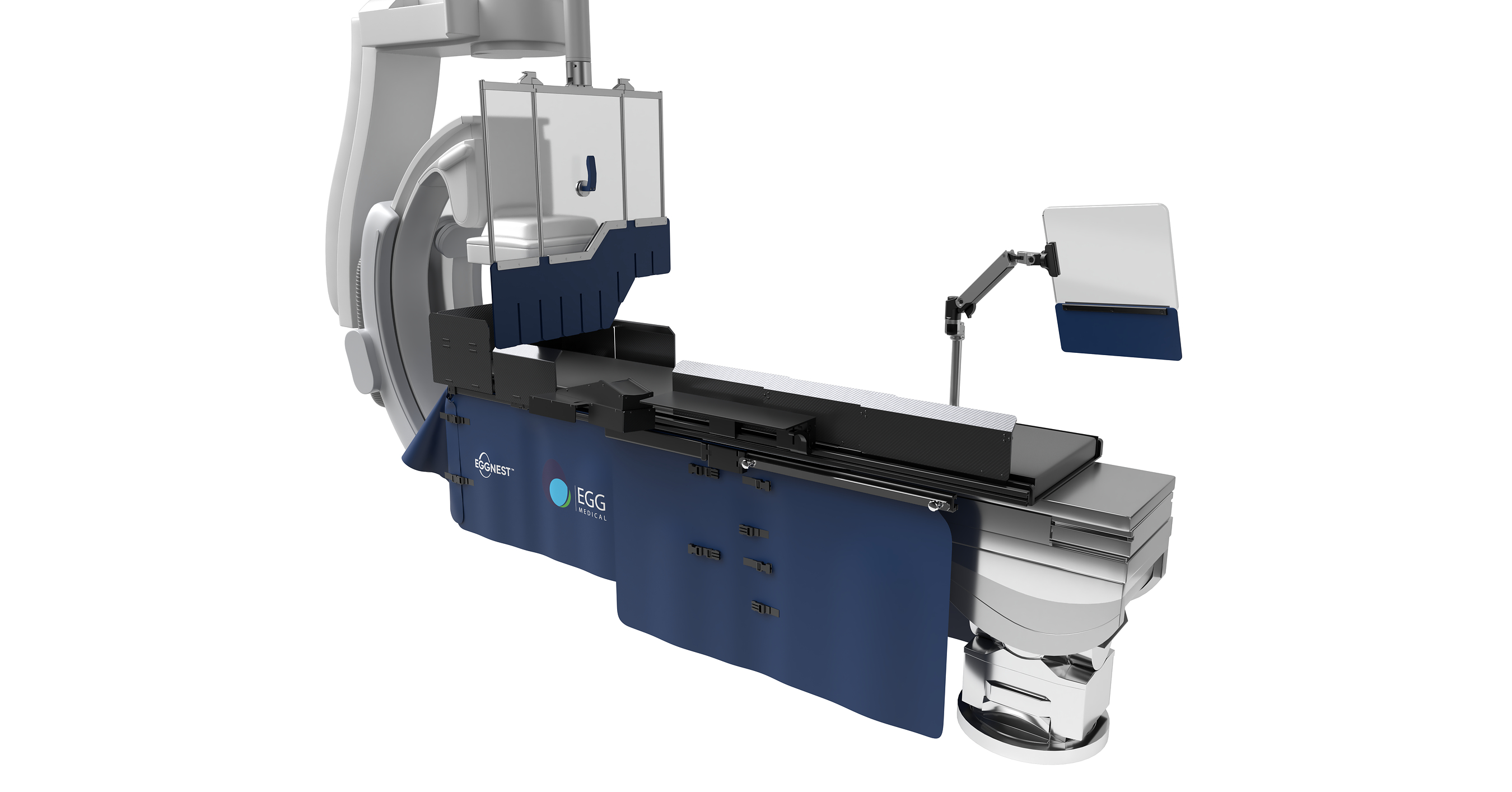
Egg Medical launched EggNest® Complete 2.0, a next-generation enhanced radiation protection device for interventional labs, emphasizing a construction-free installation (no structural changes or permitting) to keep labs operational during setup. The company also highlights meaningful weight reduction via the Protect 2.0 base platform and more durable, easy-to-clean molded carbon fiber components. Overall, the release is product-focused with limited indication of near-term financial impact.
The economic lever here is not the device itself but the friction it removes from adoption. If a hospital can avoid room downtime, permitting, and contractor coordination, the sales cycle for interventional-suite add-ons can shorten materially; that tends to favor vendors with low-installation, workflow-preserving products and disadvantage retrofit-heavy incumbents and local construction providers. For public markets, the first-order revenue impact is likely too small to matter, but the second-order effect is a modestly higher probability of incremental capex in cath labs, EP labs, and IR suites that were previously deferred.
The key question is whether this becomes a repeatable procurement pattern or remains a niche upgrade story. The next 1-2 quarters matter most for order conversion and installed-base announcements; without independent evidence of backlog growth, this should be treated as marketing rather than signal. Over 6-18 months, the only meaningful upside would be a broader workflow standardization trend that nudges procedural volumes and refresh cycles at large hospital systems, with the biggest beneficiaries being high-throughput operators rather than device manufacturers.
Contrarian view: the market may overestimate how quickly hospitals adopt even "construction-free" capital products because capital committees still demand ROI proof, infection-control signoff, and staff retraining. The thesis breaks if there is no visible repeat order cadence, if procurement remains lumpy, or if budget pressure pushes hospitals to postpone non-reimbursement-enhancing upgrades. For now, this looks like an incremental product improvement, not a sector-level catalyst.
AI-powered research, real-time alerts, and portfolio analytics for institutional investors.
Request DemoOverall Sentiment
mildly positive
Sentiment Score
0.18
