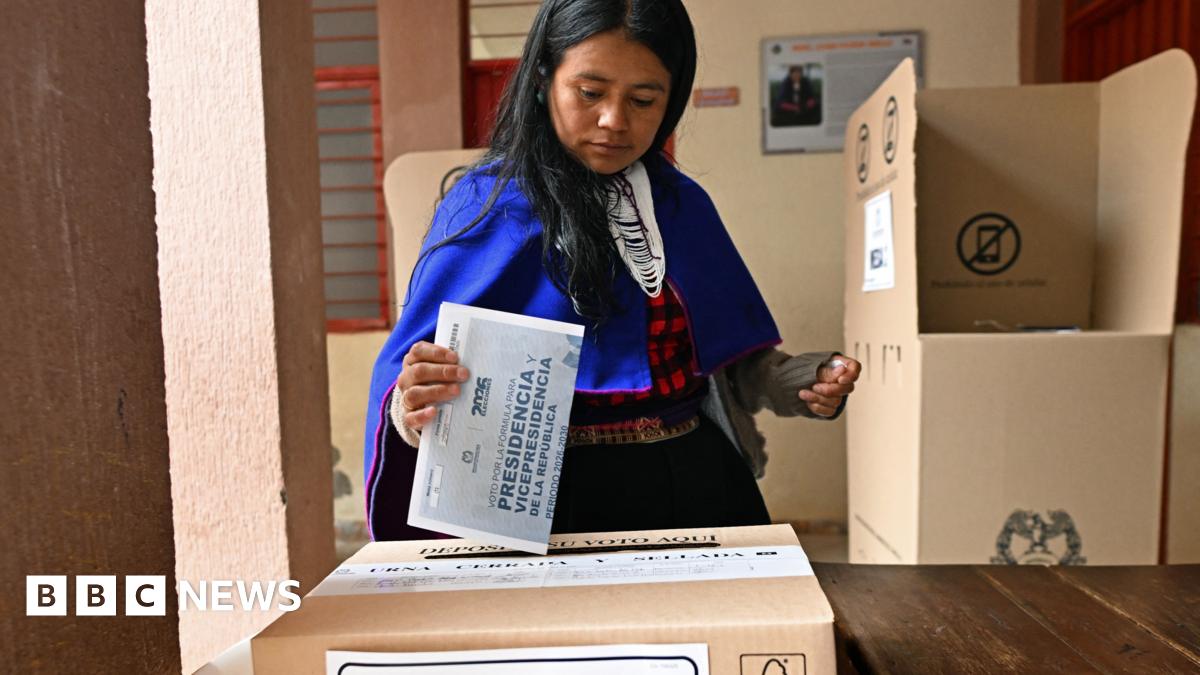
Colombia’s presidential election has closed, with Iván Cepeda leading polling but no candidate expected to win outright, making a runoff likely on 21 June. The contest is centered on security, drug trafficking, and relations with the US, with both Abelardo de la Espriella and Paloma Valencia favoring a tougher military approach while Cepeda backs Petro’s stalled 'total peace' strategy. The vote matters for Colombia’s regional alignment and anti-drug policy, but near-term market impact is likely limited unless the result signals a sharp policy shift.
The market implication is less about who wins Sunday’s count and more about whether Colombia gets a policy regime with enough legitimacy to keep security spending, foreign investment, and U.S. cooperation from becoming hostages to coalition politics. A Cepeda victory likely extends policy continuity with a softer tone, which is marginally favorable for sovereign risk because it reduces the odds of abrupt institutional fights, but it also leaves the violence problem structurally unresolved. A de la Espriella or Valencia win would likely be more market-friendly near term on security optics, though the bigger medium-term issue is whether a hardline mandate actually improves the operating environment or simply escalates conflict and raises fiscal costs.
The second-order effect is on risk premia across Colombia’s domestic beneficiaries: banks, utilities, toll roads, and concession-heavy infrastructure names should trade primarily on whether post-election rhetoric narrows or widens the spread between policy ambition and implementation capacity. If the winner pivots toward tougher security and a closer U.S. alignment, the most immediate beneficiaries are contractors, logistics, and transport-linked cash-flow stories that gain from lower disruption and stronger public order. The losers are NGOs, local civil-society-driven programs, and any sector exposed to labor unrest or land-use disputes, but the investable expression is really in compression of credit spreads and improved access to project finance rather than a simple equity rerating.
The key catalyst window is the runoff and then the first 30-60 days of cabinet appointments, not election night itself. A true reversal would require either a surprise moderation from a hardliner or a credible security plan from the left that changes expectations around violence and narco economics; absent that, headline volatility likely stays high while fundamentals move slowly. The contrarian view is that the market may be overestimating the benefit of a pro-U.S. administration: in Colombia, improved relations can be positive for funding and trade, but they do not automatically translate into lower insecurity, and security failure would quickly overwhelm any initial pro-business relief.
AI-powered research, real-time alerts, and portfolio analytics for institutional investors.
Request TrialOverall Sentiment
neutral
Sentiment Score
-0.05
For duration investors, the cleaner trade is to buy the post-event de-risking rather than chase election headlines: the vote should reduce some tail risk premium, but only if the runoff is orderly and violence does not spike. That argues for selective exposure to high-quality Colombia assets on weakness, with tighter stops into the runoff outcome and cabinet reveal. The asymmetry is best if the market underprices a moderate, technocratic coalition that preserves external alignment while avoiding a policy shock.
