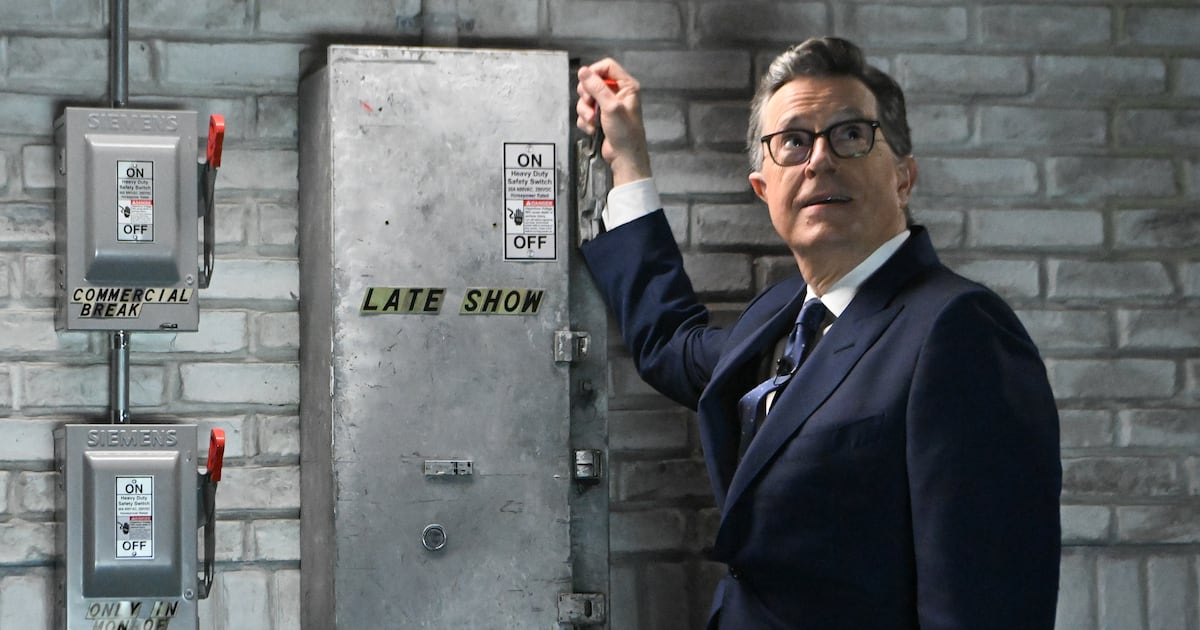
The Late Show drew 3.3 million viewers in its penultimate week, making Stephen Colbert the most-watched late-night host and capping an extended finale that reached 4.1 million viewers for CBS's May 12 broadcast. The cancellation was framed by CBS as a financial decision, but the article emphasizes Colbert's strong audience appeal and the political backlash around his departure. The news is meaningful for media and entertainment sentiment, but the direct market impact is limited.
The real market signal here is not the late-night ratings themselves, but the monetization of political controversy into audience retention. CBS effectively proved that a cancellation narrative can create a short-lived scarcity premium: viewers showed up because the show became a referendum on censorship, not because the format improved. That dynamic is usually stronger for linear media than advertisers or sponsors assume, because outrage-driven sampling can temporarily lift reach even as long-run economics remain structurally weak.
For NYT, the second-order implication is modestly positive: politically charged entertainment continues to reinforce demand for premium explanatory journalism and opinion-led coverage, especially when media brands become part of the news cycle. The risk is that this is mostly an attention trade, not a durable subscription catalyst, so any upside is likely concentrated in engagement and bundles rather than a step-change in ARPU. For NMAX, the controversy is a reminder that low-credibility opinion platforms can still harvest audience spikes from partisan conflict, but they remain vulnerable to being crowded out when the narrative shifts back to marquee legacy voices with broader appeal.
The consensus mistake is to treat this as a verdict on one host’s popularity rather than on distribution power and audience fragmentation. The more important takeaway is that legacy TV can still concentrate national attention for brief windows, which helps ad inventory and negotiating leverage, but only around eventized moments. That favors owners with strong live-event programming and brands capable of converting spikes into cross-platform engagement; it does not rescue the underlying late-night business model.
Catalyst horizon is days to weeks: the sentiment bump should fade quickly once the finale exits the cycle, unless CBS, ABC, or another network tries to replicate the ‘controversy-as-programming’ playbook. The key risk is political backlash or advertiser sensitivity if the content is perceived as overtly partisan, which would cap monetization even if viewership holds.
AI-powered research, real-time alerts, and portfolio analytics for institutional investors.
Request DemoOverall Sentiment
mildly positive
Sentiment Score
0.15
Ticker Sentiment
