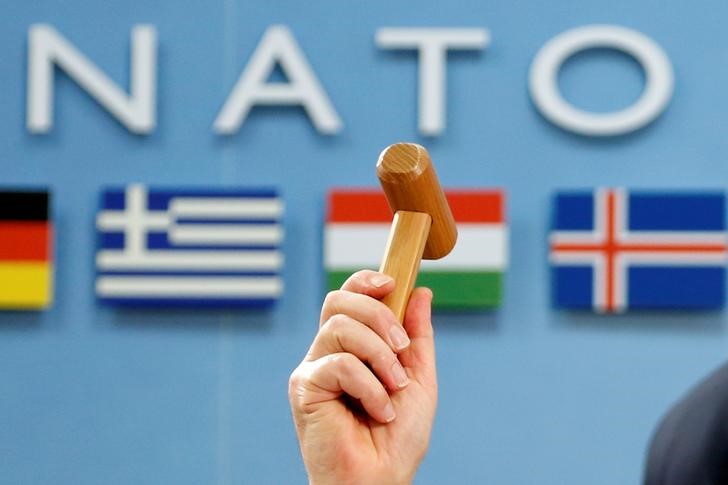
The article reports that a U.S. internal Pentagon email outlined options to punish NATO allies seen as failing to support the Iran war, including suspending Spain from NATO and reviewing U.S. positions on Britain’s Falkland Islands claim. Trump has also criticized allies for not helping reopen the Strait of Hormuz and has floated withdrawing from NATO, underscoring elevated alliance तनाव and policy risk. While the piece is geopolitical rather than market-specific, it signals potentially material escalation for defense and energy-related markets.
The market is underpricing how quickly a geopolitics dispute can morph into a funding and logistics shock for European defense and industrial names. Any hint that Washington is willing to use NATO access, basing, and alliance status as bargaining chips raises the probability of fragmented European procurement, faster rearmament budgets, and a higher “sovereign autonomy” premium across EU defense contractors and dual-use infrastructure suppliers. That is structurally bullish for U.S.-listed defense primes and select subcontractors, but it also creates a dispersion trade: countries seen as obstructionist can face domestic pressure to diversify away from U.S. systems, while those aligned with Washington may accelerate orders.
The second-order risk is not the headline sanction threat itself; it is the normalization of policy coercion outside the traditional sanctions toolkit. If alliance relationships become transactional, the hidden cost is higher for shipping, aerospace, and industrials that rely on clean overflight, base access, and secure maritime corridors. That should keep risk premia elevated in any supply chain exposed to the Strait of Hormuz or Mediterranean transit, even if oil itself does not immediately spike. The timeframe is days-to-weeks for positioning, but months for procurement and capex implications.
Contrarian takeaway: the clearest beneficiary may not be the obvious defense names already crowded in the tape, but the picks-and-shovels infrastructure and compute suppliers that gain from sustained defense capex and command-and-control modernization. The structured data’s positive read-through for high-beta AI hardware suggests the market is linking conflict escalation to accelerated demand for resilient data-center and edge-compute infrastructure, not just weapons. If the ceasefire extends and direct Iran escalation recedes, the risk is a sharp mean reversion in defense sentiment while the infrastructure beneficiaries hold up better because their demand is budgeted, not narrative-driven.
AI-powered research, real-time alerts, and portfolio analytics for institutional investors.
Request TrialOverall Sentiment
mildly negative
Sentiment Score
-0.20
Ticker Sentiment
