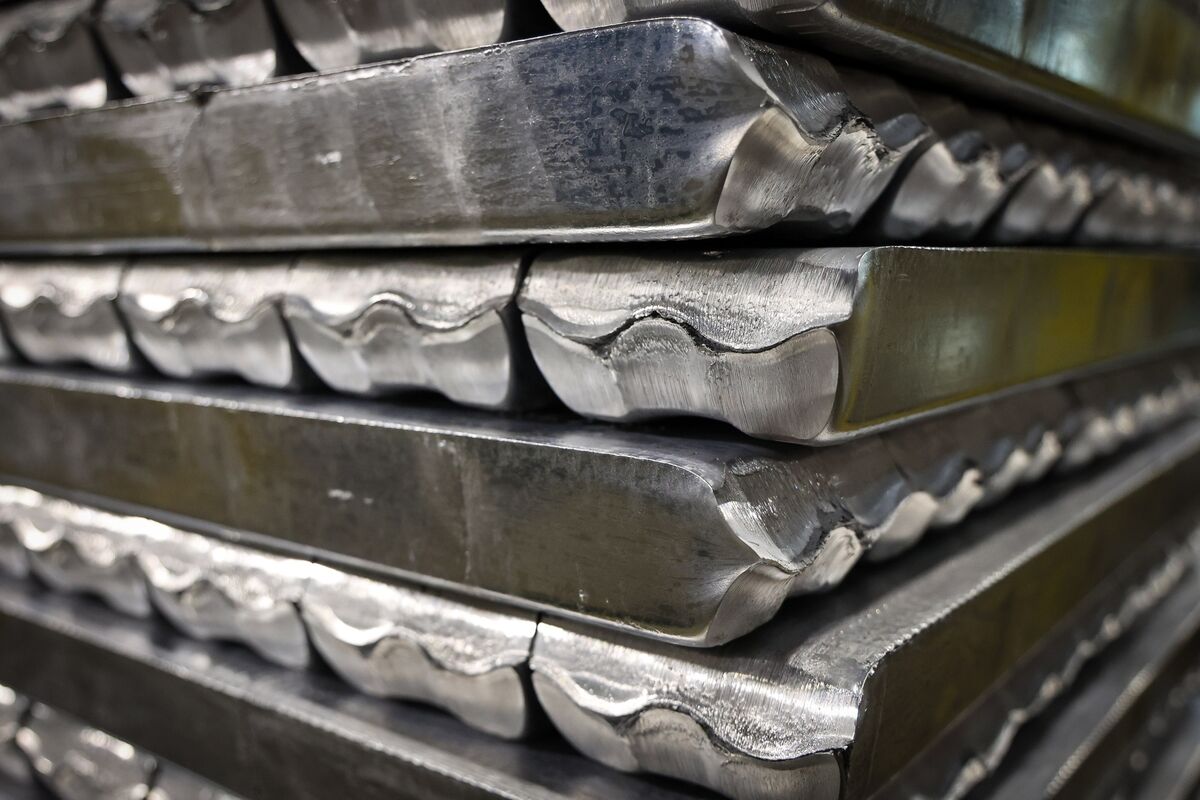
Aluminum plunged as much as 8.4% to $3,115/ton on the LME — the biggest drop since 2018 — amid growing worries about the global economic impact of the war in Iran. The move erased earlier conflict-driven gains and occurred alongside copper down >4%, gold down >5% and sharp weakness in global equities, signaling a broad, risk-off selloff across industrial metals and wider markets.
The price reversal has immediate redistributive consequences along the aluminum value chain: low-cash-cost, hydro-powered smelters (Nordic/Canadian footprints) will widen margins and can outlast high-cost Chinese/old Gulf capacity, accelerating curtailments over 1–3 months and tightening global usable capacity over 6–12 months. Downstream users with large auto and packaging exposures will see margin relief, which should flow to EBIT over the next two reporting cycles unless scrap premiums adjust more slowly than primary metal.
Market microstructure and flows are the proximate amplifier. Leveraged positions in aluminum futures/ETFs and correlated copper positions can force cross-commodity liquidation; thinness in some LME locations means a mechanical overshoot and creates a non-linear short-covering squeeze risk if physical demand re-emerges or inventories fail to rebuild. That makes near-term directionality dominated by risk-off headlines and fund deleveraging (days–weeks) rather than fundamentals (months).
Key catalysts to watch: Iran conflict trajectories (escalation → renewed risk premium, de-escalation → further downside), Chinese industrial activity and inventory signals (SHFE/LME stocks) over the next 4–12 weeks, and power/gas price moves that determine smelter cash costs. A constructive reversal would require sustained Chinese restocking or explicit curtailments announced by high-cost producers; absent that, expect a choppy base-building phase before clearer structural moves emerge.
AI-powered research, real-time alerts, and portfolio analytics for institutional investors.
Overall Sentiment
strongly negative
Sentiment Score
-0.60
