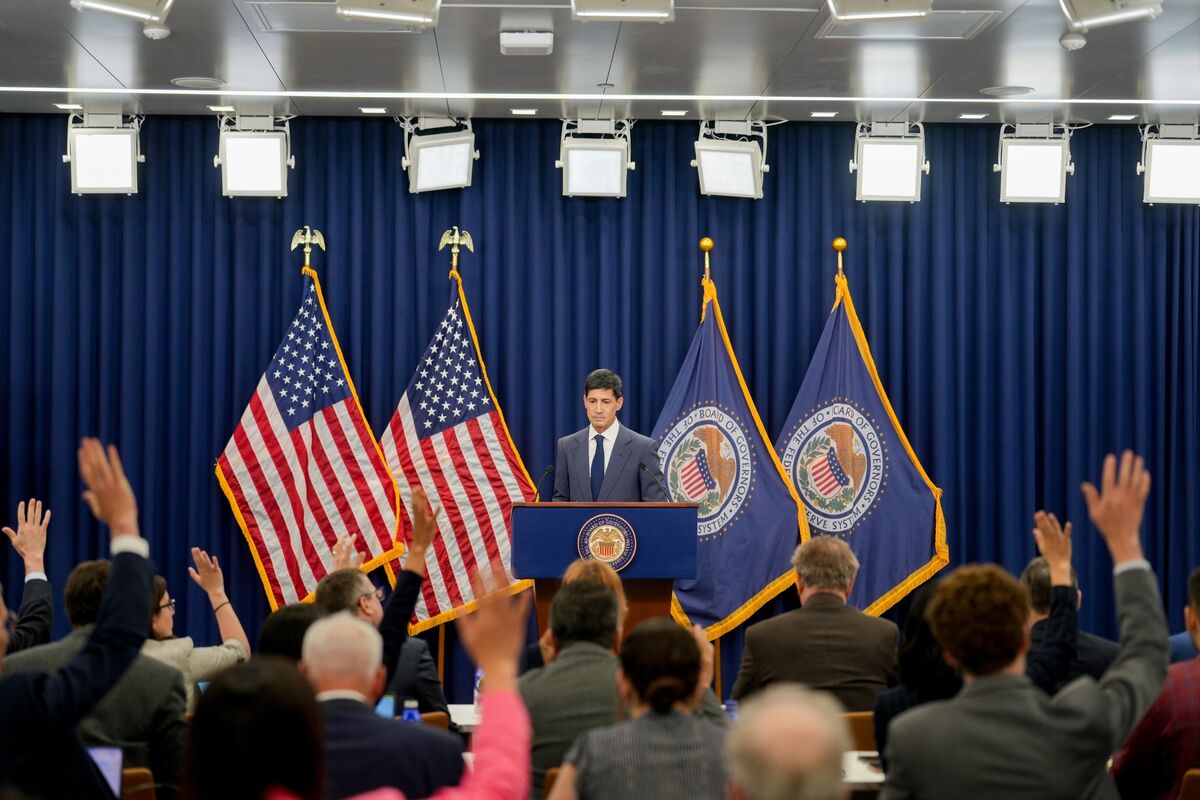
Treasury traders sold short-term bonds after Kevin Warsh’s debut as Fed chair, pushing some yields up by the most in over a year. Futures markets quickly added rate-hike bets for as soon as next month as Warsh signaled the Fed will not tolerate high inflation. The move reflects a sharper hawkish policy outlook and could ripple across rates, bond, and derivatives markets.
The immediate market message is that the front end is now the highest-beta expression of a hawkish regime shift. That matters because short-duration Treasuries are mechanically sensitive to policy credibility, and a credible anti-inflation stance forces term-premium repricing even before any actual move in the policy rate. In practice, this is less about one press conference and more about the market resetting the distribution of near-term policy outcomes from “cuts/steady” toward “hike optionality,” which can continue to pressure 2Y–5Y yields for several sessions if positioning is crowded.
Second-order effects should be stronger in credit than in rates. Higher front-end yields tighten financial conditions fastest for levered balance sheets, floating-rate borrowers, and duration-sensitive sectors that rely on cheap refinancing rather than current cash generation. Expect weaker issuance windows, wider spreads in lower-quality IG and HY, and underperformance in rate-sensitive equities as equity investors begin discounting both a higher discount rate and slower earnings support from easier financing.
The key risk is that this move becomes self-limiting if incoming data fail to validate the hawkish tone or if the market has already over-discounted the first hike. If inflation prints soften or growth cracks, the front-end can reverse violently because the positioning adjustment will be one-way and liquidity in short-dated Treasury futures can thin quickly after a macro shock. The next 2-6 weeks are the critical horizon: if front-end yields keep repricing but inflation expectations do not follow, the trade becomes vulnerable to a sharp squeeze.
The consensus may be underestimating how much of the move is a positioning event versus a fundamentals event. That creates a tactical opportunity to fade an overextended selloff in the front end, while still respecting the structural hawkish shift by avoiding duration-heavy exposure. The better expression is likely relative value, not outright duration: stay defensive on credit and rate-sensitive equities, but use any further knee-jerk jump in short yields to put on limited-risk bullish duration exposure.
AI-powered research, real-time alerts, and portfolio analytics for institutional investors.
Request DemoOverall Sentiment
mildly negative
Sentiment Score
-0.15
